Social Insurance for Foreigners in Vietnam: Rates and Rules for Nha Trang (2026)
A foreign employee on a fixed-term labour contract of 12 months or more with an employer in Vietnam must join compulsory social insurance and health insurance. Three listed exceptions apply. You pay 8% of contribution salary into the retirement-and-death fund. Health insurance is 4.5% of that salary, and you pay one-third.
On this page
- Who must join compulsory social insurance
- Contribution rates: what you pay and what your employer pays
- The salary your contributions are based on
- Claiming a one-time social-insurance payment
- Pension, one-time payment or keeping your record
- Your employer’s duties and the penalties
- The social insurance office in Nha Trang
- Common questions
A foreign employee on a fixed-term labour contract of 12 months or more with an employer in Vietnam must join compulsory social insurance. Three listed exceptions apply. Compulsory health insurance follows the same test.
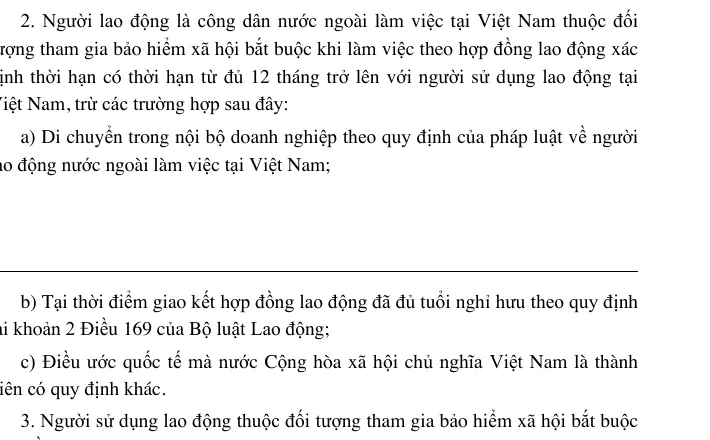
Người lao động là công dân nước ngoài làm việc tại Việt Nam thuộc đối tượng tham gia bảo hiểm xã hội bắt buộc khi làm việc theo hợp đồng lao động xác định thời hạn có thời hạn từ đủ 12 tháng trở lên với người sử dụng lao động tại Việt Nam, trừ các trường hợp sau đây:
A foreign employee working in Vietnam is a mandatory participant in compulsory social insurance when working under a fixed-term labour contract of 12 months or more with an employer in Vietnam, except in the cases listed.
Law 41/2024/QH15, Điều 2 khoản 2
Each month your employer deducts your 8% share of contribution salary for the retirement-and-death fund. Health insurance is 4.5% of that salary, and you pay one-third.
Who must join compulsory social insurance
The rule names one kind of contract for a foreign employee: a fixed-term labour contract of 12 months or more with an employer in Vietnam. It names no other kind.
Three exceptions apply:
- An intra-company transferee, as defined under the regulations on foreign workers in Vietnam, is not a mandatory participant.
- Someone already at retirement age under Labor Code Article 169 clause 2 when the labour contract is signed is not a mandatory participant.
- A case where an international treaty that Vietnam is a party to provides otherwise is not a mandatory participant.
The retirement-age exception turns on your age when you sign the contract. Retirement age in normal working conditions rises by 3 months a year for men and 4 months a year for women from 2021. It reaches 62 for men in 2028 and 60 for women in 2035.
For the other two exceptions the law points to other regulations and to treaties. Ask your employer’s HR before you assume you are exempt.
Separately, a foreigner working in Vietnam holds a work permit issued by the competent Vietnamese state agency, except in the cases listed in Labor Code Article 154. Tax is a different test: see Vietnam tax residency.
Contribution rates: what you pay and what your employer pays
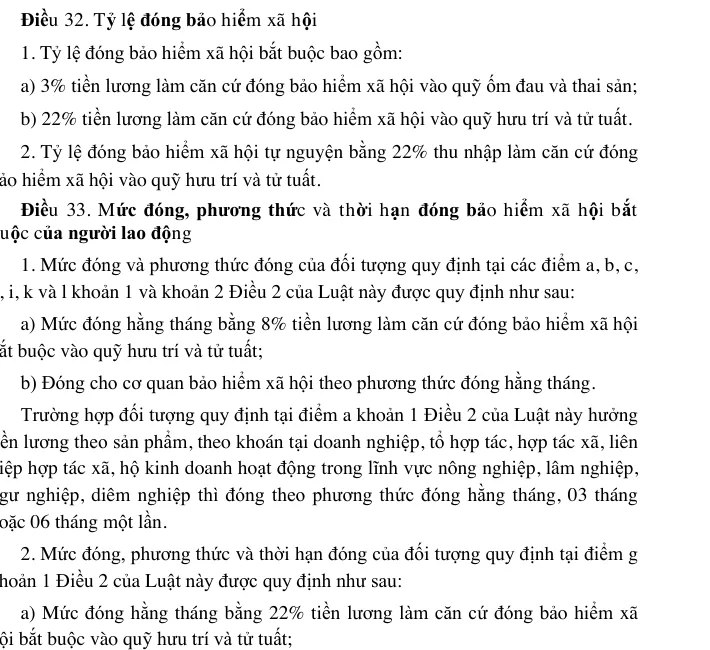
The compulsory social insurance rate consists of 3% of the salary base into the sickness-and-maternity fund and 22% into the retirement-and-death fund. The two sides split it as the table shows.
| Fund | You pay | Employer pays |
|---|---|---|
| Retirement and death | 8% | 14% |
| Sickness and maternity | No share quoted | 3% |
| Occupational accident and disease | No share quoted | 0.5%, or 0.3% under the Article 5 conditions |
| Health insurance (4.5% in total) | One-third | Two-thirds |
Retirement and death fund
Each month you pay 8% of the contribution salary into the retirement-and-death fund. Your employer pays a further 14% of the same salary into that fund.
Sickness and maternity, and occupational accident and disease
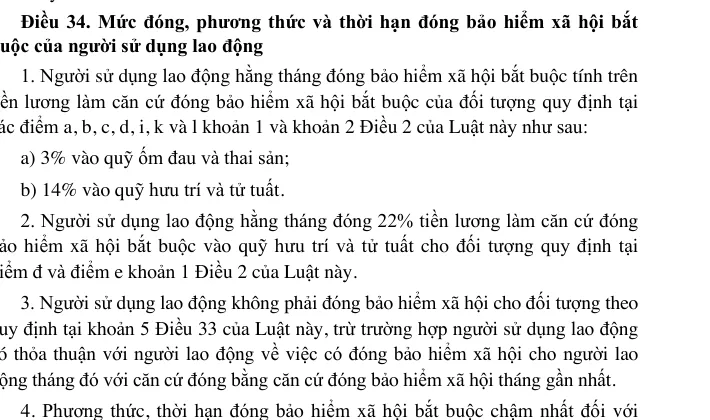
Your employer pays 3% of the contribution salary into the sickness-and-maternity fund. A foreign employee covered by Article 2 clause 2 is a mandatory participant in occupational accident and disease insurance.
The employer pays 0.5% of the salary base into that fund, or 0.3% if the enterprise meets the conditions in Article 5 of the decree.
Health insurance
The 12-month contract test also makes you a mandatory health-insurance participant. The exceptions are an intra-company transferee, someone already at retirement age when the contract is signed, and a treaty case.
The monthly contribution is 4.5% of the salary used as the basis for compulsory social insurance. Your employer pays two-thirds of that and you pay one-third. For hospital rules in Nha Trang, see health insurance for foreigners in Nha Trang.
Unemployment insurance
The Employment Law lists the workers who must join unemployment insurance. It defines a worker as a Vietnamese citizen aged 15 or over who is able to work and needs work. The list does not name foreign employees.
If your payslip shows an unemployment-insurance line, ask your employer’s HR what it is for.
The salary your contributions are based on
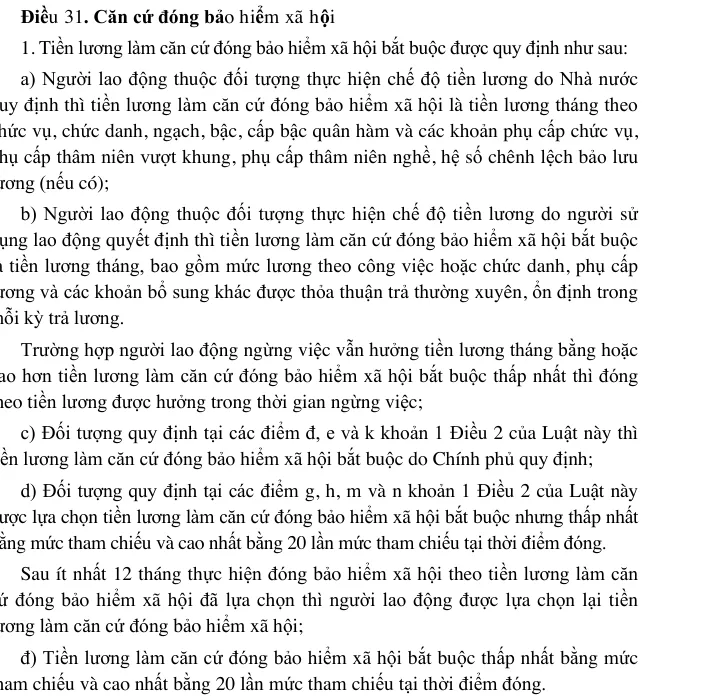
For an employee whose pay is decided by the employer, the contribution salary is the monthly salary. It includes the wage for the job or title, wage allowances and other supplements agreed to be paid regularly and stably in each pay period.
Decree 158/2025/NĐ-CP details what counts:
- The job wage agreed in the labour contract.
- Wage allowances agreed in the labour contract, but not those that depend on or vary with productivity, work process or work quality.
- Other supplements of a determinable amount agreed in the labour contract and paid regularly and stably in each pay period, with the same exclusion.
The contribution salary is at least the reference level and at most 20 times the reference level at the time of payment. The reference level is an amount decided by the Government to calculate contribution and benefit levels for several schemes.
For as long as the base salary has not been abolished, the reference level equals the base salary. The base salary is VND 2,530,000 a month from 1 July 2026. At that figure the cap is 20 times VND 2,530,000 a month.
Claiming a one-time social-insurance payment
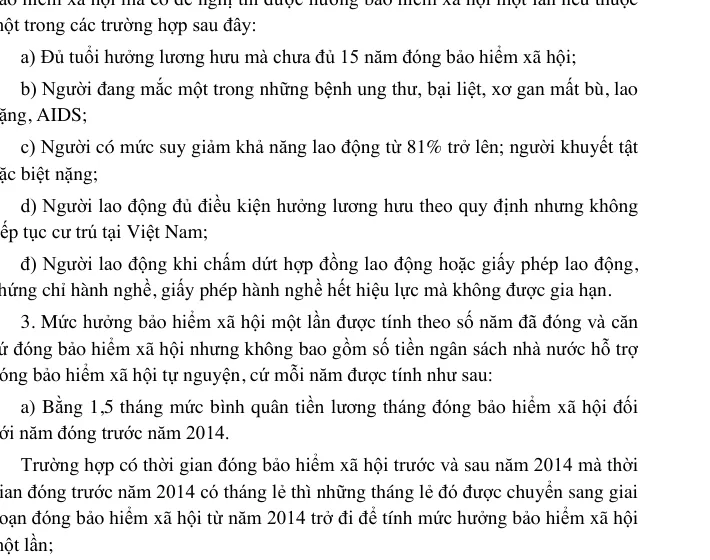
A foreign employee who has stopped participating in social insurance and applies is entitled to a one-time payment in one of these cases:
- The labour contract ends, or the work permit, practising certificate or practising licence expires and is not renewed.
- You are eligible for a pension under the regulations but do not continue residing in Vietnam.
- You have reached retirement age with fewer than 15 years of contributions.
- You have cancer, paralysis, decompensated cirrhosis, severe tuberculosis or AIDS.
- Your work-capacity reduction is 81% or more, or you have an especially severe disability.
The payment is 2 months of your average monthly contribution salary for each year from 2014 onward. For a period of contributions shorter than one year it is the amount paid in, up to 2 months of that average.
Pension, one-time payment or keeping your record
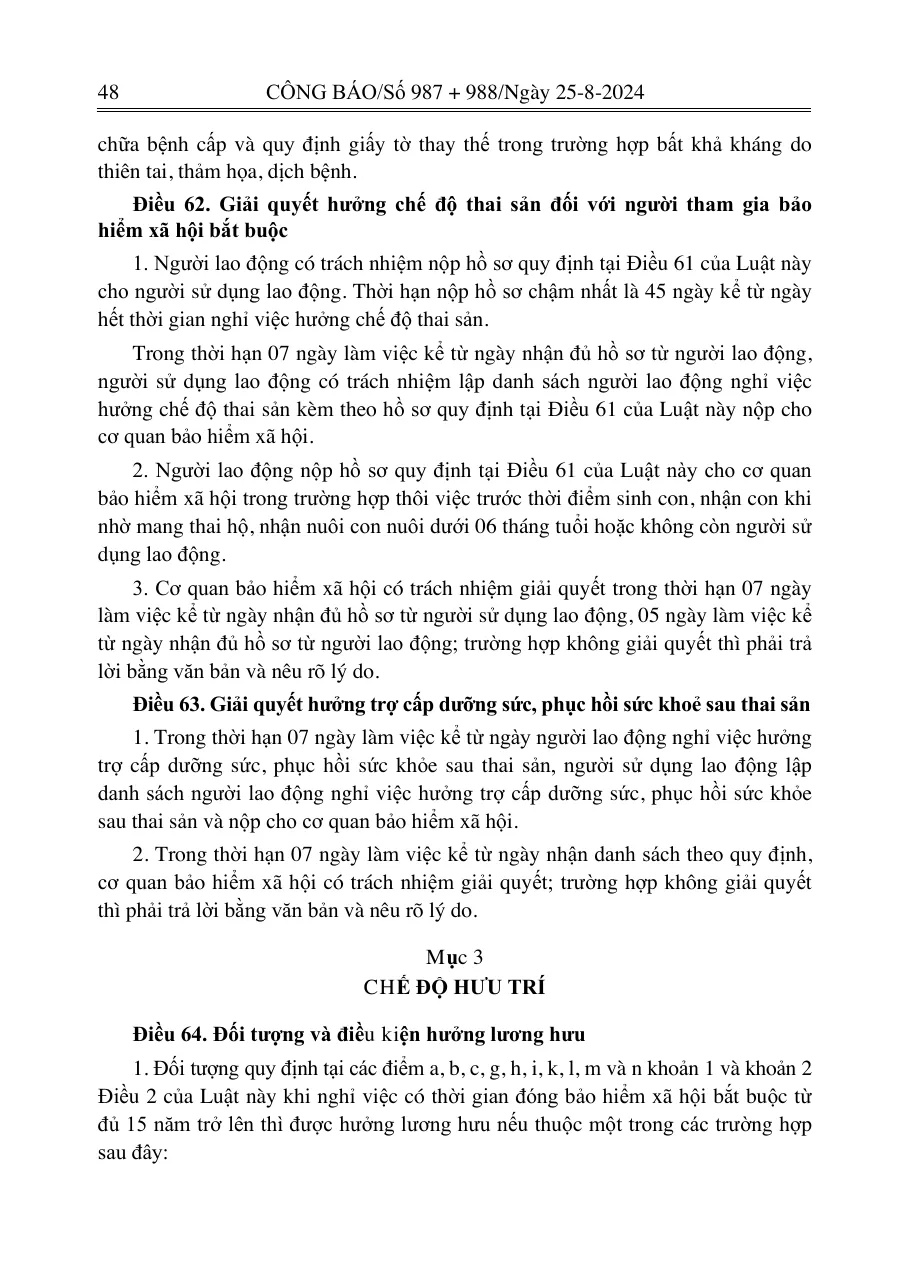
A foreign employee under Article 2 clause 2 who stops work with 15 years or more of compulsory contributions receives a pension if one of the listed cases applies. One listed case is reaching retirement age under Labor Code Article 169 clause 2.
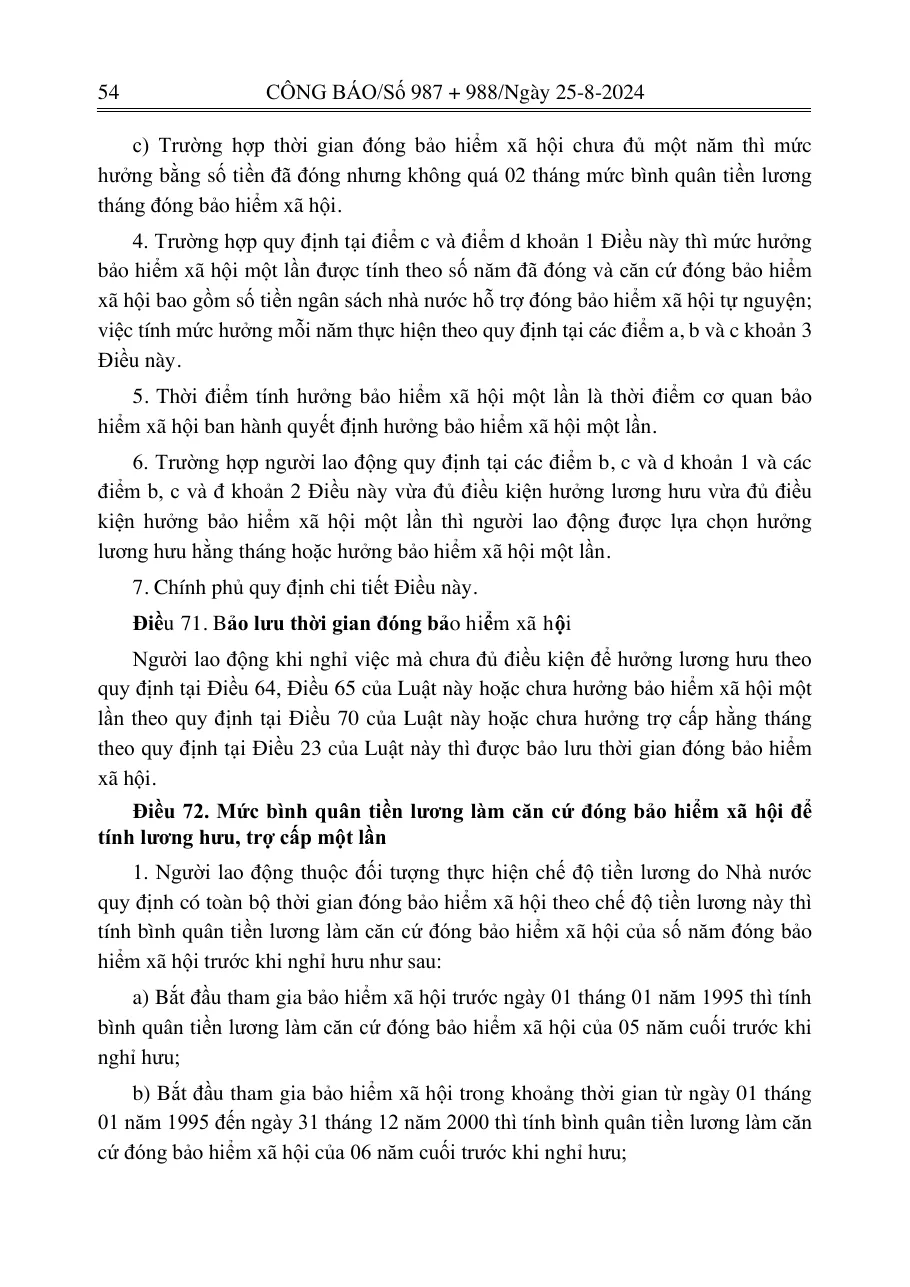
Someone who leaves work without yet meeting the conditions for a pension or the one-time payment keeps the contribution period on record. A worker eligible for both in the cases the law lists may choose either the monthly pension or the one-time payment.
The one-time payment is calculated from the time the social-insurance agency issues the decision granting it. Law 41/2024/QH15 takes effect from 1 July 2025.
Which case are you
| Your situation | What the law says |
|---|---|
| Fixed-term contract of 12 months or more with a Vietnamese employer | Mandatory participant |
| Intra-company transferee | Not a mandatory participant |
| Already at retirement age when the contract is signed | Not a mandatory participant |
| Contract ends, or work permit expires and is not renewed | Entitled to a one-time payment on application |
| Retirement age, fewer than 15 years of contributions | Entitled to a one-time payment |
| Retirement age, 15 years or more of contributions | Pension if a listed case applies |
| Leaving without meeting either set of conditions | Contribution period kept on record |
Your employer’s duties and the penalties
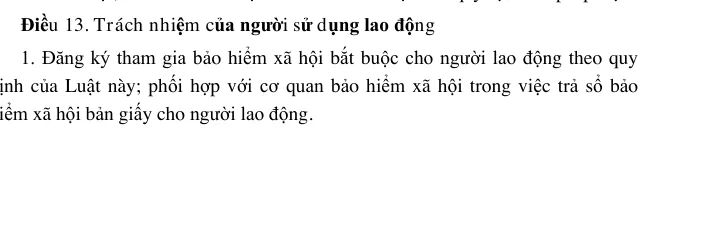
Your employer registers your compulsory participation and pays on your behalf. It deducts your share from your wages and pays it into the fund together with its own share. Employers include enterprises, cooperatives, household businesses, other organisations and individuals that hire under labour contracts.
An employer that commits a listed act of late payment is fined 12% to 15% of the total paid late, up to VND 75,000,000. For a listed act of evading payment the fine is 18% to 20% of the total evaded, up to VND 75,000,000.
These amounts are the fine for an individual employer. For an organisation the fine is 2 times the individual fine.
Decree 158/2025/NĐ-CP takes effect from 1 July 2025. From that date the earlier decree that specifically governed compulsory social insurance for foreign employees ceased to have effect. An earlier decree detailing the Law on Social Insurance on compulsory insurance also ceased.
The social insurance office in Nha Trang
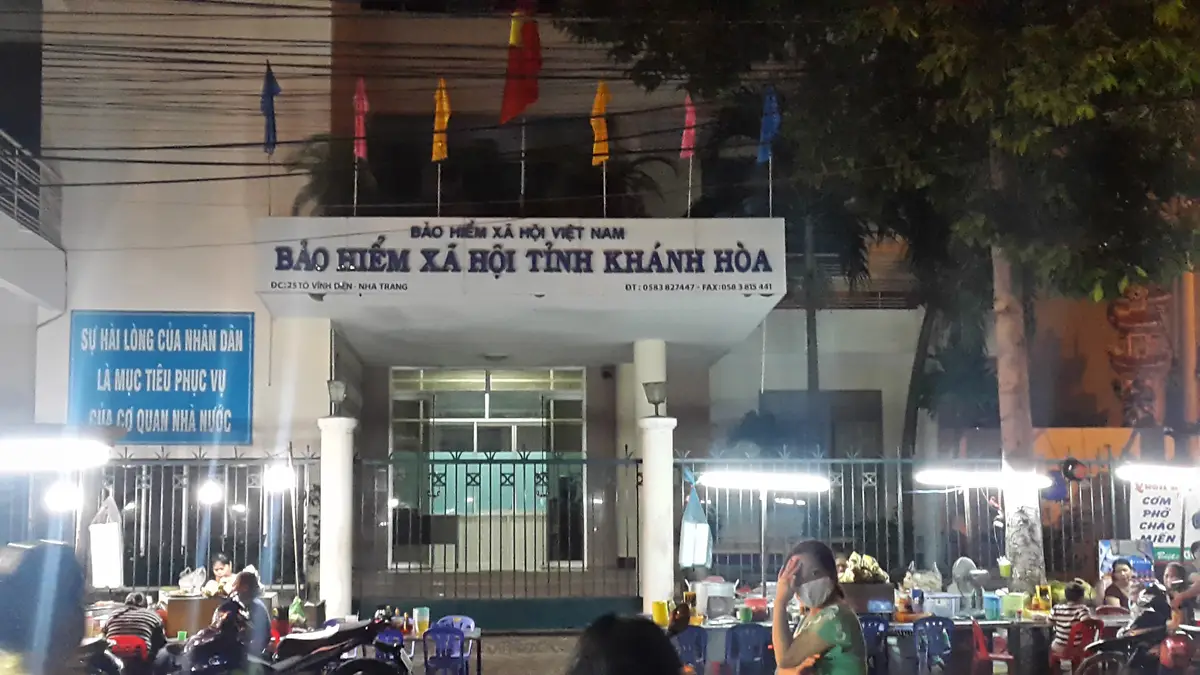
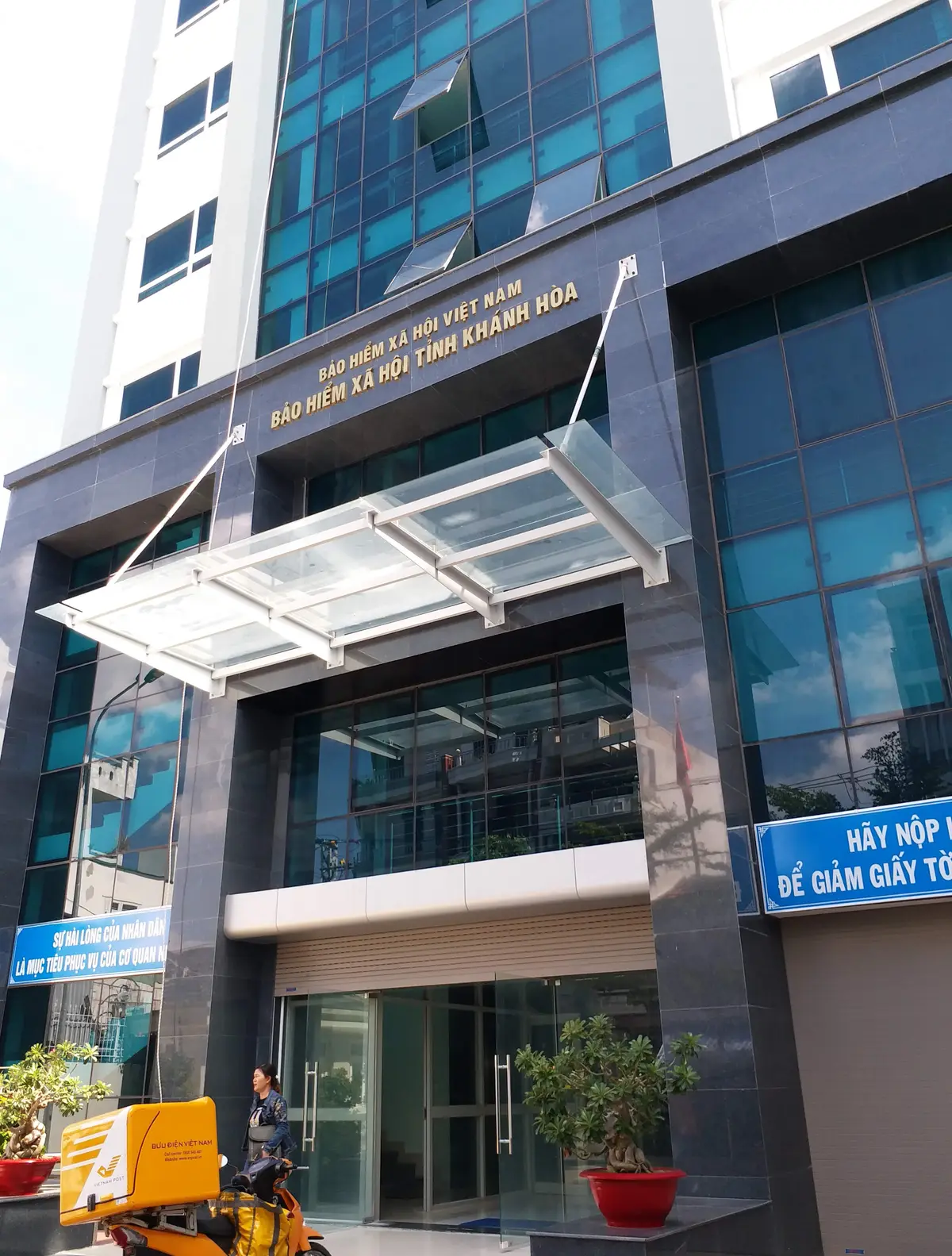
The Khanh Hoa provincial social insurance portal lists its office in the page footer. Its own portal gives the address as 5 Huynh Thuc Khang, Nha Trang Ward, Khanh Hoa Province. The telephone shown is 02583.827447 and the email is bhxh@khanhhoa.vss.gov.vn.
The portal header also shows a hotline, 1900 90 68. Ask your employer’s HR first.
More guides: opening a bank account in Nha Trang and the money hub.
Photos and clips uploaded to Google Maps (Khanh Hoa Social Insurance Office on Google Maps (opens in a new tab)) by @Triet Bui Minh, @Chau Phuong.
Not confirmed: How your case is treated if your contract is under 12 months, has no fixed term or is with an overseas employer: the foreign-employee rule names no other contract type. Ask your employer's HR. Which counter at the Khanh Hoa social insurance office takes a one-time payment claim: ask the office before you go.
Common questions
Do I have to join social insurance on a 12-month contract?
A foreign employee on a fixed-term labour contract of 12 months or more with an employer in Vietnam must join compulsory social insurance. The exceptions are an intra-company transferee, someone already at retirement age when the contract is signed, and a treaty case.
How much do I pay each month?
8% of contribution salary into the retirement-and-death fund. Health insurance adds one-third of 4.5% of the salary.
How much does my employer pay on top?
3% into the sickness-and-maternity fund and 14% into the retirement-and-death fund. Occupational accident and disease insurance is 0.5%, or 0.3% if the enterprise meets the Article 5 conditions. Health insurance is two-thirds of 4.5%.
What is the most my contribution salary can be?
20 times the reference level at the time of payment. The reference level equals the base salary for as long as the base salary has not been abolished. The base salary is VND 2,530,000 a month from 1 July 2026.
Can I get my contributions back when I leave Vietnam?
A foreign employee who has stopped participating and applies is entitled to a one-time payment in listed cases. One is a labour contract that ends, or a work permit, practising certificate or practising licence that expires and is not renewed.
Does unemployment insurance apply to foreigners?
The Employment Law lists who must join unemployment insurance as workers, and it does not name foreign employees. It defines a worker as a Vietnamese citizen aged 15 or over who is able to work and needs work.
Does my employer or do I register me for social insurance?
The employer registers your compulsory participation and pays on your behalf. It deducts your own share from your wages and pays it into the fund with its own share.
Where is the Khanh Hoa social insurance office?
Its own portal gives 5 Huynh Thuc Khang, Nha Trang Ward, Khanh Hoa Province. The telephone shown is 02583.827447.
Can a foreigner receive a pension in Vietnam?
A foreign employee under Article 2 clause 2 who stops work with 15 years or more of compulsory contributions receives a pension if a listed case applies. One listed case is reaching retirement age.
Can I choose between a pension and a one-time payment?
A worker eligible for both in the cases the law lists may choose either the monthly pension or the one-time payment.
Read next
General information checked against the sources listed above, not legal advice for your situation. Rules and office practice change; confirm with the immigration office or a licensed adviser before you act. See how guides are checked.
Spotted an error? Report it.