Bringing a Dog or Cat to Vietnam via Cam Ranh: Papers, Fees and Quarantine (2026)
You declare up to 2 pet animals directly at the border animal quarantine agency. Bring the quarantine certificate from the exporting country, which the agency checks. The import certificate follows within 1 working day, or 5 if a sample is tested. It costs VND 40,000, at 50% until 31 December 2026.
On this page
- Which route does your pet take
- Which animals the rule covers
- Before you fly: the exporting country’s certificate
- What the Law on Animal Health says about imports
- At Cam Ranh: what the border check involves
- Which office covers Cam Ranh airport
- Who does what
- Fees and fines
- More than 2 pets: register first
- Moving your pet out of Khanh Hoa
- What happens if you skip the declaration
- Common mistakes to avoid
- Taking your pet out of Vietnam later
- Flying with your pet
- After landing: vets in Nha Trang
- Checklist before you fly
- Read next
- Step by step
- Common questions
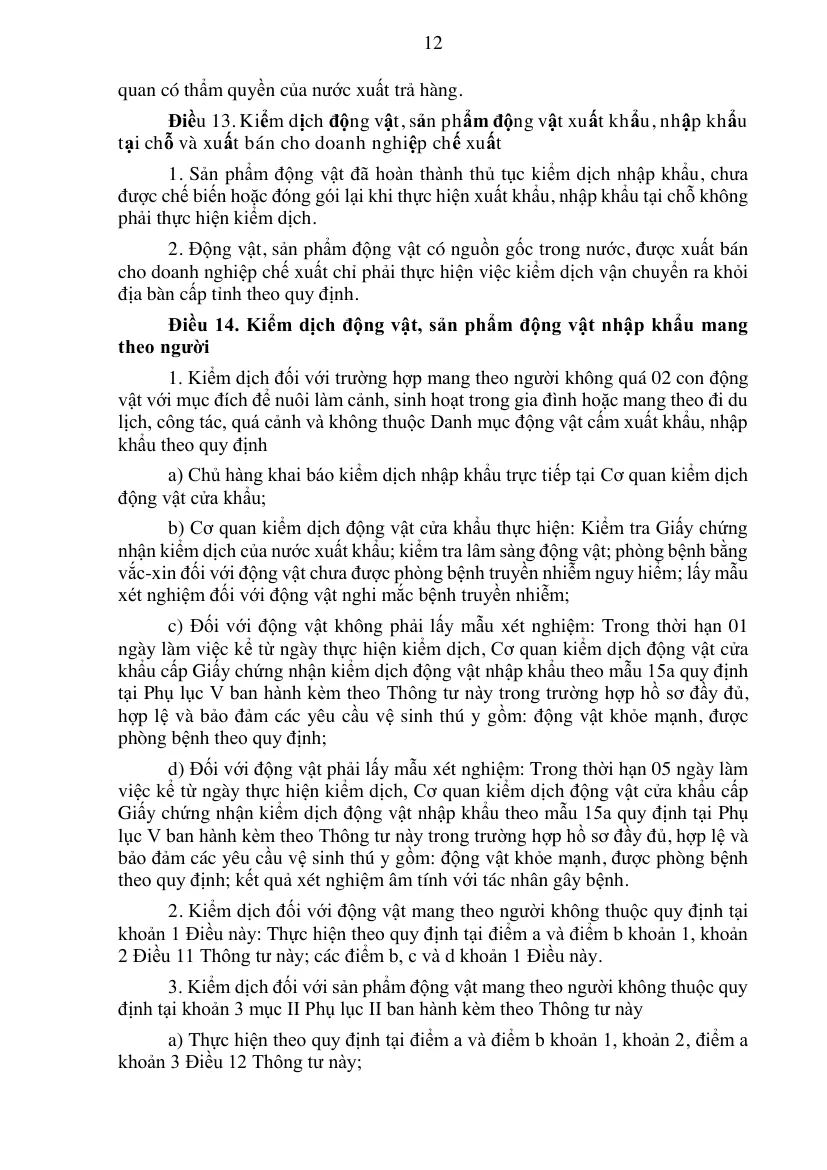
Is your pet inside the direct-declaration route? For no more than 2 animals kept as pets, for household use, or travelling with you, the owner declares the import quarantine directly at the border animal quarantine agency. The animal must not be on the list banned from import.

This page follows Circular 01/2026/TT-BNNMT, which took effect on 1 January 2026. It replaced Circular 25/2016/TT-BNNPTNT, the text many pet-relocation sites still cite.
Which route does your pet take
Chủ hàng khai báo kiểm dịch nhập khẩu trực tiếp tại Cơ quan kiểm dịch động vật cửa khẩu
“The owner declares the import quarantine directly at the border animal quarantine agency.”
Thông tư 01/2026/TT-BNNMT, Điều 14 khoản 1
If you bring no more than 2 pets
You declare directly at the border checkpoint. You do not register in advance. The agency checks the exporting country’s quarantine certificate and examines the animal.
If you bring more than 2 pets
The animal follows the standard import-quarantine path in Articles 11 and 14 of the circular. Before importing, you send one set of registration documents to the Department of Livestock Production and Animal Health. The file is an application on form 19, plus any licence another authority requires.
Which animals the rule covers
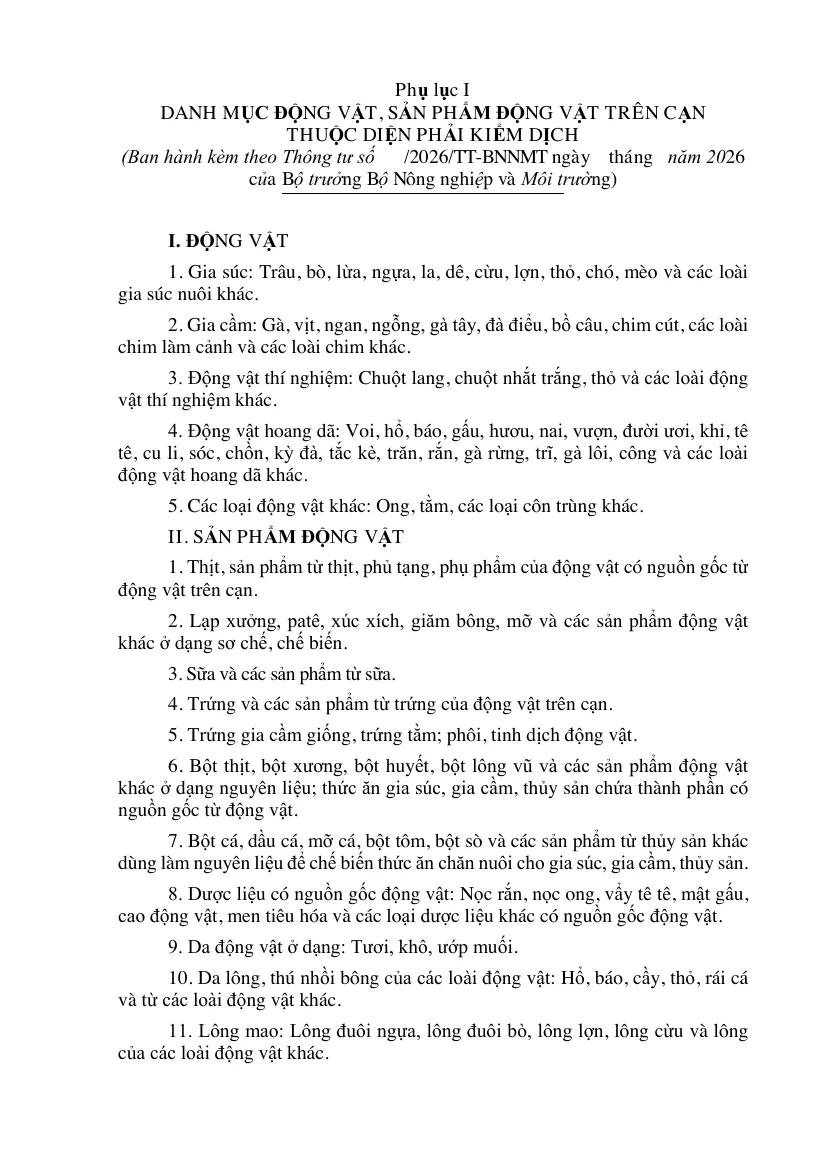
The list of animals subject to quarantine includes livestock such as dogs and cats. It also includes poultry and ornamental (pet) birds. Rabies is on the circular’s list of diseases that animal quarantine covers.
That list names diseases that quarantine looks for. It is not a statement that a rabies certificate or vaccination date is required to import a pet.
Before you fly: the exporting country’s certificate
An imported animal must be healthy. It must come from an area or facility recognised as free of the disease, or without a dangerous disease, under World Organisation for Animal Health and Vietnamese rules. It must also have a quarantine certificate from the exporting country’s competent authority that meets Vietnam’s veterinary hygiene requirements.
The Law on Animal Health also says animals must receive compulsory disease prevention against dangerous infectious diseases, as the specialised veterinary management agency requires. The word for rabies does not appear in that article.
The declaration file includes a copy of the exporting country’s quarantine certificate or the original certificate. A copy is confirmed by the business and followed by the original.
What the Law on Animal Health says about imports
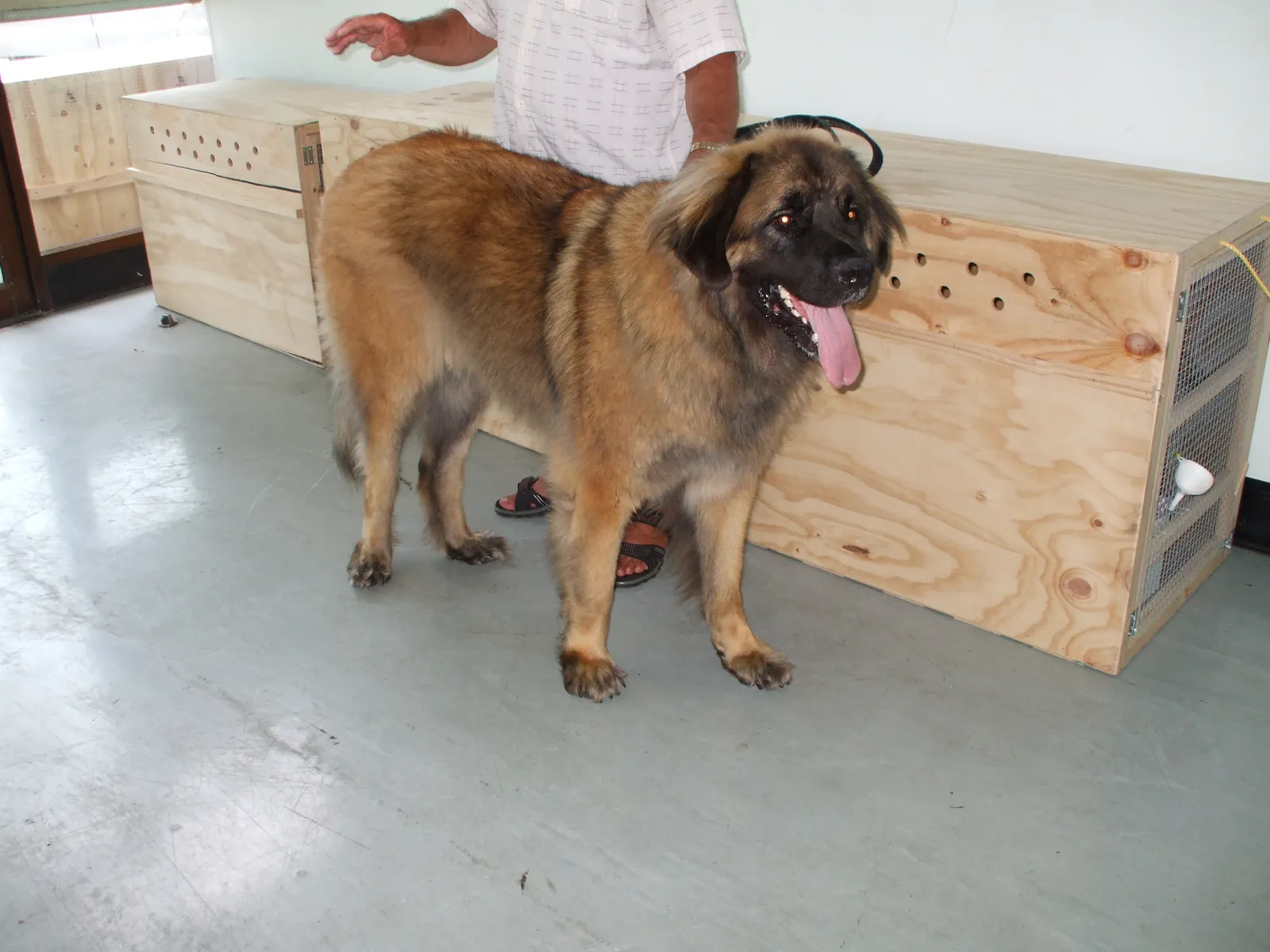
An organisation or individual importing an animal on the list of animals subject to quarantine registers the quarantine with the Ministry of Agriculture and Environment. The Ministry then issues written guidance on import quarantine. It bases that guidance on the exporting country’s disease situation and its disease and veterinary-hygiene monitoring.
Animals from a country registering for import for the first time go through a risk analysis by the Ministry first. So do animals from a country at high risk of disease. Before an animal reaches the border checkpoint, the importer declares the quarantine with the central veterinary management agency. That agency decides the place and time of quarantine.
At the check, the agency confirms a valid file and an animal showing no sign of dangerous disease, and moves the animal to an isolation area or an approved place. An animal that meets the hygiene requirements receives the import quarantine certificate. The agency notifies the veterinary agency at the destination.
At Cam Ranh: what the border check involves
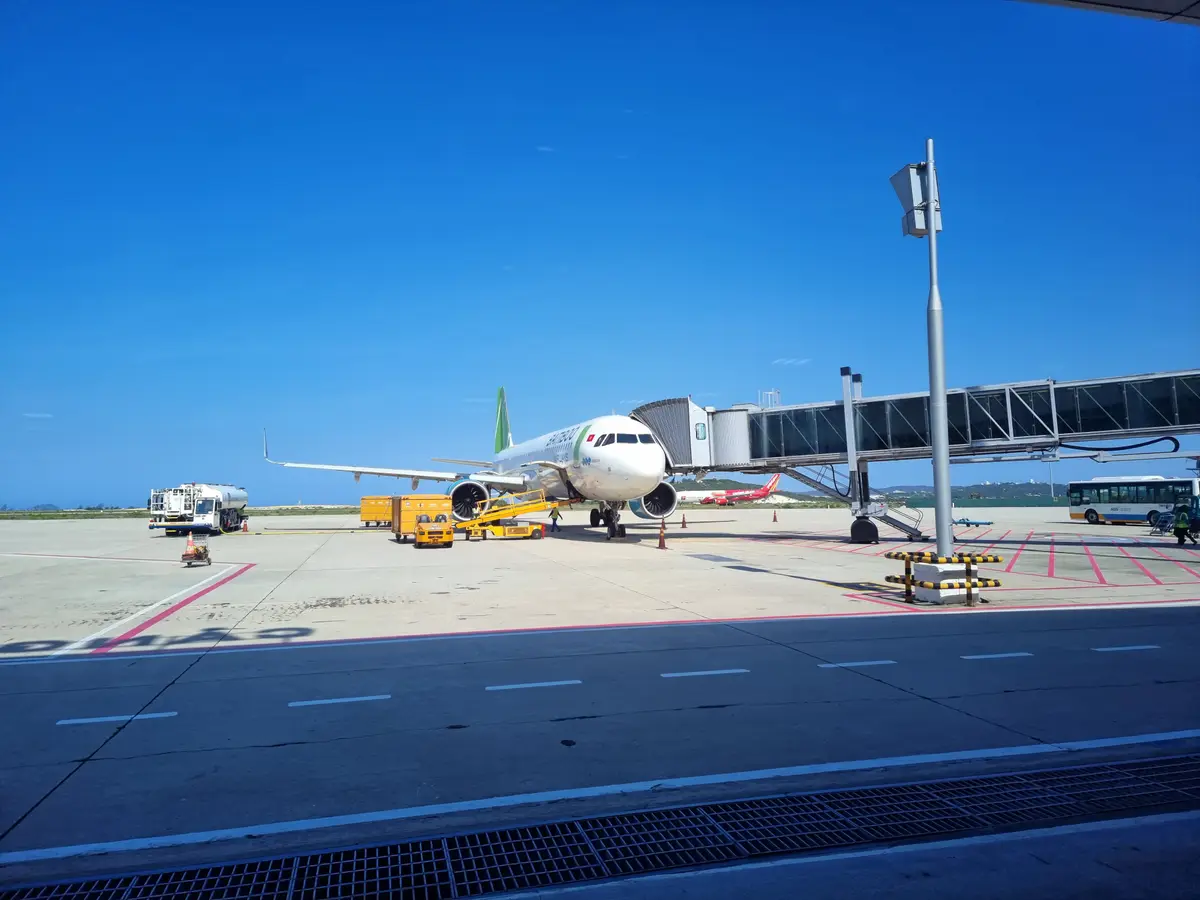
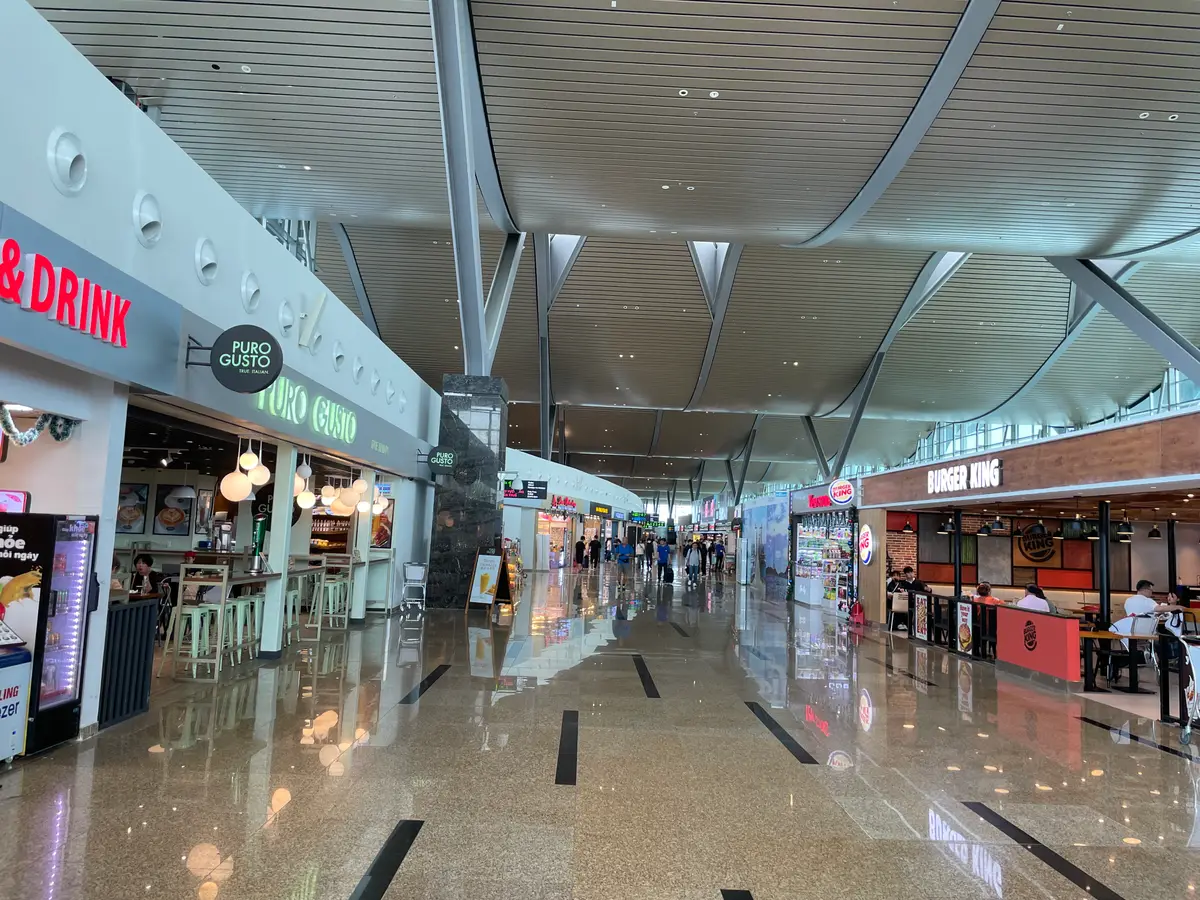
Cam Ranh International Airport sits on Nguyen Tat Thanh Street in Bac Cam Ranh. A Maps listing gives its phone number as +84 258 3989 956.

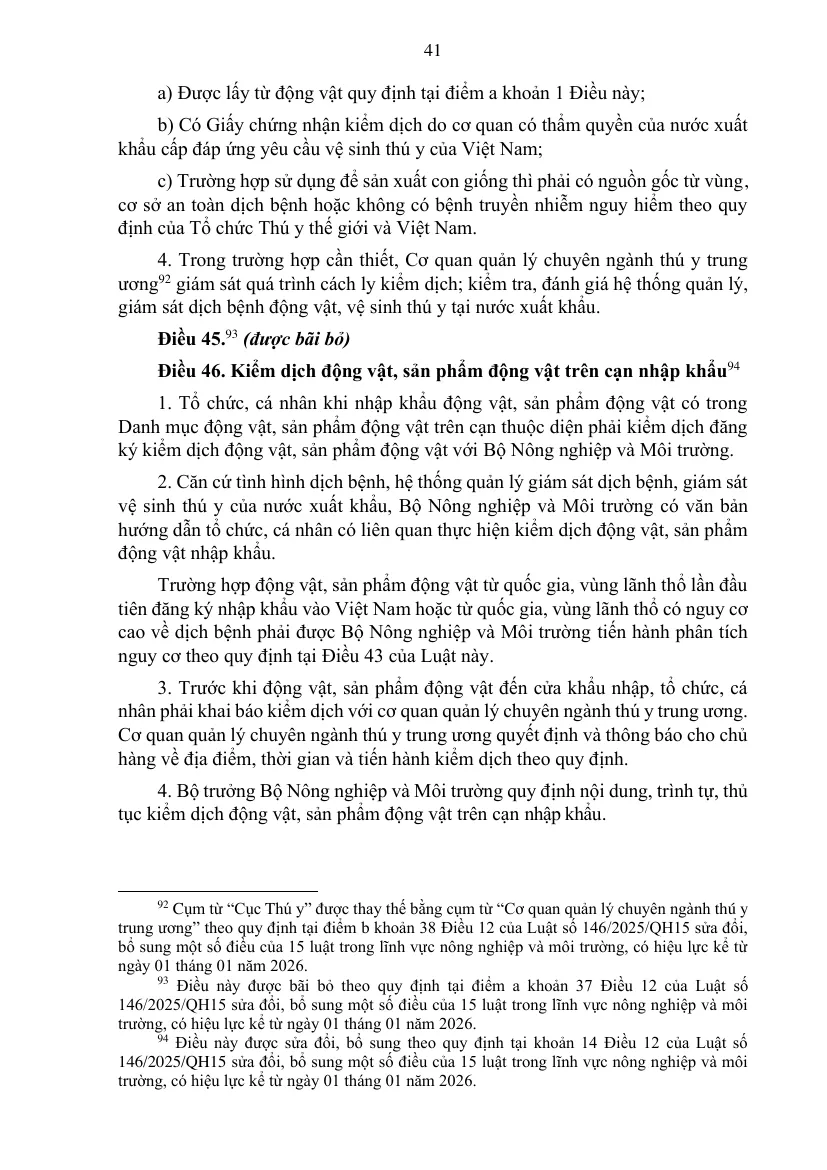
The border animal quarantine agency does four things:
- checks the exporting country’s quarantine certificate
- carries out a clinical examination of the animal
- vaccinates the animal against dangerous infectious diseases if it has not already been vaccinated
- takes a test sample if the animal is suspected of an infectious disease

How long the import certificate takes
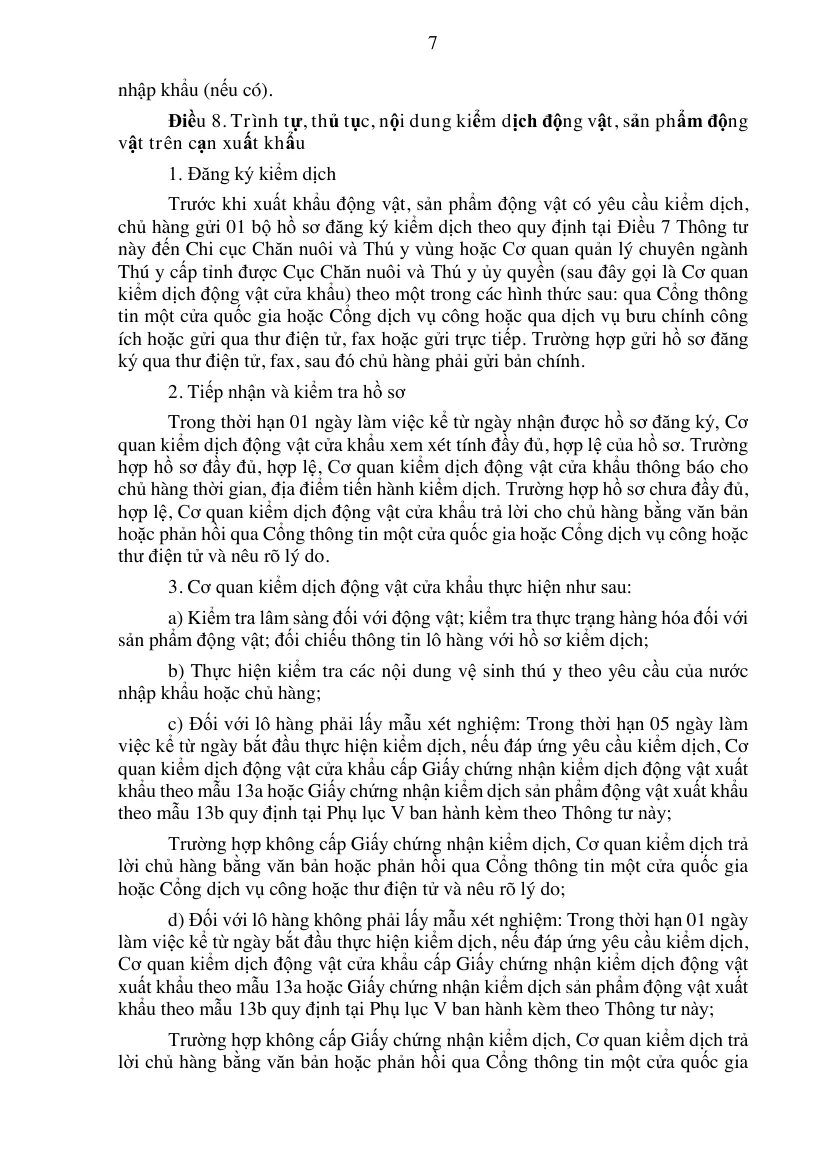
For an animal that needs no test sample, the agency issues the import quarantine certificate (form 15a) within 1 working day of the quarantine being carried out. That needs a complete, valid file, a healthy animal and the required vaccination.
For an animal that needs a test sample, the certificate comes within 5 working days. It also needs a negative test result for the pathogen.
Right after issuing the certificate, the border agency notifies the inland animal quarantine agency at the destination of the consignment details.
If the pet fails the check
If an animal does not meet the requirements, the agency makes a record and handles the case under the law. The owner’s duties follow the same file: the agency vaccinates an animal not yet protected against dangerous infectious diseases, and takes a test sample if it suspects an infectious disease.
Which office covers Cam Ranh airport
The circular calls the office the border animal quarantine agency. It is the regional Livestock Production and Animal Health Sub-Department, or a provincial veterinary authority that the Department authorises.
No official page naming the agency or the desk at Cam Ranh was found. The circular offers a way in: the Department’s written consent and quarantine instructions are also sent to the border agency.
The Khanh Hoa Livestock Production and Animal Health Sub-Department’s website gives its address as 15 Nhi Ha Street, Nha Trang Ward. That is the provincial office, and it is not confirmed as the border agency for the airport.
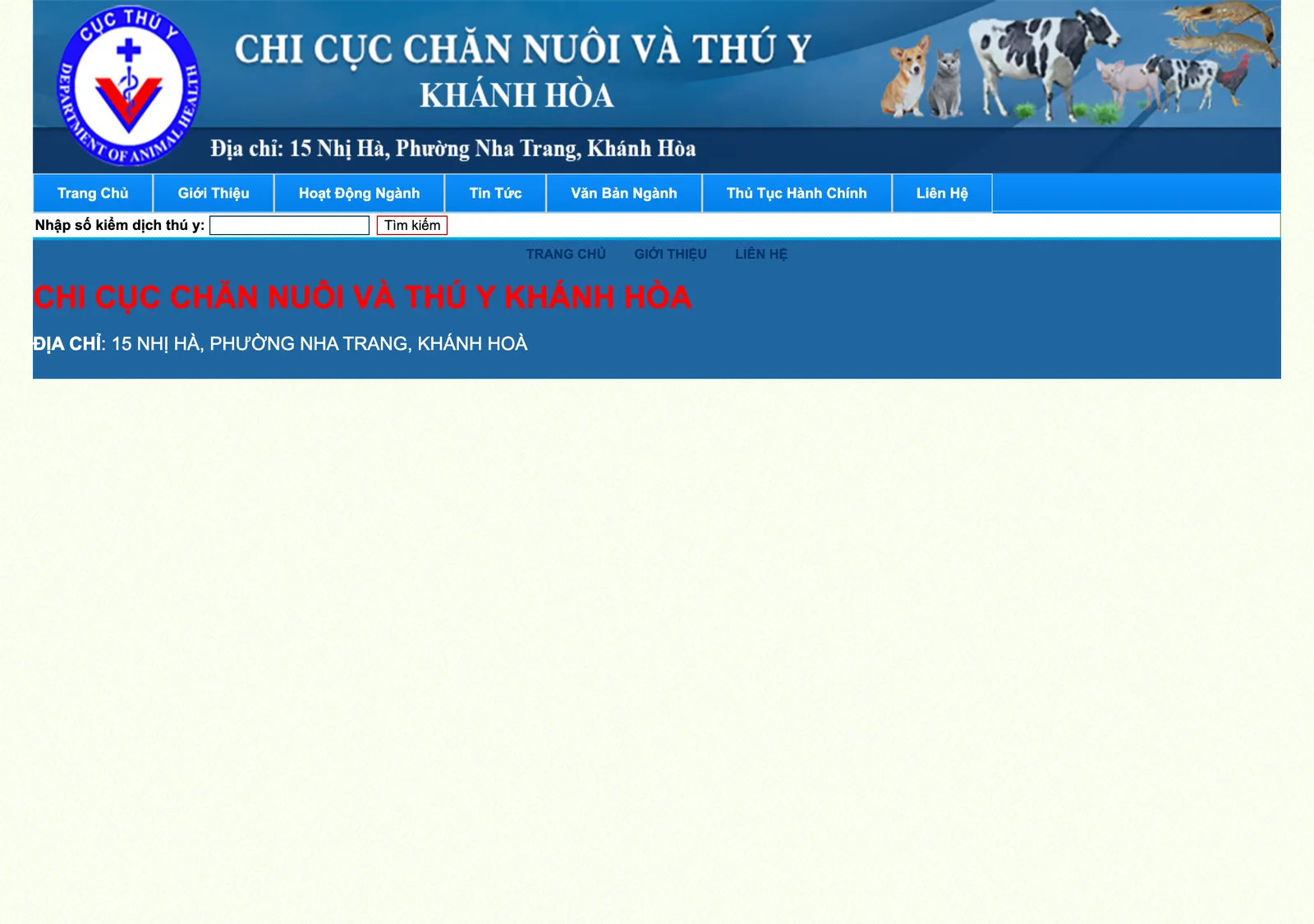
15 D. Nhi Ha, Nha Trang, Khanh Hoa · Open in Google Maps (opens in a new tab)
Who does what
| Who | What they do |
|---|---|
| You, the owner | Declare the import quarantine directly, for no more than 2 pets |
| Border animal quarantine agency | Checks the certificate, examines, vaccinates if needed, samples if suspected |
| Department of Livestock Production and Animal Health | Sends written consent and instructions within 4 working days, for registered imports |
| Inland agency at the destination | Is notified of the consignment after the import certificate |
| Provincial veterinary agency | Checks a registration file within 1 working day, for moving an animal out of a province |

Fees and fines
The fee for issuing an animal quarantine certificate is VND 40,000 per certificate. From 1 July 2025 through 31 December 2026, the collection rate is 50% of that rate.
The fee circular lists a clinical-examination fee of VND 100,000 per vehicle for dogs, cats and similar animals. For poultry, which includes ornamental birds on the quarantine list, the clinical-examination fee is also charged at 50% through 31 December 2026. The schedule does not say how that line applies to one hand-carried pet.
| Item | Amount |
|---|---|
| Quarantine certificate | VND 40,000 per certificate |
| Same certificate, 1 July 2025 to 31 December 2026 | 50% of that rate |
| Clinical examination, dogs and cats | VND 100,000 per vehicle |
| Not declaring quarantine on import | VND 4,000,000 to 5,000,000 |
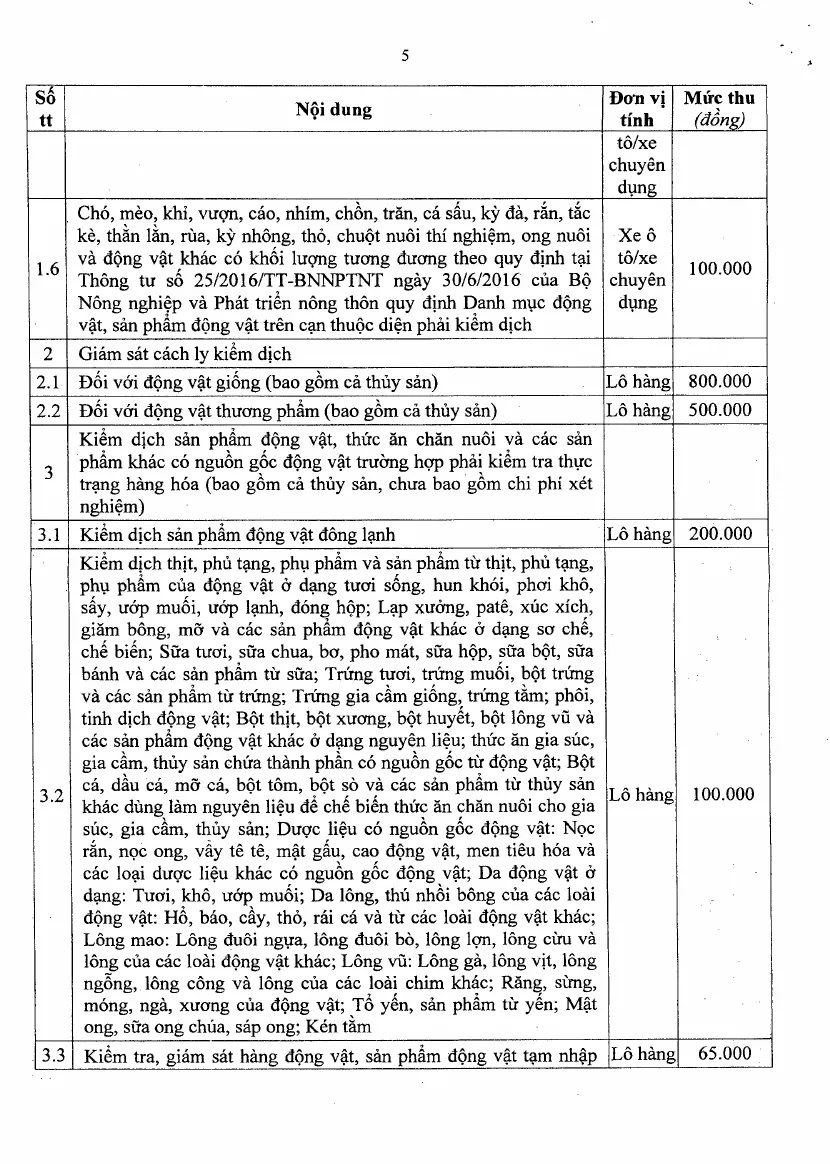
The fee circular was in effect from 11 January 2021, and the temporary 50% cut runs through 31 December 2026. The fine comes from a penalty decree that takes effect on 1 August 2026.
More than 2 pets: register first
For an animal outside the direct route, you send one registration file to the Department of Livestock Production and Animal Health before importing. You may use the national single-window portal, the public-service portal, postal service, email, fax, or hand delivery. An emailed or faxed file is followed by the original.
Within 4 working days of a complete, valid file, the Department sends written consent and quarantine instructions. Before the animal reaches the entry checkpoint, you send a declaration file to the border agency.
Within 1 working day of a complete, valid declaration, the border agency confirms the form and tells you the place and time of quarantine. You arrange the isolation place, and the agency guides and supervises you.
Isolation and monitoring
When an animal goes into isolation, the agency seals the container and issues a transport certificate (form 14a) for the owner to carry the animal there. Monitoring lasts as set for each species and disease, but no more than 45 days from the start of isolation.
The agency takes samples, or guides and supervises sampling, and guides the owner on compulsory disease prevention for an animal not yet protected as required.
Two routes side by side
| Direct route (no more than 2 pets) | Time limit |
|---|---|
| Declare at the border agency | On arrival |
| Import certificate without a sample | 1 working day |
| Import certificate with a sample | 5 working days |
| Register-first route | Time limit |
|---|---|
| Department’s written consent | 4 working days |
| Border agency confirms the declaration | 1 working day |
| Isolation monitoring | No more than 45 days |
Moving your pet out of Khanh Hoa
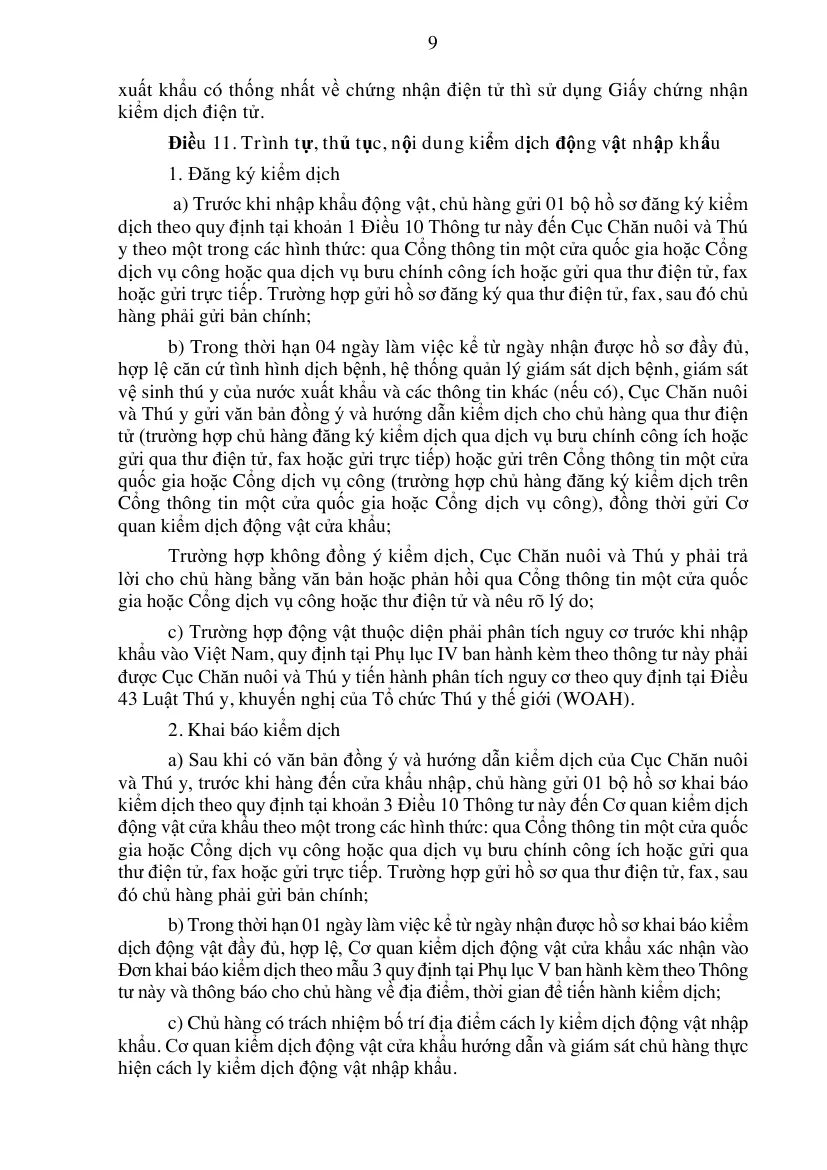
The circular has a separate rule for moving an animal out of a province. The list of animals subject to quarantine includes dogs and cats. The circular’s exemption list for moving animals out of a province names animals for security and defence in an emergency, honey bees, and certain egg and handicraft products. It does not name pets.
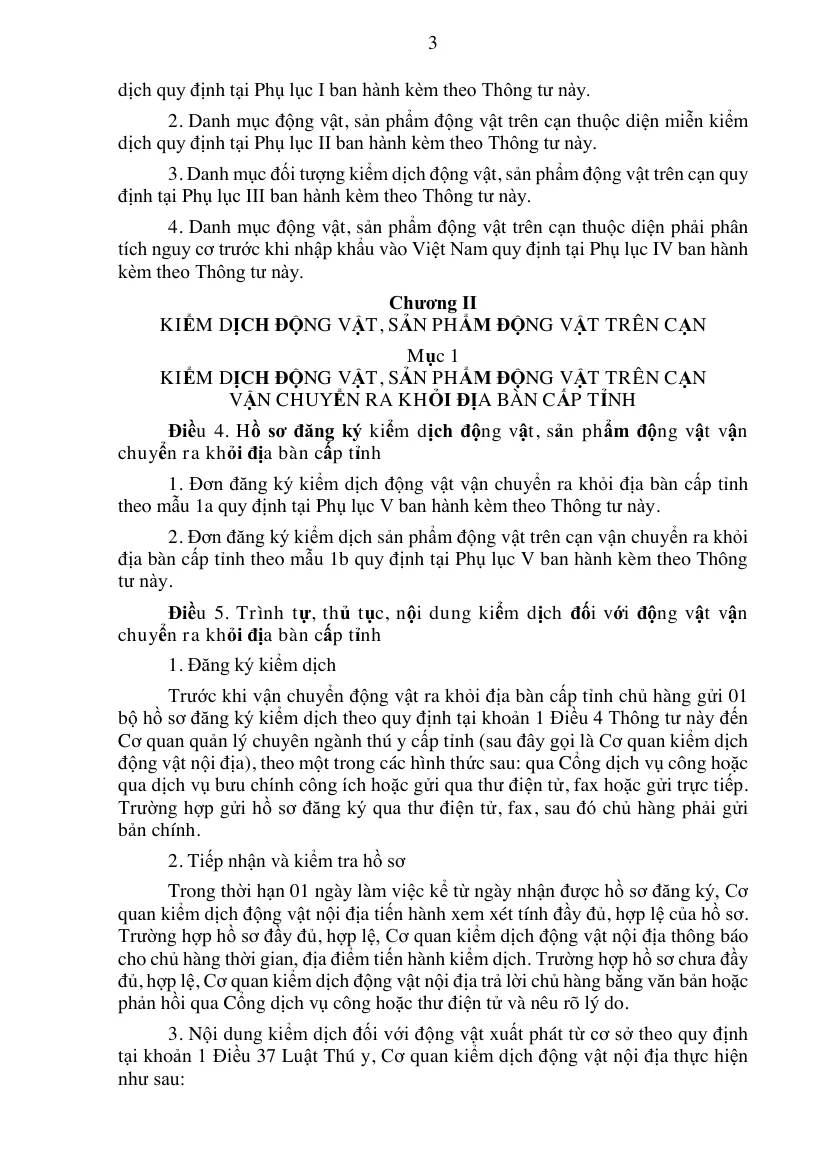
Before moving an animal out of a province, the owner sends one registration file to the provincial veterinary management agency. The options are the public-service portal, public postal service, email, fax or in person. Within 1 working day of receiving the file, that agency checks it. If it is complete and valid, the agency tells the owner the time and place of quarantine.
The certificate for moving the animal comes within 5 working days of the quarantine. For an animal from a disease-safe, pathogen-free or vaccinated establishment, it comes within 1 working day. Ask the provincial veterinary authority whether this applies to a pet that moves with its owner, and plan the dates before you book a domestic flight.
What happens if you skip the declaration
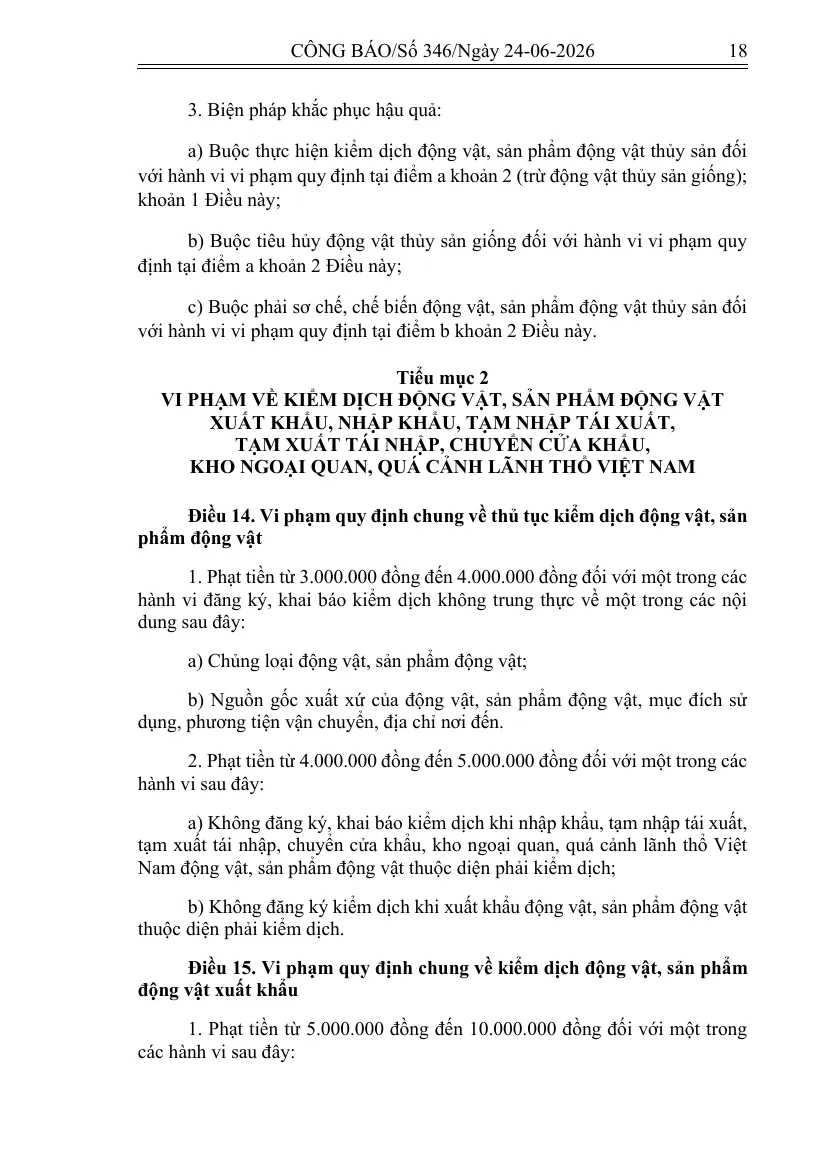
Not registering or declaring quarantine on import is fined VND 4,000,000 to 5,000,000. The same fine band covers temporary import for re-export, temporary export for re-import, transfer between border checkpoints and transit through Vietnamese territory.
The penalty decree takes effect on 1 August 2026 and replaces the 2017 decree. Declare even a single pet, because the direct route is the declaration itself.
Common mistakes to avoid
- Citing the old circular. Circular 25/2016/TT-BNNPTNT was replaced from 1 January 2026.
- Treating the disease list as a vaccination rule. Rabies appears on the list of quarantine diseases, and the circular’s traveller rule sets no vaccination date.
- Bringing more than 2 pets on the direct route. More than 2 follows the register-first path.
- Arriving with a bare copy of the exporting country’s certificate. The declaration file takes a copy confirmed by the business, followed by the original, or the original itself.
- Assuming the airline’s rules are the quarantine rules. The airline pages set carrier size and weight limits, not quarantine law.

Taking your pet out of Vietnam later
If you leave Vietnam with the pet, the export rules apply. The export registration file is an application on form 2a, plus the importing country’s or the owner’s veterinary-hygiene requirements and the importing country’s sample certificate, if there are any.
Within 1 working day of receiving the export file, the border animal quarantine agency checks it. If it is complete and valid, the agency tells you the time and place of quarantine. The agency examines the animal, checks it against the requirements, and issues the export certificate (form 13a) within 1 working day, or 5 if a sample is taken.
At the exit checkpoint, the agency checks the export certificate and confirms the check on it, or swaps it for an export certificate at your request. If neither the importing country nor the owner requires quarantine, you carry out the quarantine for transport out of the province instead.
Flying with your pet
Vietnam Airlines says taking pets on board depends on the legal and quarantine systems of each country or region. It asks passengers to read the government rules of both the departure and arrival countries. These are airline rules, not quarantine law.
Vietnam Airlines
- Cabin: dogs and cats aged 10 weeks or older, not pet birds, and no dogs on flights between Vietnam and the United States.
- The pet must be in good health, not sick, fully vaccinated, and not emit an unpleasant odour or affect passengers or their possessions.
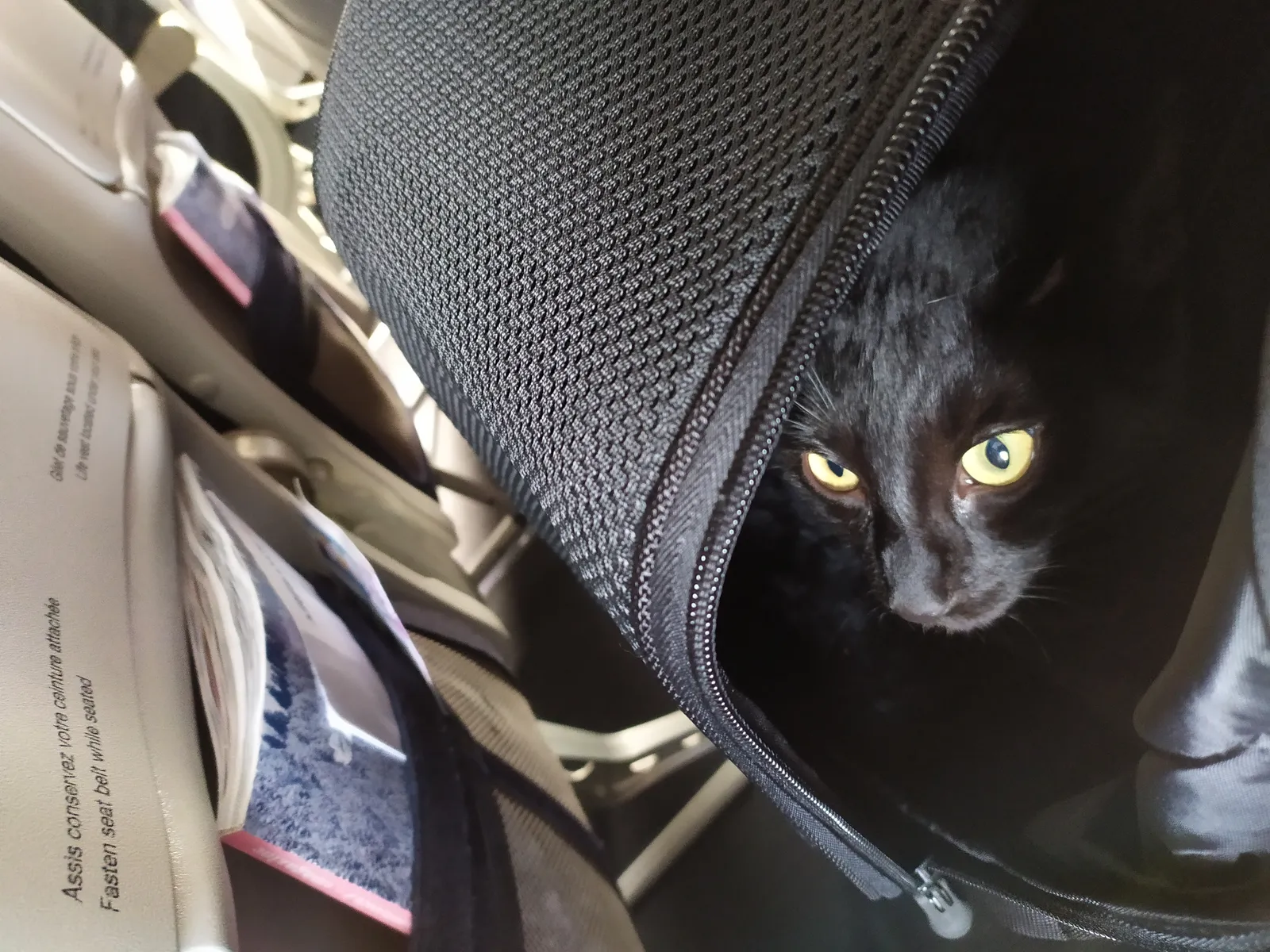
- The container may not exceed 35cm x 30cm x 20cm, and pet and container together must not exceed 6kg.
- Checked baggage: dogs, cats aged 10 weeks or older, and ornamental birds. Pet and cage together must not exceed 32kg, or the pet goes as cargo.
Vietjet
- The pet-in-cabin service covers a dog or cat on Vietnam domestic flights, in all classes except Business class.
- A cage with the pet may weigh at most 7kg and measure 35cm x 30cm x 20cm. The limit is 3 cages per flight, 1 pet per cage and 1 pet per passenger.
- The charge is VND 4,000,000 per cage per pet, excluding VAT.
- Pets must be at least 10 weeks old, and pregnant pets are not allowed. The cage sits on the floor in front of your seat, not on a seat or in the overhead compartment.
After landing: vets in Nha Trang
Once you are in Nha Trang, see Vets in Nha Trang for three clinics compared by hours. Under the Law on Animal Health, animals must receive compulsory disease prevention as the veterinary agency requires.
For the airport and your onward trip, read Cam Ranh Airport to Nha Trang and Cam Ranh Airport Arrival.
Checklist before you fly
- The exporting country’s quarantine certificate.
- The number of pets: no more than 2 for the direct route.
- A copy of the certificate for the declaration file, confirmed by the business.
- Form 19 and the Department’s written consent, if you bring more than 2.
- VND 40,000 for the import certificate, at the 50% rate to 31 December 2026.
- The airline’s carrier size and weight limits.
- The pet’s age: at least 10 weeks for either airline’s cabin service.
Read next
Settling in as a family? Read Vets in Nha Trang, Nha Trang with kids, marriage registration in Nha Trang and birth registration in Nha Trang.
Photos and clips uploaded to Google Maps (Cam Ranh International Airport on Google Maps (opens in a new tab)) by @Winne Chen, @Minh Hiếu Lê, @Michael Hoang, @sun 9, @DMITRIY FEDOROV, @Trungnguyen Le, @Auld F. Art.
Step by step
- Check how many pets you bringNo more than 2 pets travel on the direct route. More than 2 means registering first with the Department of Livestock Production and Animal Health.
- Get the exporting country's quarantine certificateThe animal must be healthy and from an area or facility recognised as free of the disease or of dangerous diseases. It needs a quarantine certificate from the exporting country's competent authority.
- Declare the pet at the borderDeclare the import quarantine directly at the animal quarantine agency at the border checkpoint.
- Pass the checkThe agency checks the certificate, examines the animal and vaccinates it if it has not been protected against dangerous infectious diseases. It takes a test sample if the animal is suspected of an infectious disease.
- Collect the import certificateWithin 1 working day without a sample, or 5 with one. It needs a complete file, a healthy animal vaccinated as required and, with a sample, a negative result.
- Pay the feeVND 40,000 per certificate, charged at 50% until 31 December 2026.
Not confirmed: Which border animal quarantine agency covers Cam Ranh airport, and where its desk sits, was not found on an official page. Rabies timing and microchip rules are not set in the circular and usually come from the exporting country. Whether the VND 100,000 clinical-examination fee applies to one hand-carried pet is unclear.
Common questions
How many pets can I declare directly at the border?
No more than 2 animals kept as pets, for household use, or travelling with you, and not on the banned list. You declare the import quarantine directly at the animal quarantine agency at the border checkpoint.
What papers does the pet need before the flight?
The animal must be healthy and come from an area or facility recognised as free of the disease or of dangerous diseases. It needs a quarantine certificate issued by the exporting country's competent authority.
How long does the import certificate take?
Within 1 working day of the quarantine being carried out if no test sample is needed. Within 5 working days if a sample is tested and the result is negative.
How much does it cost?
The certificate fee is VND 40,000 per certificate. From 1 July 2025 through 31 December 2026 it is charged at 50% of that rate.
What happens if I do not declare my pet?
Not registering or declaring quarantine on import is fined VND 4,000,000 to 5,000,000 under the penalty decree. That decree takes effect on 1 August 2026.
What if I bring more than 2 pets?
You register first with the Department of Livestock Production and Animal Health, using form 19. Written consent follows within 4 working days of a complete file.
Which office handles pets at Cam Ranh airport?
The border animal quarantine agency is the regional animal health sub-department, or a provincial veterinary authority it authorises. The Department's consent letter is also sent to the border agency.
Is a rabies vaccination date required?
The circular's traveller rule sets no vaccination date. The border agency vaccinates an animal not yet protected against dangerous infectious diseases. Ask the exporting country's vet and your airline.
Can my pet fly in the cabin?
Vietnam Airlines accepts dogs and cats aged 10 weeks or older in the cabin, with pet and container weighing no more than 6kg. Vietjet accepts a dog or cat in the cabin on domestic flights.
Where is a vet in Nha Trang after arrival?
See the page on vets in Nha Trang for three clinics compared by hours and phone number.
Read next
General information checked against the sources listed above, not legal advice for your situation. Rules and office practice change; confirm with the immigration office or a licensed adviser before you act. See how guides are checked.
Spotted an error? Report it.