Po Nagar Cham Towers: Hours, Festival and Visit Guide
Po Nagar Cham Towers open 06:00 to 17:30 on the Khanh Hoa tourism portal, while Google Maps shows 6 AM to 6 PM. Plan for the narrower one. Entry costs VND 30,000 per person under a provincial resolution, and visitors follow the board's rules. The yearly festival runs from the 20th to the 23rd day of the 3rd lunar month.
Po Nagar Cham Towers open 06:00 to 17:30 on the Khanh Hoa tourism portal. Google Maps, checked on 12/10/2026, shows 6 AM to 6 PM every day. Plan to finish by 17:30, the narrower window.
The yearly festival runs from the 20th to the 23rd day of the 3rd lunar month. Reaching the towers means climbing 36 steep steps from the mandapa.
The two sources differ. The tourism portal’s 17:30 is the earlier closing time, so use it when planning.
Po Nagar opening hours from two sources, the yearly festival and the climb.
Entry
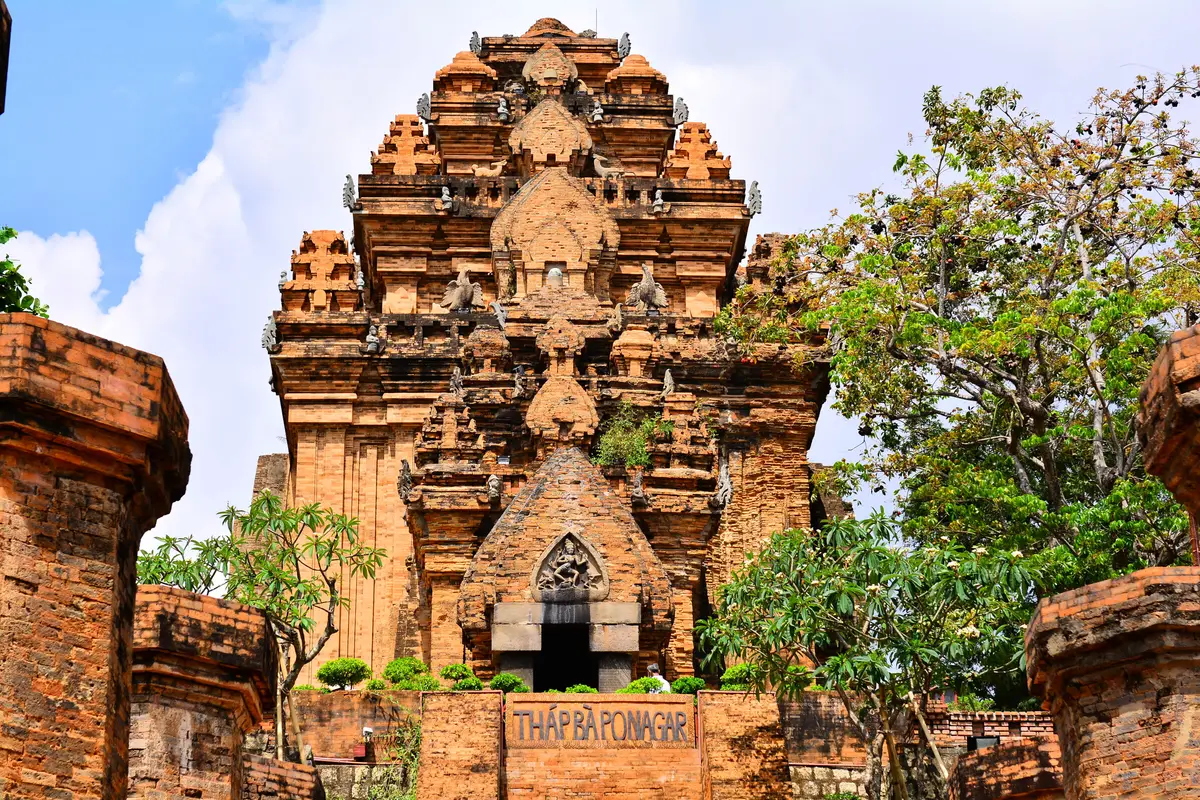
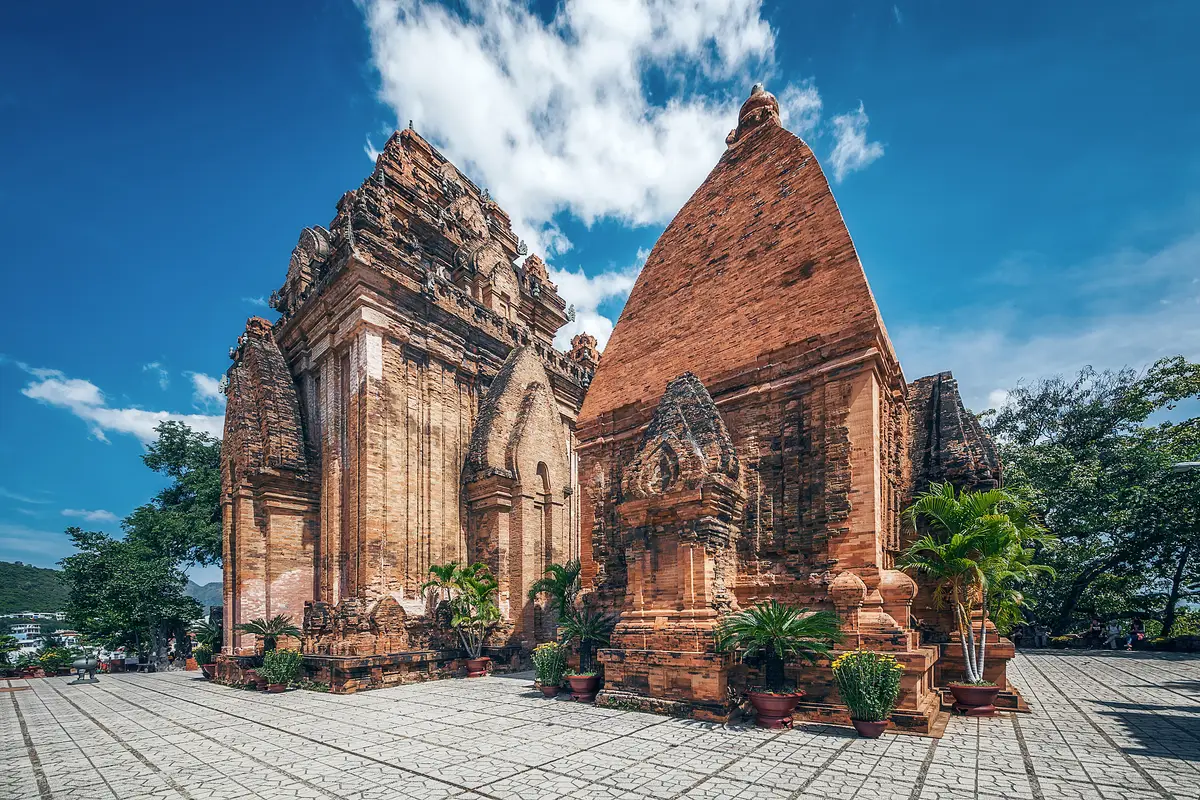
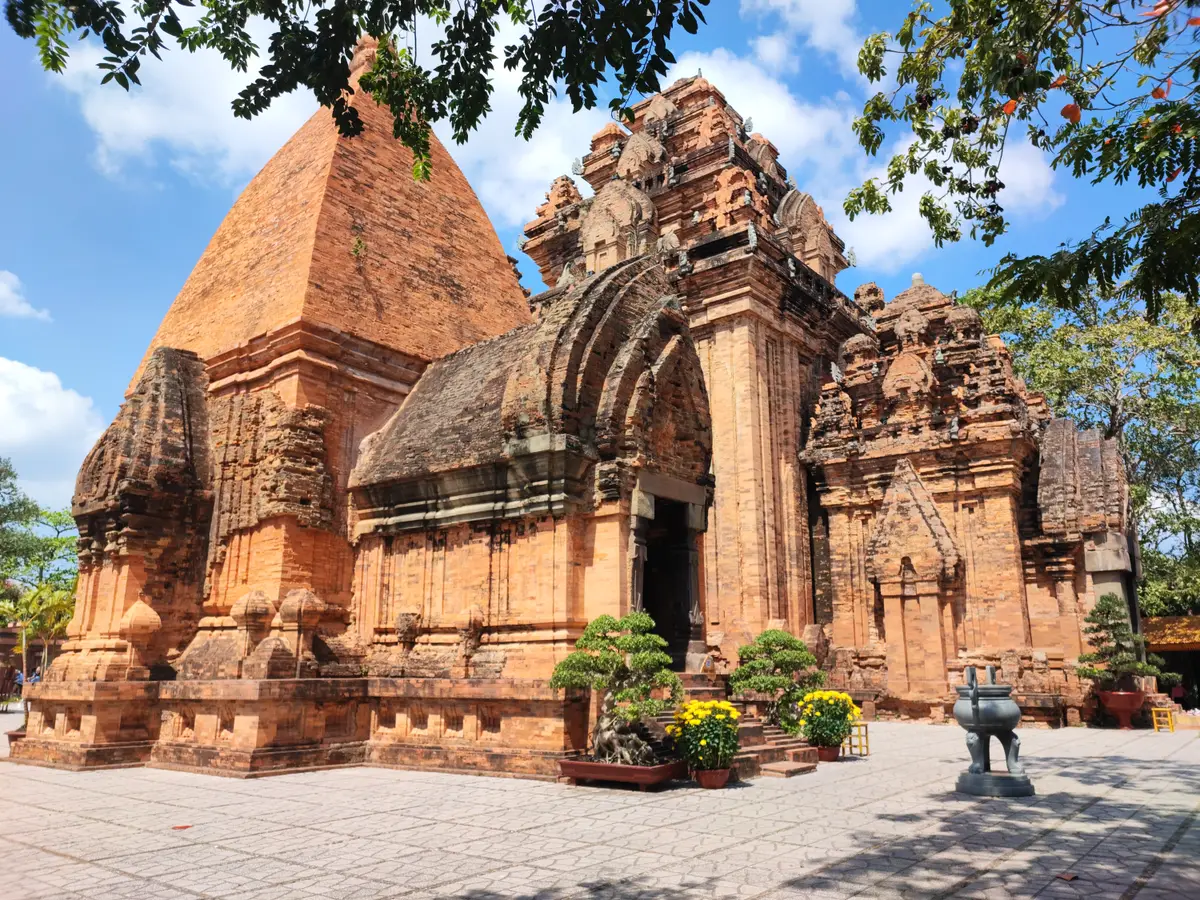
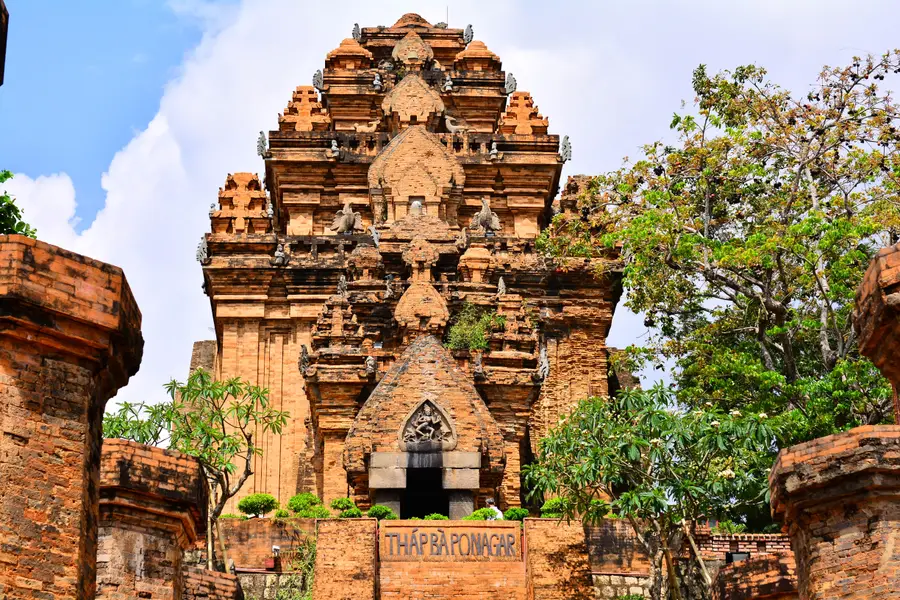
A Po Nagar tower seen from the entrance area.
Visitors must buy an entrance ticket to enter the towers and follow the management board’s rules. The Khanh Hoa People’s Council set the fee at VND 30,000 per person per visit, in force from 01/01/2023. Children are exempt, and the resolution sets no age. Permanent residents of Khanh Hoa are exempt as well.
Two undated blogs list lower prices, VND 21,000 and VND 22,000. The resolution is the official figure; carry cash for the window in case the price differs.
Dress code
No current official page states a dress rule. A 2017 VnExpress report says the site kept nearly 100 free ao dai for visitors in short or revealing clothes to borrow before entering the main hall.
The management board said each tower has a notice board with words and drawings about the rules. Guards told revealing outfits to change first. That report is nine years old. Wear covered shoulders and knees to avoid the question, and read the notice at the tower.
Festival
The Po Nagar festival is held every year from the 20th to the 23rd day of the 3rd lunar month. Residents and visitors join the traditional rituals together during the festival. The portal’s programme list includes spirit dance and chanting (Mua Bong, hat Van); it gives no performance times.
What to see at Po Nagar Cham Towers
The complex is the religious centre of the goddess Po Nagar, the Mother of the land for the Cham people. It was built roughly from the middle of century VIII to century XIII.
The climb
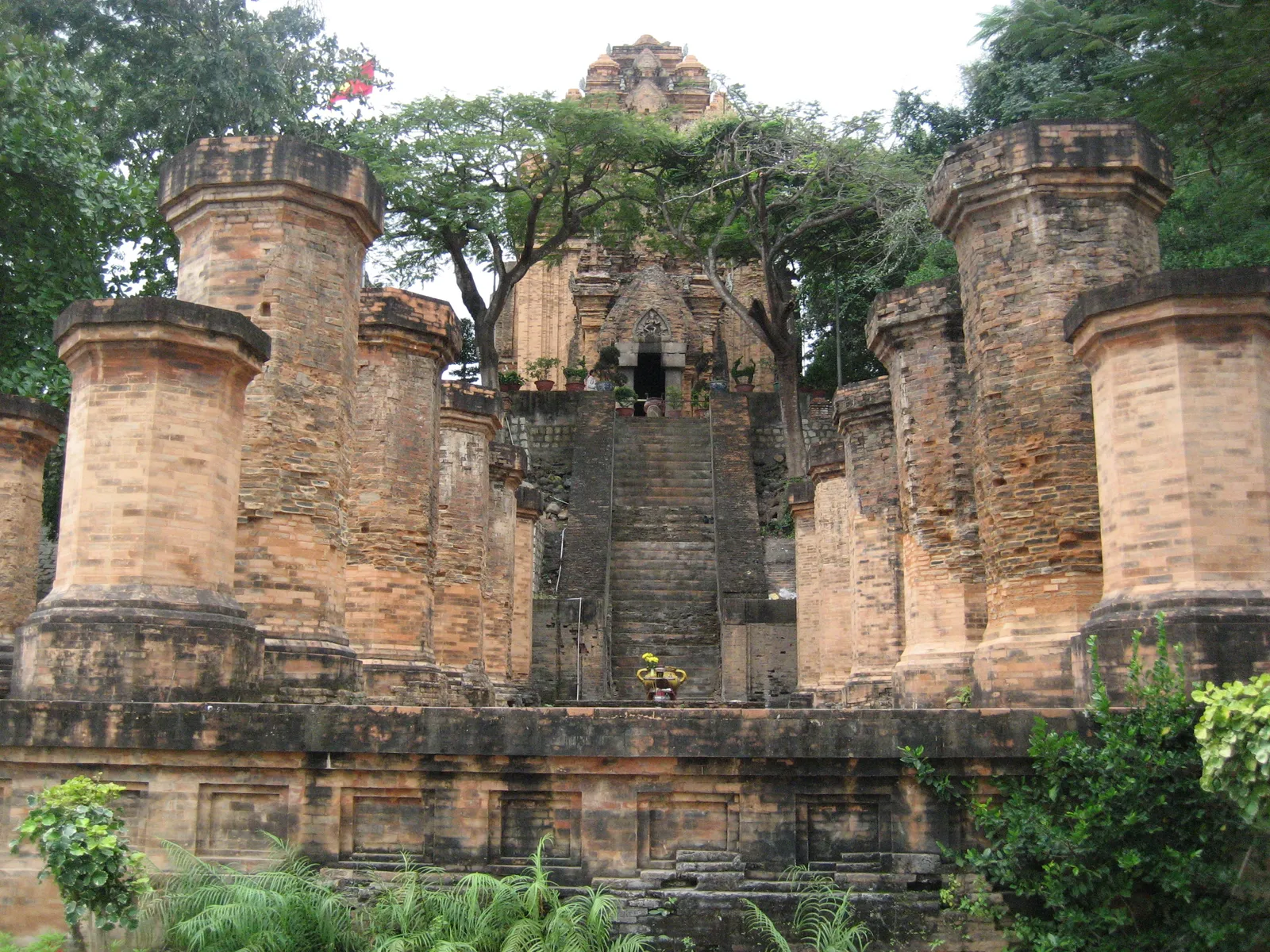
The gate, the mandapa and the main tower form a straight east-west axis. From the mandapa up to the temple area there are 36 steep steps. A stone path on the south side of the hill was added later for visitors.
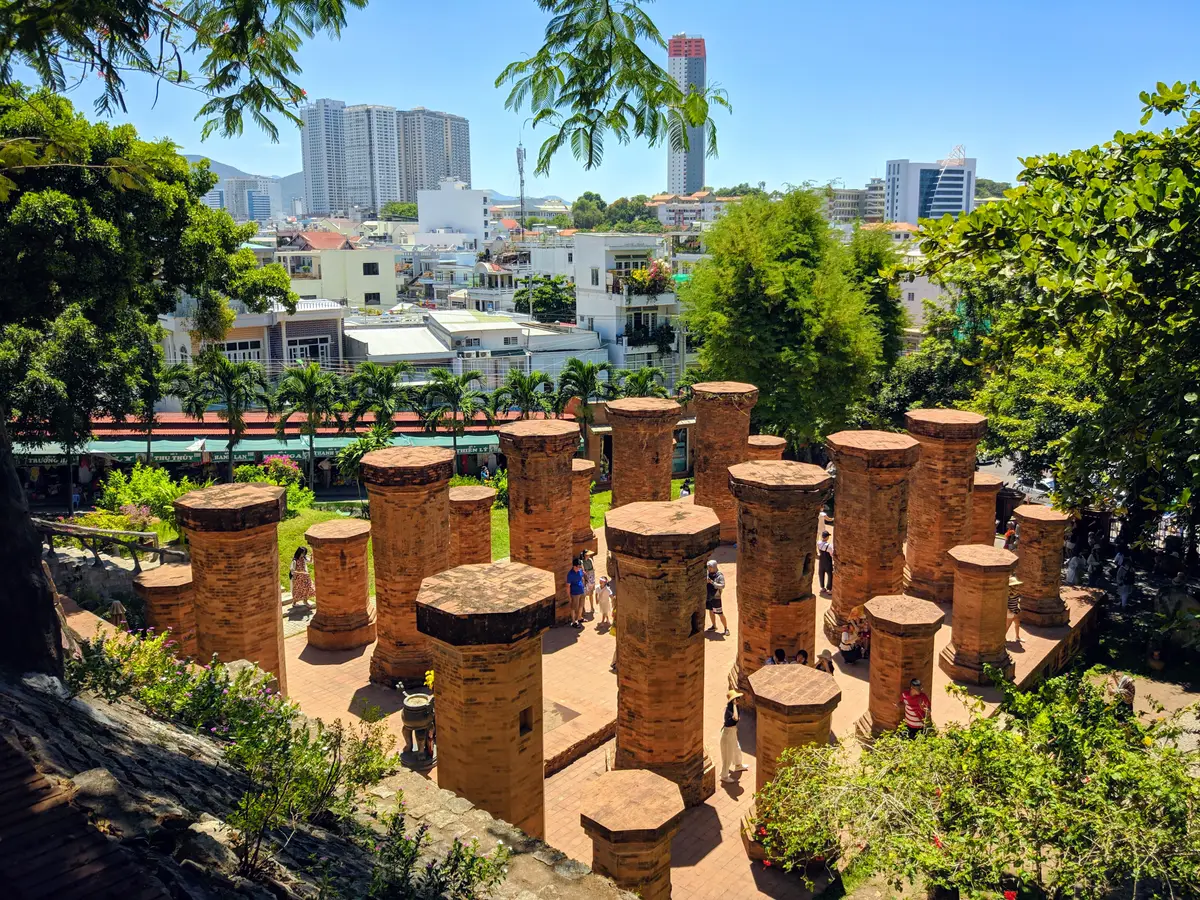
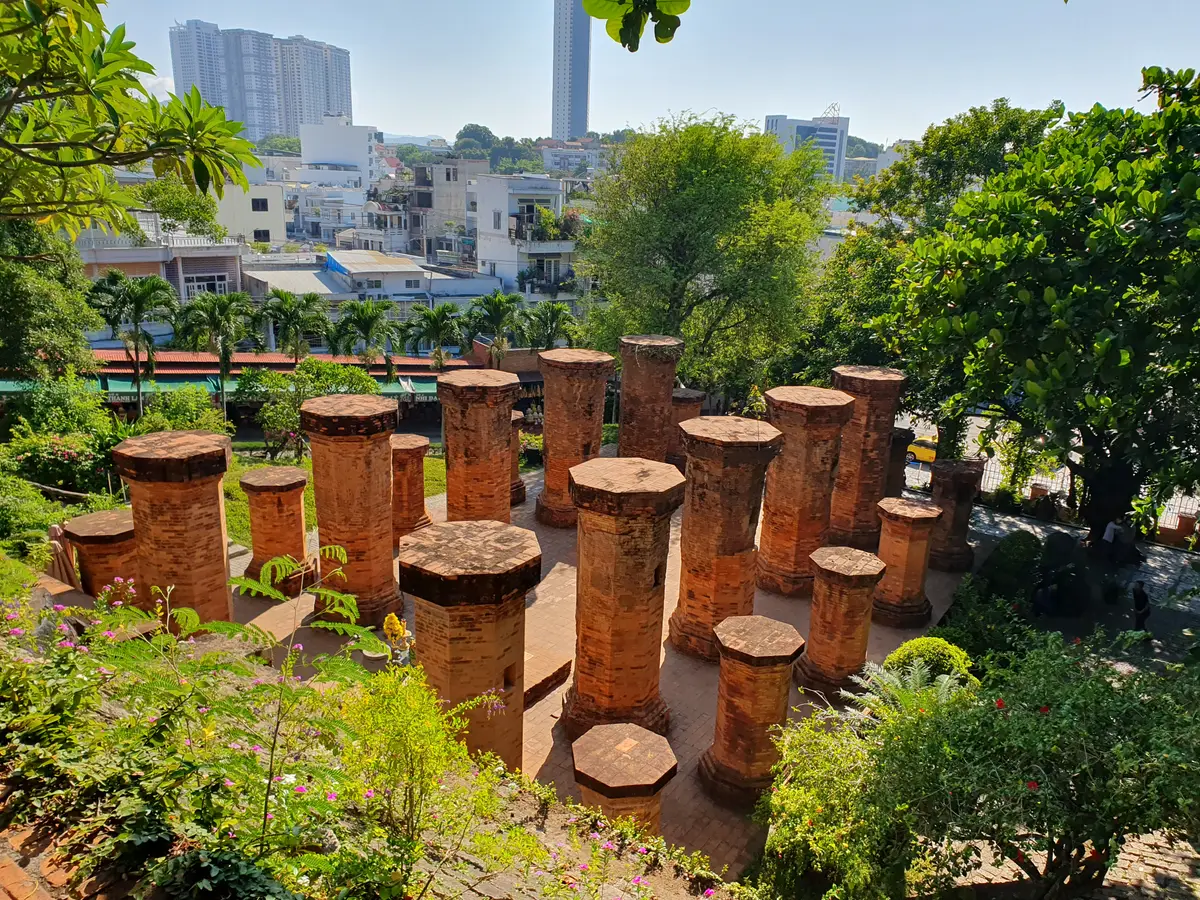
The brick pillars of the mandapa, the hall at the foot of the climb.
Tradition says worshippers climb bent forward and walk down backwards, so as not to turn their back to the temple.
The main tower
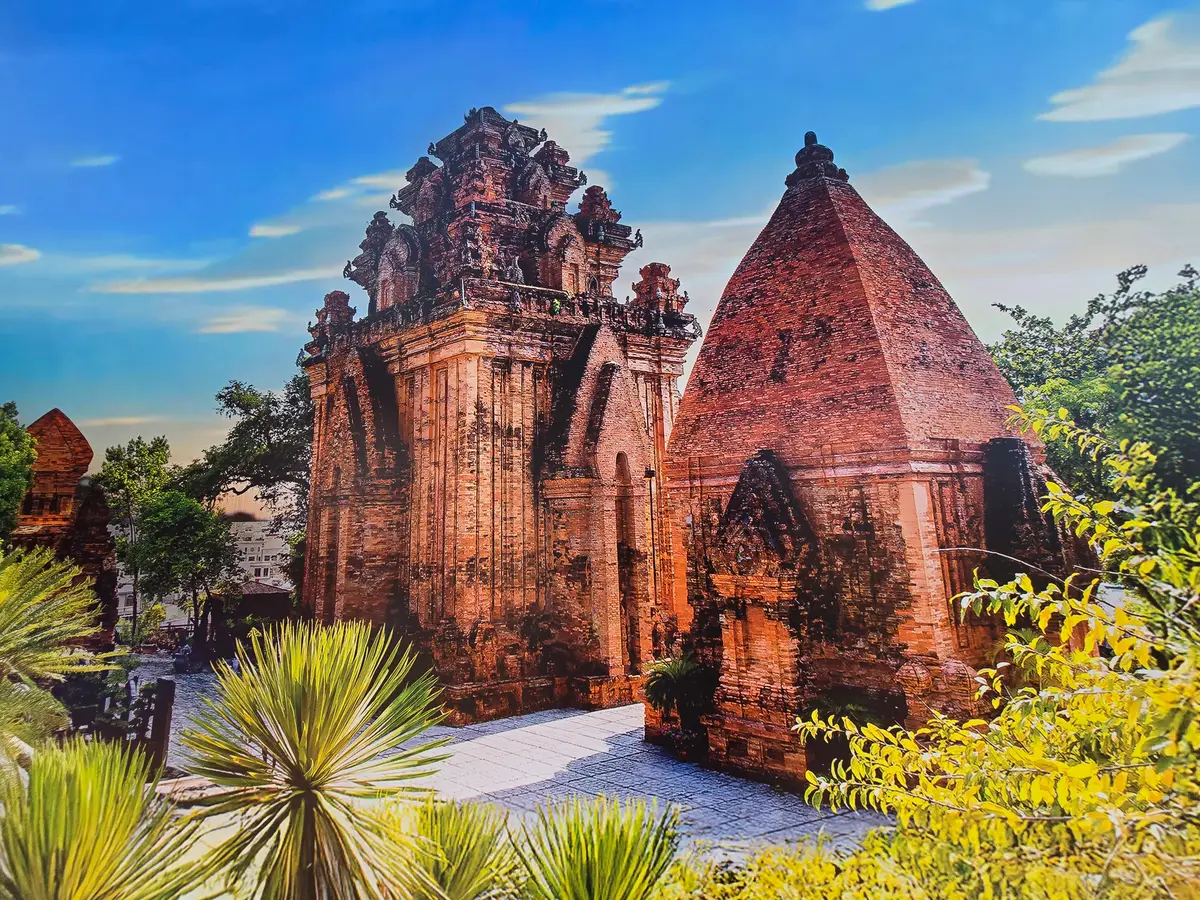
The main tower and a smaller tower stand next to each other on the hilltop.
The main tower is about 23 metres tall. It has three parts, base, body and roof, and the roof has three tiers that shrink towards the top. Only the east door is open; the other three are false doors.
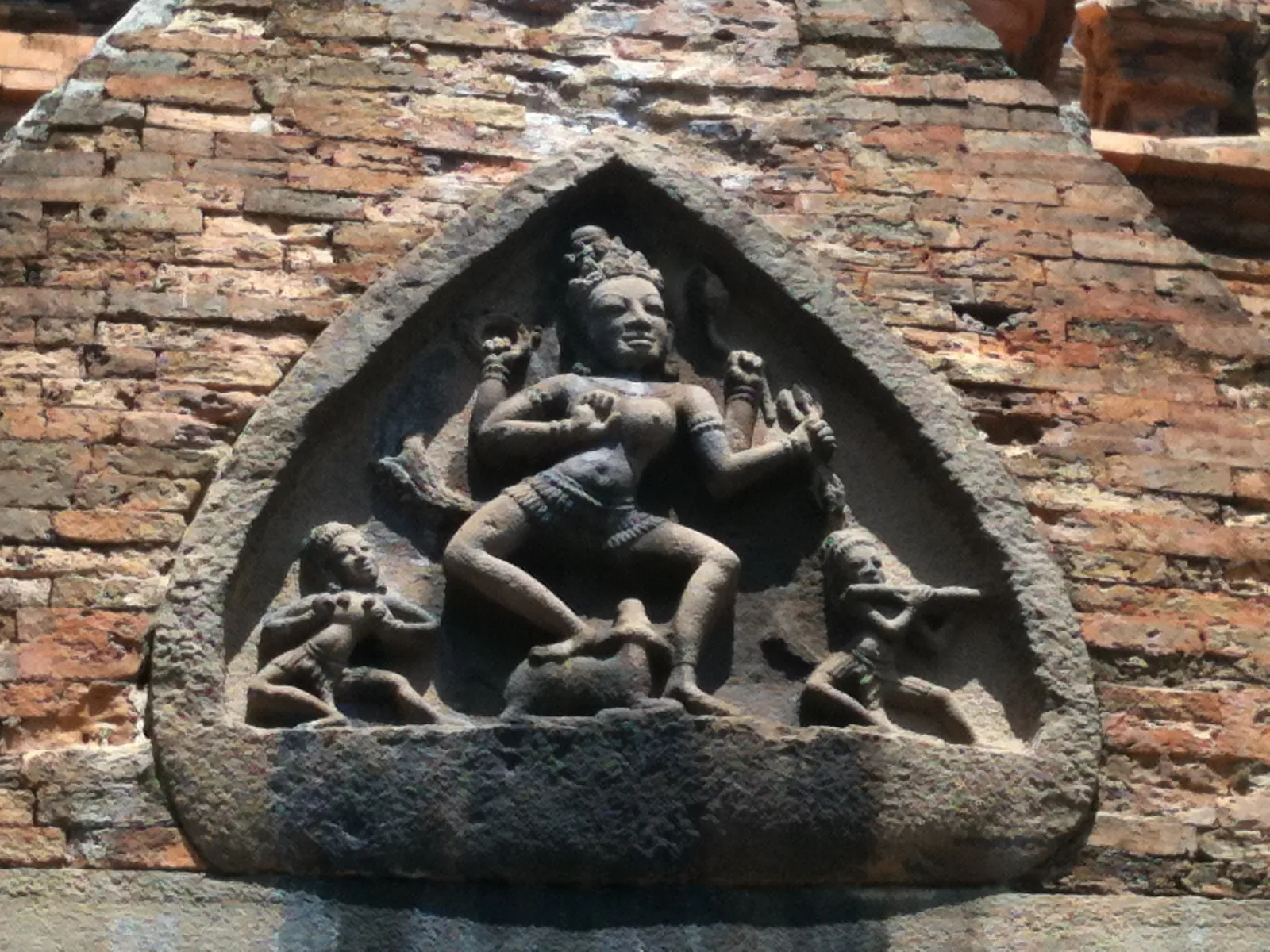
The door lintel carries a relief of Shiva dancing on the bull Nandin. The relief dates from century XI and is described as one of the finest Cham reliefs kept in Vietnam.
The smaller towers
The hilltop courtyard with the towers in afternoon light.
The South Tower is about 18m tall and dates from century XIII. Vietnamese visitors treat it as the shrine of Ong Nam Hai, husband of the Holy Mother Thien Y A Na.
The Southeast Tower is about 7m tall with a boat-shaped roof. A Culture newspaper report gives it as 7.1 m, dated about the 11th to 12th century and linked to Skandha, a son of Shiva. The provincial portal puts it later, in century XIII, so the sources disagree on its age.
The Northwest Tower stands behind the main tower, is about 9m tall and has a saddle-shaped roof. The same report calls it the only tower fairly intact in architecture and decoration, and says Vietnamese tradition names it the Co Cau tower for the Holy Mother’s children. Vietnamese visitors call the South Tower Thap Ong, the husband’s tower.
The mandapa
The mandapa has four rows of octagonal fired-brick columns, 10 large and 12 small. The present mandapa dates from about the 11th-12th century, the same as the last phase of the main tower. Of the original gate tower, mandapa and temple-tower area, 5 structures remain on two levels.
What the Cham towers worship
The main tower was first built in the 8th century and rebuilt in the 11th. It holds a statue of the goddess Po Nagar. The South Tower holds a linga-yoni and is worshipped as Cri Cambhu, another name for Shiva.
The Southeast Tower holds a stone linga-yoni. Vietnamese belief treats it as the shrine of the Holy Mother’s foster parents. The Northwest Tower worships Ganesa and is the only one fairly intact in architecture and decoration.
Inscriptions and the statue
The dates below come from Wikipedia, citing the scholars Coedes, Maspero and Ngo Van Doanh, not an official page.
A stele dated 781 records King Satyavarman restoring the damaged temple. Steles say the king restored the linga in 784. A stele of 918 orders a golden statue of the goddess, which later steles say the Khmer stole in 950. In 965 King Jaya Indravarman I replaced it with a stone statue.
The central image is a stone statue of the goddess, 1.2 m tall, seated cross-legged with ten hands holding symbolic items.
The Culture newspaper adds that the brick-making method is so unusual that questions about it remain unanswered. Steles from the feudal period also stand on site to introduce the monument.
Details to look for
The roof tiers of the main tower carry figures of geese, goats, elephants and praying monks. The east door is held by two stone pillars with inscriptions in old Cham and Sanskrit. On the lintel relief, Shiva dances with one foot on the bull Nandin, between two musicians.
The false doors of the Northwest Tower still carry the Garuda bird, the god Kala and the goddess Indra riding an elephant.
History and status
The provincial tourism centre calls Po Nagar the largest Cham architectural complex in Vietnam today. The Khanh Hoa provincial gazette ran the headline on 04/02/2025 that Po Nagar was ranked a special national relic.
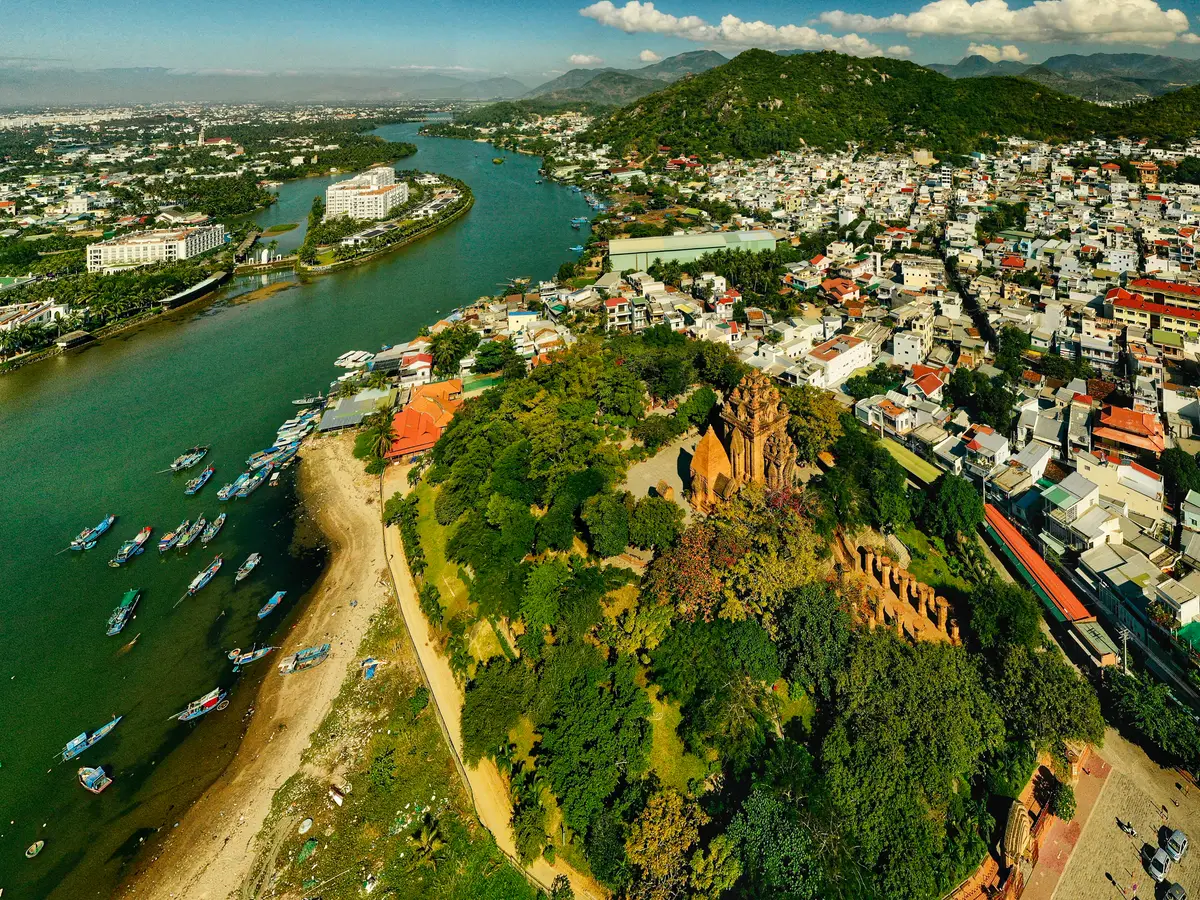
The Cu Lao hill beside the river mouth, seen from the air.
The towers stand on Cu Lao hill near the Cai river mouth, facing Nha Trang sea. The hill is a little over 20 m above sea level, and the site covers 17,683.6 m2. The area belonged to the old Kauthara region, where landscape, settlement, trade and belief meet.
A press report says the relic was ranked a national relic in 1979 and that the Prime Minister signed a decision on 17.01.2025 raising it to special national relic. The Cham culture portal says the Vietnamese have kept the site as a place to worship Thien Y Thanh Mau. From 1653, Vietnamese and Cham coexistence marked the growth of that worship alongside the Cham Mother of the Land.
The festival is a national intangible cultural heritage.
Who it suits (and who should skip it)
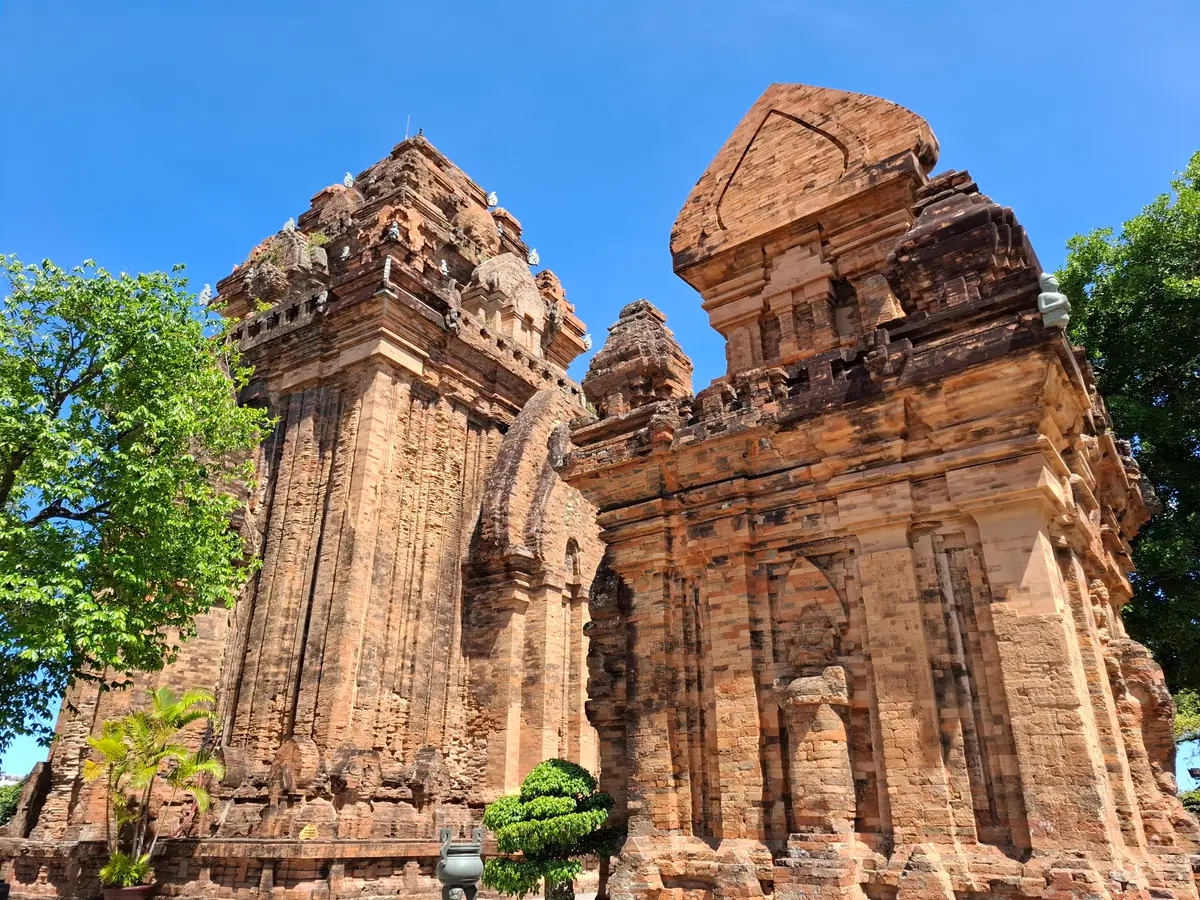
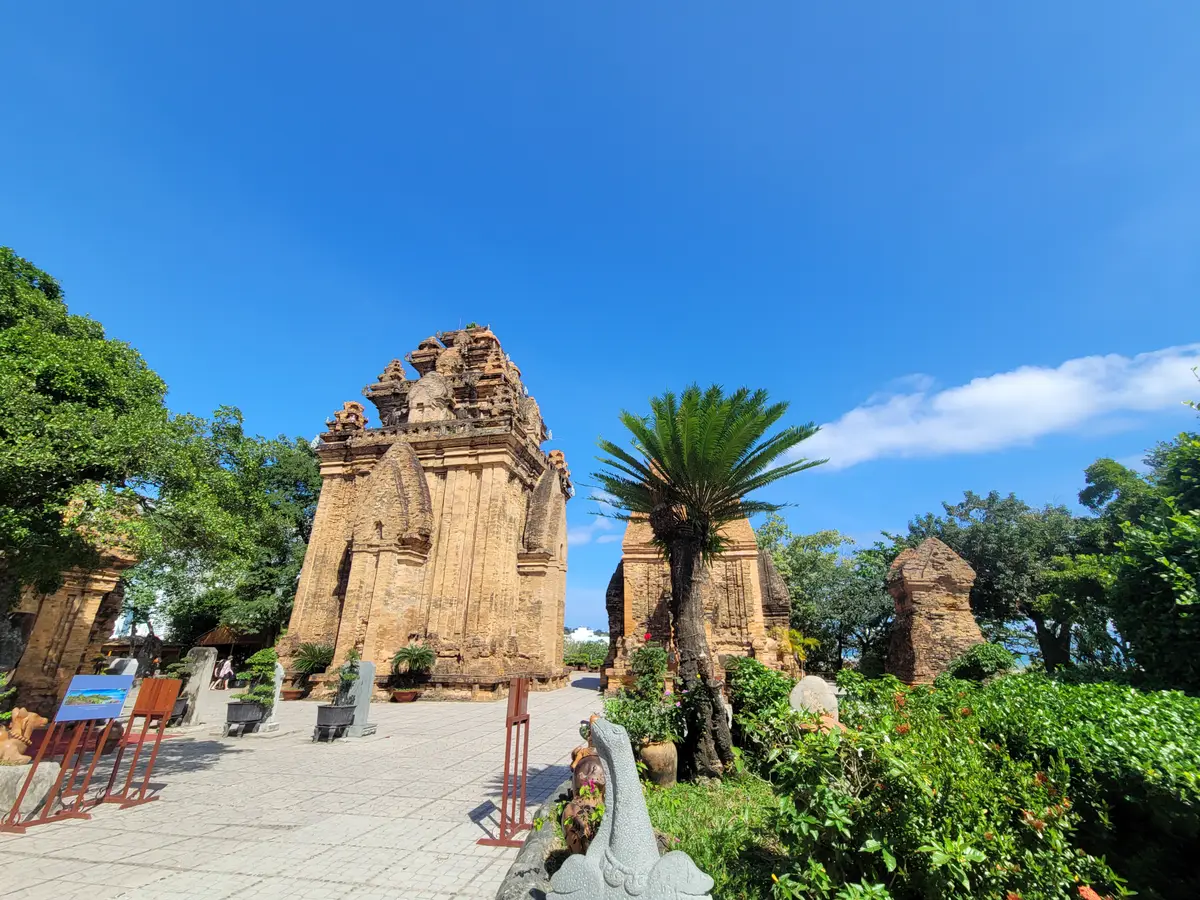
The north tower and the south tower from the courtyard.
Visitors interested in Cham architecture: the complex dates from century VIII to century XIII.
Early risers: the portal gives an opening time of 06:00.
Families and tour groups: the head of the management board said over 21,000 visitors came in the 4-day New Year 2026 holiday, so expect crowds on holidays.
Photographers: “good place to take pictures” is the top Google review topic, with 811 mentions. Reviews from the last 6 months were checked on 13/10/2026: 4 of 5 praise the site as well preserved, restored or maintained.
Skip it if you dislike crowds or entrance queues: “entrance fee” (761) and “crowded” (309) are among the listed review topics.
Skip it if steep steps are a problem: 36 steep steps lead up to the temple area.
Plan around the festival dates if you want to see it, or avoid it: 20th to 23rd day of the 3rd lunar month.
How to get to Po Nagar Cham Towers
The approach to the towers.
The towers stand on Cu Lao hill, about 2km north of the centre, in Bac Nha Trang ward. The Maps listing gives the address as 61 Hai Thang Tu, Bac Nha Trang. Open in Google Maps (opens in a new tab).
Xanh SM lists its Nha Trang taxi opening fare for the first 2 km at 29,500 VND. It lists 18,000 VND per km from the next km up to km 12. The table is for reference only and may change. Xanh SM puts Po Nagar about 10-15 minutes from Dam Market by taxi or motorbike.
By bus
VinWonders lists city bus route 04 as Hon Xen - Thap Ba - Le Thanh Ton - Cau Da - Vinpearl port, running 5:10 - 19:10. The reference fare on the inner-city routes is VND 7,000 per trip.
When to go and how long
Arrive before the 17:30 closing time on the portal. The 20th to 23rd day of the 3rd lunar month is festival time. VinWonders says it usually falls in April or May.
Rain is the main weather risk. The Nha Trang station averages 17.6 rainy days in October and 18.0 in November, against 4.1 in March. VinWonders calls October to December the rainy season, with mostly light sudden rain. No source states how long a visit takes.
The paved courtyard in front of the Po Nagar sanctuary.
Leave by 17:30, the earlier of the two published closing times.
Buy an entrance ticket at the gate (VND 30,000 per the provincial resolution) and follow the management board’s rules.
Cover shoulders and knees; a 2017 report says loan ao dai were kept for revealing clothes.
Wear shoes that grip: the way up has 36 steep steps.
Expect crowds on public holidays: 21,000 visitors came in 4 days at New Year 2026.
Check the lunar calendar for the festival, held on the 20th to 23rd day of the 3rd lunar month.
Photos and clips uploaded to Google Maps (Po Nagar Cham Towers on Google Maps (opens in a new tab)) by @Sang Nguyen Hoang, @Quang Nhật Lê (fuzeless), @집짓는삵, @tmhuy, @Philip John Deans (Zeno Images), @Keawta Solo, @이윤숙 (vivian), @Khoa Khánh, @Héctor valladares.
1Choose your arrival timeAim to be out by 17:30, the narrower of the two published closing times.
2Buy an entrance ticketVisitors must buy an entrance ticket and follow the management board's rules.
3Climb to the towersFrom the mandapa up to the temple area there are 36 steep steps.
Not confirmed: Dress rule: no current official text exists online, so read the notice at the tower before you go in.
Common questions
What time does Po Nagar open and close?
The Khanh Hoa tourism portal gives 06:00 to 17:30. Google Maps, checked on 12/10/2026, shows 6 AM to 6 PM every day.
Do I need a ticket?
Yes. Visitors must buy an entrance ticket to go inside and follow the management board's rules. The provincial resolution sets VND 30,000 per person per visit.
When is the Po Nagar festival?
It is held every year from the 20th to the 23rd day of the 3rd lunar month.
How many steps are there to the towers?
There are 36 steep steps from the mandapa up to the temple area.
How many people visit Po Nagar?
The head of the management board said over 21,000 visitors came in the 4-day New Year 2026 holiday.
Which tower is the best preserved?
Bao Van hoa says the Northwest Tower is the only one fairly intact in architecture and decoration.
How many structures are left?
Bao Van hoa says 5 structures remain, on two levels: the mandapa and the temple-tower area.
Is Po Nagar a special national relic?
The Khanh Hoa gazette ran that headline on 04/02/2025. Bao Van hoa says the Prime Minister signed the ranking decision on 17.01.2025.
How old are the towers?
The complex was built roughly from the middle of century VIII to century XIII.
How much is the Po Nagar ticket?
VND 30,000 per person per visit under a provincial resolution in force from 01/01/2023. Children are exempt, with no age set. Khanh Hoa permanent residents are exempt too. Older blog prices of VND 21,000-22,000 are lower than the resolution.
General information checked against the sources listed above, not legal advice for your situation. Rules and office practice change; confirm with the immigration office or a licensed adviser before you act. See how guides are checked.