Temporary Residence Card in Nha Trang: Eligibility, Fees
A temporary residence card is open to foreigners staying in Vietnam who qualify for one of the listed visa symbols. It costs US$145, US$155 or US$165 by validity. Processing takes 5 working days from a complete dossier. In Nha Trang, the provincial immigration office takes it.
On this page
- Which case are you?
- Who is eligible
- How long the card lasts
- Fee by validity
- Who files the application
- What goes in the dossier
- Filing in Nha Trang
- Processing and collecting the card
- Step by step: from visa to card
- Getting the right visa symbol first
- Why a card request fails
- Card or stay extension?
- Card versus the address declaration
- Step by step
- Common questions
A temporary residence card (TRC) is issued to a foreigner permitted to reside in Vietnam for a fixed period, and it is valid in place of a visa. It is a separate procedure from a stay extension, with its own forms. A sponsor files it, not you.
Which case are you?
- Work in Vietnam on an LD1 or LD2 visa: your employer files as sponsor. The card runs up to 2 years and costs US$145.
- Invest on a DT1 visa: your sponsor files. The card runs up to 10 years.
- Hold an NN1, NN2, DT3 or TT visa: the card runs up to 3 years.
- Hold a DN1 or DN2 visa: neither symbol is on the list, so you get no card on it.
- Hold a UD1 or UD2 visa: Law 118/2025/QH15 added both symbols, and the card runs up to 10 years.
- Belong to a diplomatic mission, consulate or UN office, or are their family or staff: you get an NG3 card. The mission files with the Ministry of Foreign Affairs.
- Arrived as a tourist: tourism is the purpose of a DL visa, and DL is not on the list. See how to extend your visa in Nha Trang.
Who is eligible
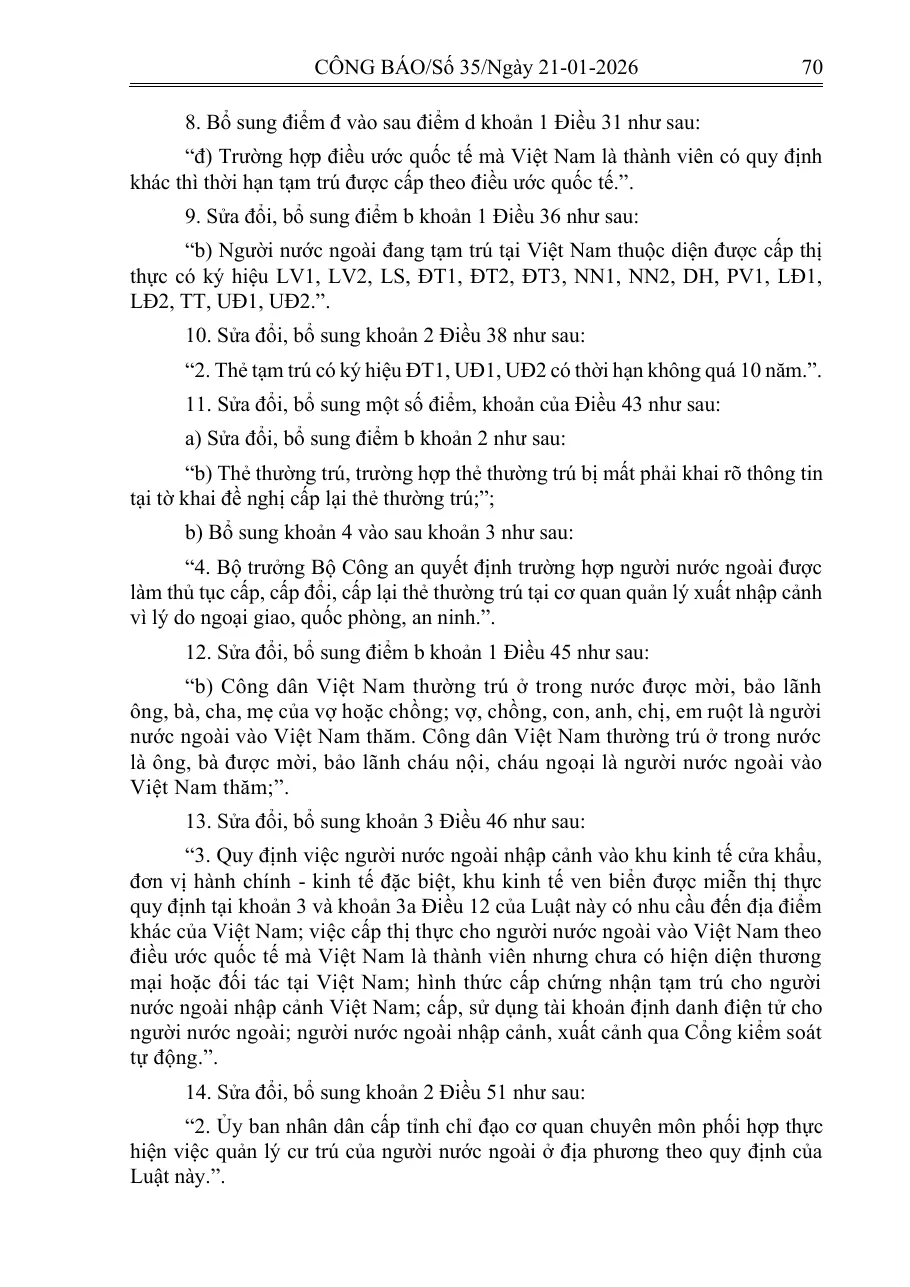
Compare the symbol on your visa (for example LD1) with this list of symbols that qualify for a card:
- LV1, LV2, LS, DT1, DT2, DT3.
- NN1, NN2, DH, PV1, LD1, LD2.
- TT, UD1, UD2.
You must be a foreigner staying in Vietnam who falls in the category eligible for one of those visas. The card carries a symbol matching your visa symbol.
A work permit holder is normally issued a matching LD1 or LD2 labour visa, and both of those symbols qualify for a card. Law 118/2025/QH15 added UD1 and UD2 holders to the eligible list. It took effect on 1 July 2026.
How long the card lasts
Whatever the symbol, the card must run at least 30 days shorter than the time left on your passport. Each term below is a maximum, not a promise.
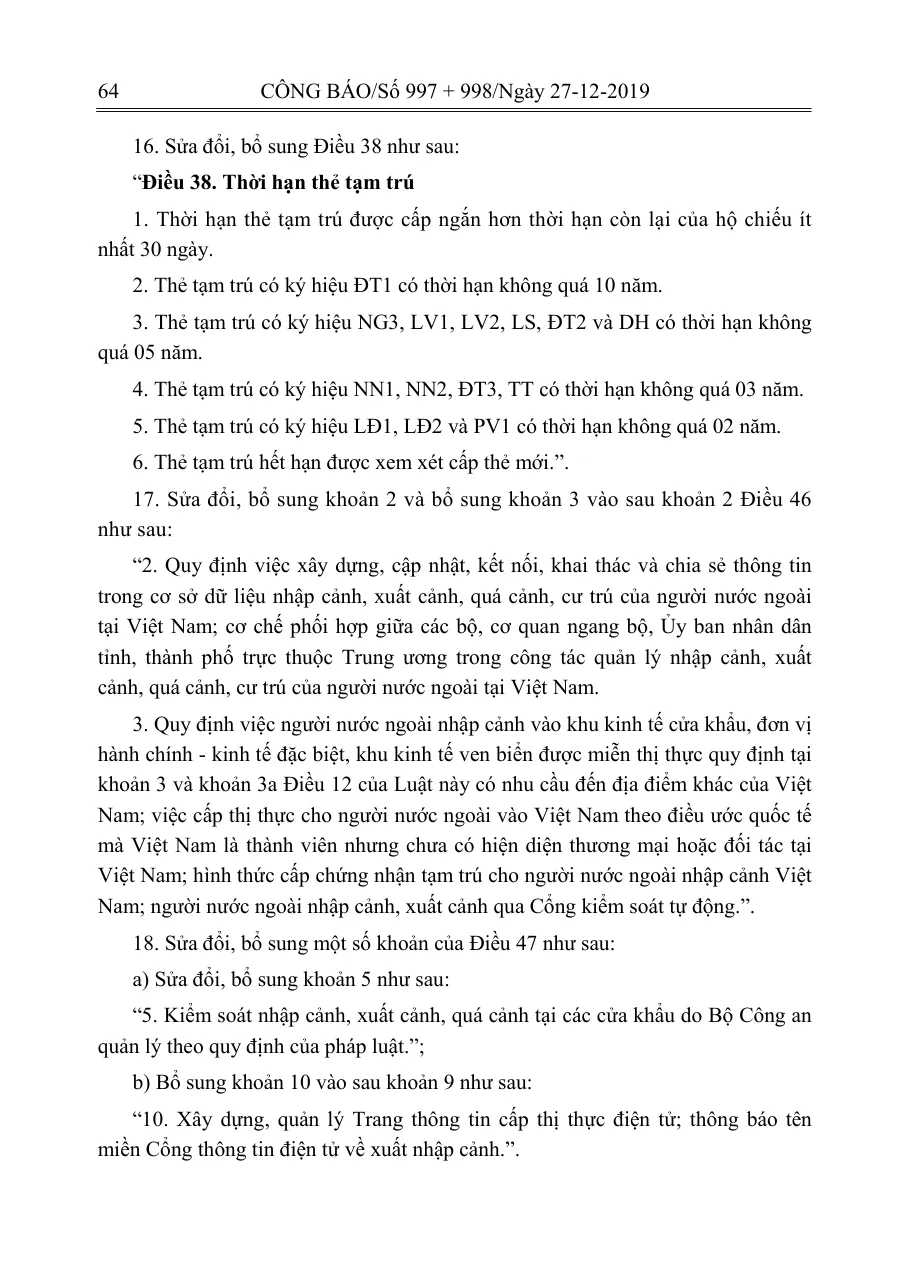
| Card symbol | Maximum validity |
|---|---|
| NG3, LV1, LV2, LS, DT2, DH | 5 years |
| NN1, NN2, DT3, TT | 3 years |
| LD1, LD2, PV1 | 2 years |
| DT1, UD1, UD2 | 10 years |
When a card expires, the holder may be considered for a new card. Renewal is a fresh issuance, not an automatic rollover.
Fee by validity
| Validity | Fee per card |
|---|---|
| Up to 2 years | US$145 |
| Over 2 to 5 years | US$155 |
| Over 5 to 10 years | US$165 |
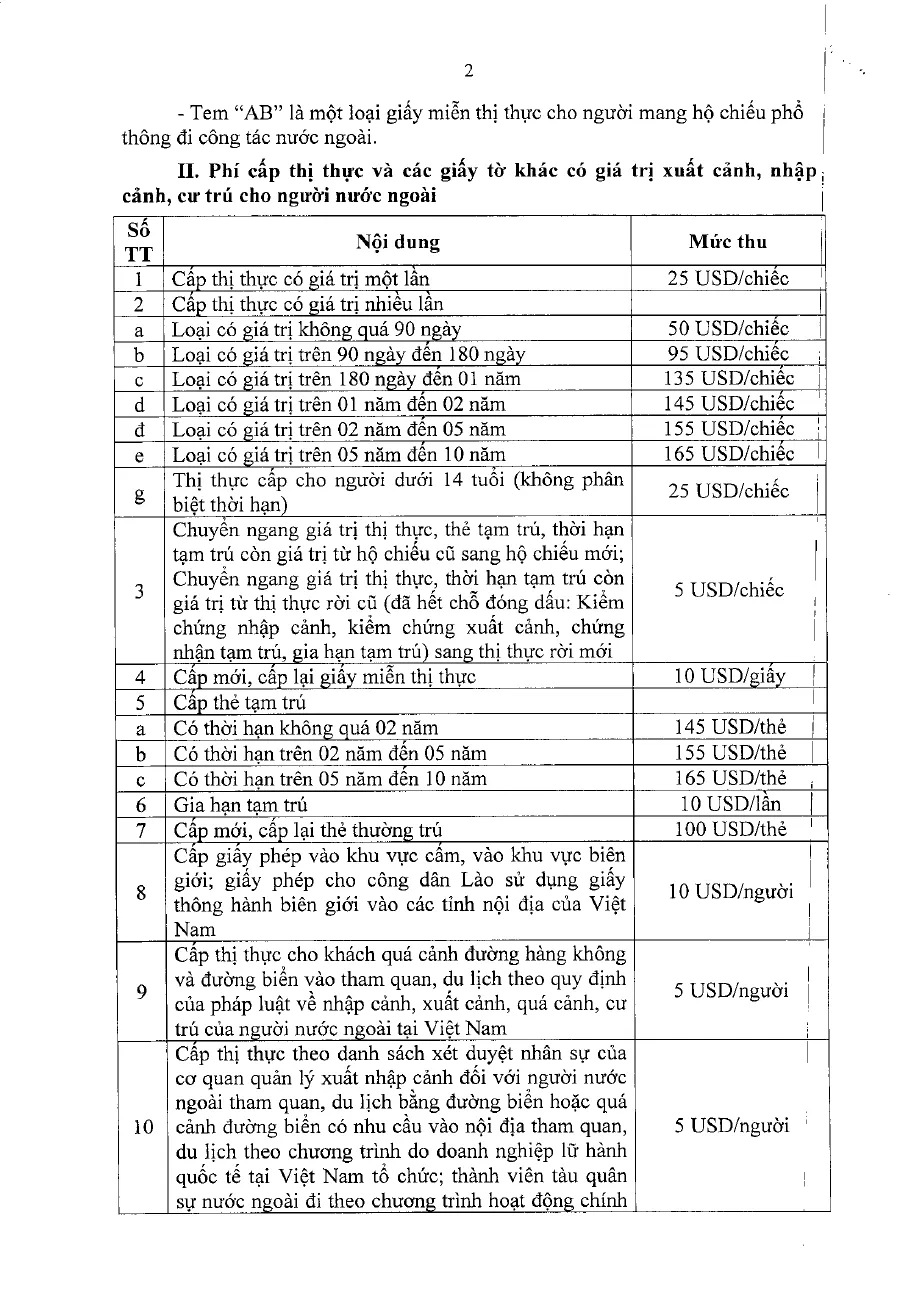
The fee follows the term you are granted, not the longest term your symbol allows. A fee set in US dollars can be paid in dollars or in the dong equivalent.
Staff of foreign missions, consulates and international organisations, and their spouse and children under 18, may be exempt on a reciprocal basis. If the applicant is not eligible or refuses to accept the result, the fee already paid is not refunded. A lost, damaged or expired card that must be reissued costs the same as a new issuance.
Who files the application
The inviting or sponsoring organisation or individual files the dossier. It files at the immigration office where the organisation is based or where the individual sponsor lives. The office follows your sponsor, so a sponsor based elsewhere files at its own provincial office.
NG3 is the exception. A foreign mission or other authorised foreign agency sends that dossier to the competent Ministry of Foreign Affairs office instead.
A Vietnamese individual sponsor for a visa or extension must be a grandparent, parent, spouse, child or sibling and show proof. The card form note asks for the passport plus either the sponsoring organisation’s official letter or a relative’s sponsorship letter.
What goes in the dossier
The law lists four items: the sponsor’s written request, the card declaration with a photo attached, your passport, and papers proving you fall under a listed case. In detail:
- 2 photos of 2x3 cm, 1 pasted on the declaration and 1 loose.
- The declaration for a card, form NA8.
- The sponsor’s request: form NA6 for an organisation, form NA7 for an individual.
- Proof you are eligible, such as a work permit or a confirmation that none is needed.
Circular 70/2026/TT-BCA amended form NA8. It has been in force since 1 July 2026. The new form asks for two recent white-background photos of 2x3 cm, one stuck on the form and one loose.
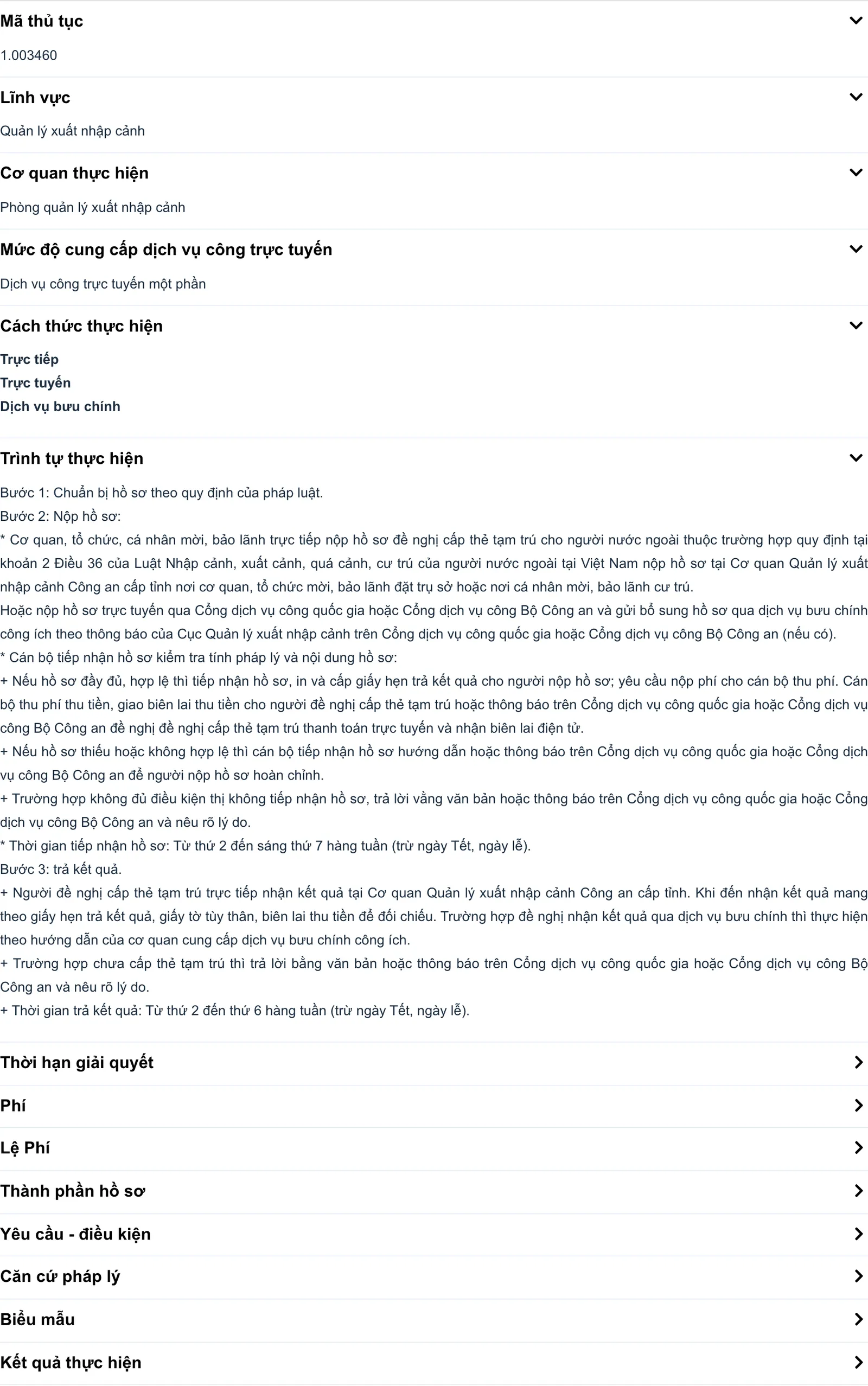
The conditions include that the foreigner falls within the cases eligible for a card under Article 36 of the Law on Entry, Exit, Transit and Residence of Foreigners in Vietnam. Do not use form NA5; that is the stay extension form.
Filing in Nha Trang
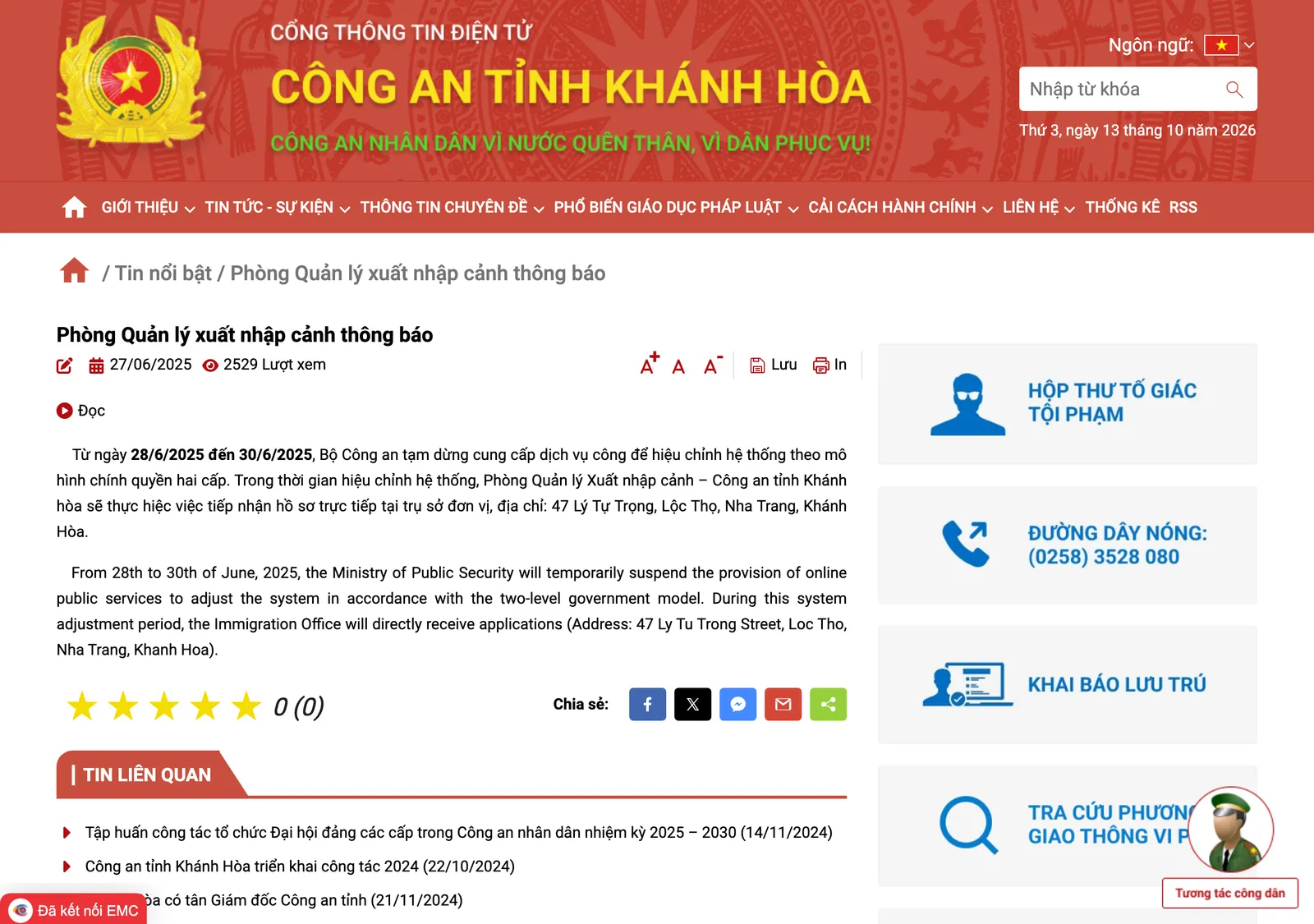
The official procedure for a card issued at provincial police level carries the code 1.003460. It accepts three channels: in person, online or by post.
- A locally based organisation or enterprise that requests a card files the dossier at the provincial police immigration management agency.
- The Khanh Hoa agency lists card issuing among its services.
- In a notice of 27/06/2025, the division said it receives applications in person at 47 Ly Tu Trong, Loc Tho, Nha Trang, Khanh Hoa.
- If you file online, send your passport to the receiving agency through the public postal service.
- For an online filing, any other papers go by post when the Immigration Department gives notice.
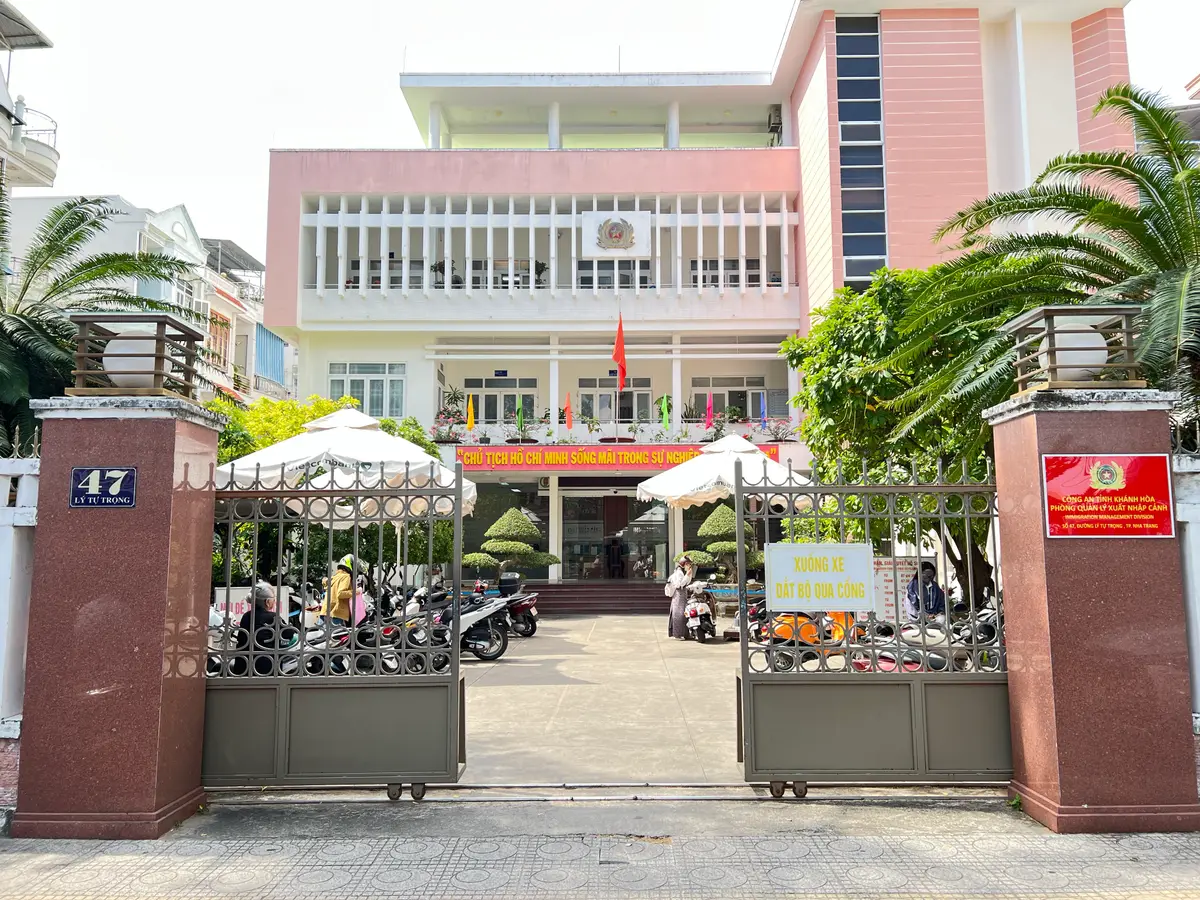
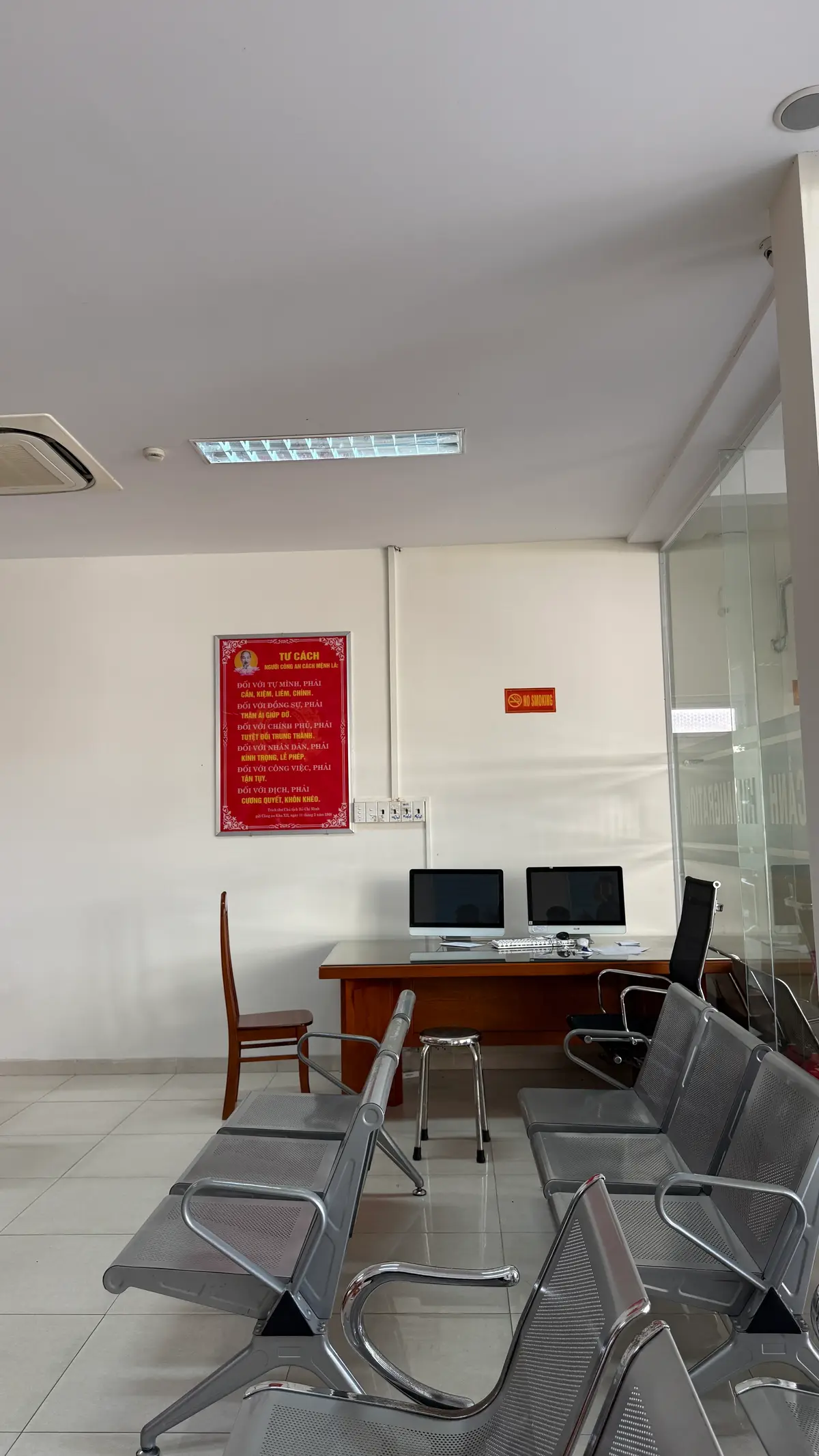
47 Ly Tu Trong, Nha Trang, Khanh Hoa 650000, Vietnam · Open in Google Maps (opens in a new tab)
Open the office in Google Maps (opens in a new tab)
Processing and collecting the card
Processing takes 5 working days from the date a complete dossier is received. Dossiers are received from Monday to Saturday morning, except Tet and public holidays. Results are returned from Monday to Friday each week, except Tet and public holidays.
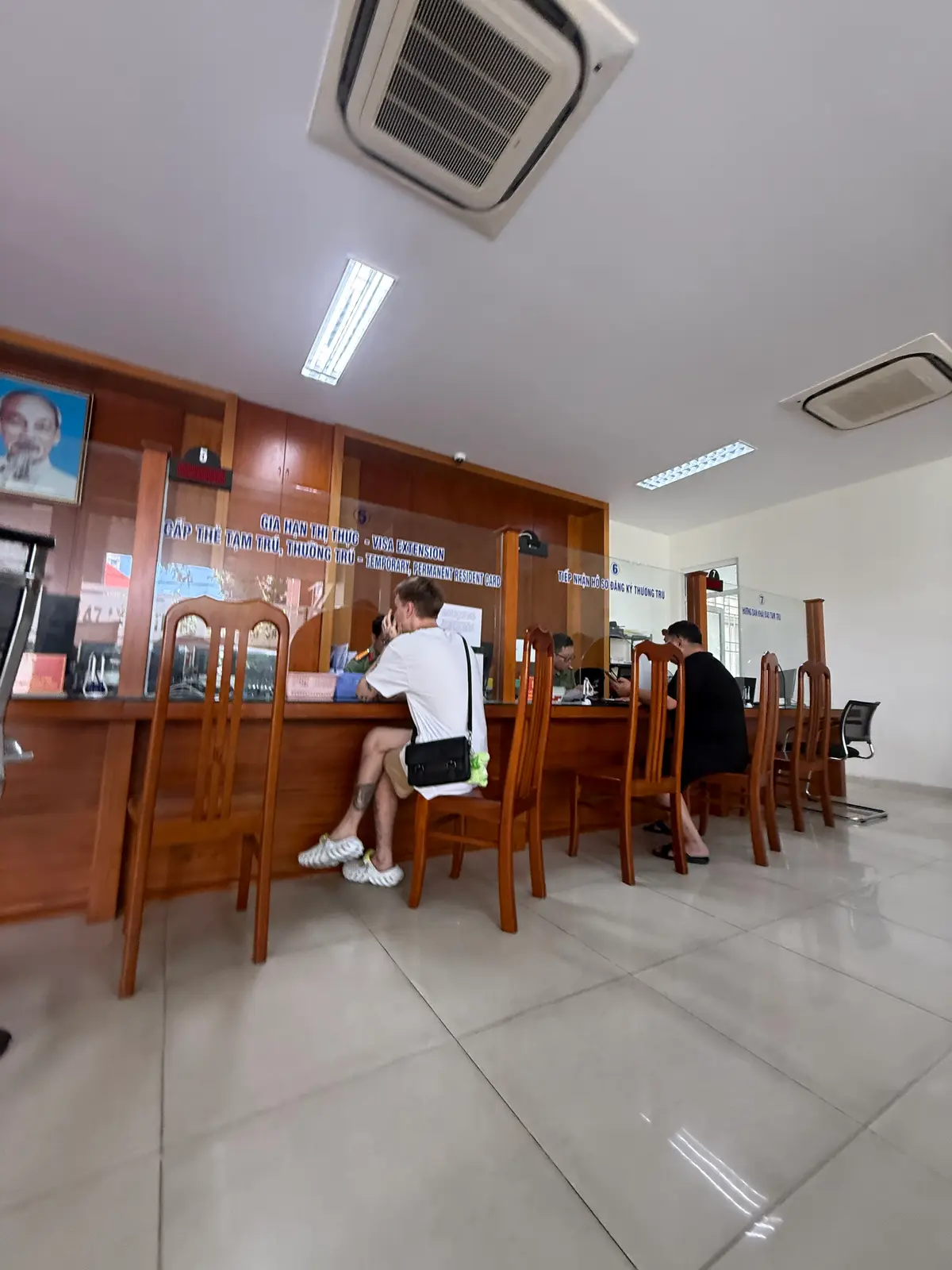
The applicant collects the result in person at the provincial immigration office with the appointment slip, an ID and the fee receipt. The card can instead be posted on request.
Step by step: from visa to card
Follow this order. Each step names the papers in hand at that point.
- Check the visa symbol. Papers: passport and visa. The symbol must be on the list of eligible symbols.
- Check the passport. The card must be set at least 30 days shorter than the remaining validity of the passport.
- Settle the work paper, if you work. Papers: the employer’s report and request on the official form. For a new permit, the employer files between 60 and 10 days before the start date, at the local Public Administrative Service Center. A foreign worker who is exempt needs an exemption confirmation certificate instead.
- Sponsor builds the dossier. Papers: form NA8, form NA6 or NA7, 2 photos of 2x3 cm, the passport and proof of eligibility.
- Sponsor files. The channels are in person, online or by post. The office is the one where the sponsor is based or lives.
- Wait for the result. Processing takes 5 working days from a complete dossier.
- Collect. Bring the appointment slip, an ID and the fee receipt, or ask for the card by post.
| Stage | Time |
|---|---|
| Work permit filing window | 60 to 10 days before the start date |
| Work permit decision | 10 working days from a complete dossier |
| Exemption certificate decision | 5 working days from a complete dossier |
| Card processing | 5 working days from a complete dossier |
| Results handed out | Monday to Friday, except Tet and public holidays |
Getting the right visa symbol first
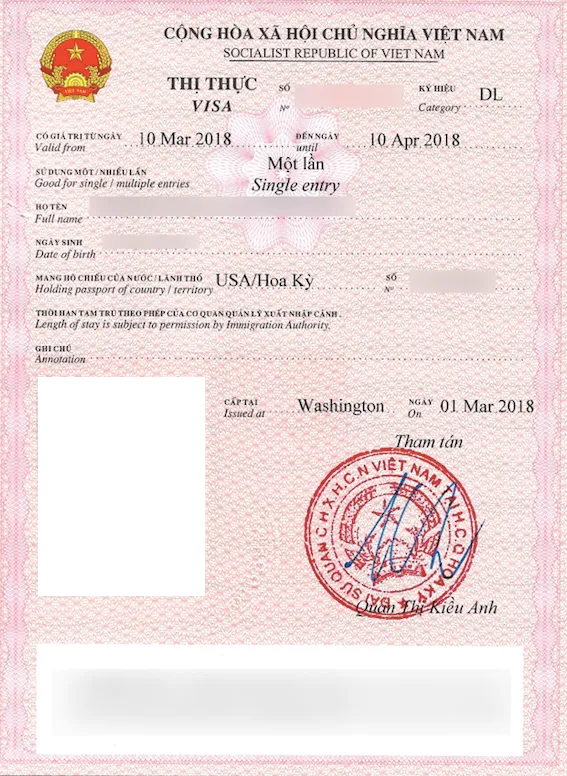
The card carries a symbol matching the visa symbol.
A visa purpose cannot be converted except in four cases. Those cases are an investor with proof, and a parent, spouse or child of the sponsor. Two more cases are a person invited to work with a work permit or exemption confirmation, and an e-visa entrant with the same papers. A converted visa is re-issued with the symbol and validity of the new purpose.
| Visa symbol | Who gets it | Card validity, maximum |
|---|---|---|
| LD1 | A foreigner working in Vietnam, confirmed exempt from a work permit | 2 years |
| LD2 | A foreigner working in Vietnam who needs a work permit | 2 years |
| DT3 | An investor with capital from 3 billion to under 50 billion VND | 3 years |
| DT2 | An investor with capital from 50 billion to under 100 billion VND | 5 years |
| DT1 | An investor with capital of 100 billion VND or more | 10 years |
| TT | A spouse or child under 18 of a holder of LV1, LV2, LS, DT1, DT2, DT3, NN1, NN2, DH, PV1, LD1 or LD2 | 3 years |
| DH | A foreigner who comes for an internship or to study | 5 years |
Why a card request fails
The sources publish the conditions, not a list of refusal grounds. These are the conditions that decide the outcome.
- The visa symbol is not on the list. DN1 and DN2 are not on it, and tourism is the purpose of a DL visa.
- The applicant is not eligible, or refuses the result. The fee already paid is not refunded.
- The wrong form is used. NA5 is the extension form, and NA8 is the card declaration.
- The wrong office is used. The sponsor files where it is based or lives.
- The passport is missing from an online filing. It must be sent to the receiving agency through the public postal service.
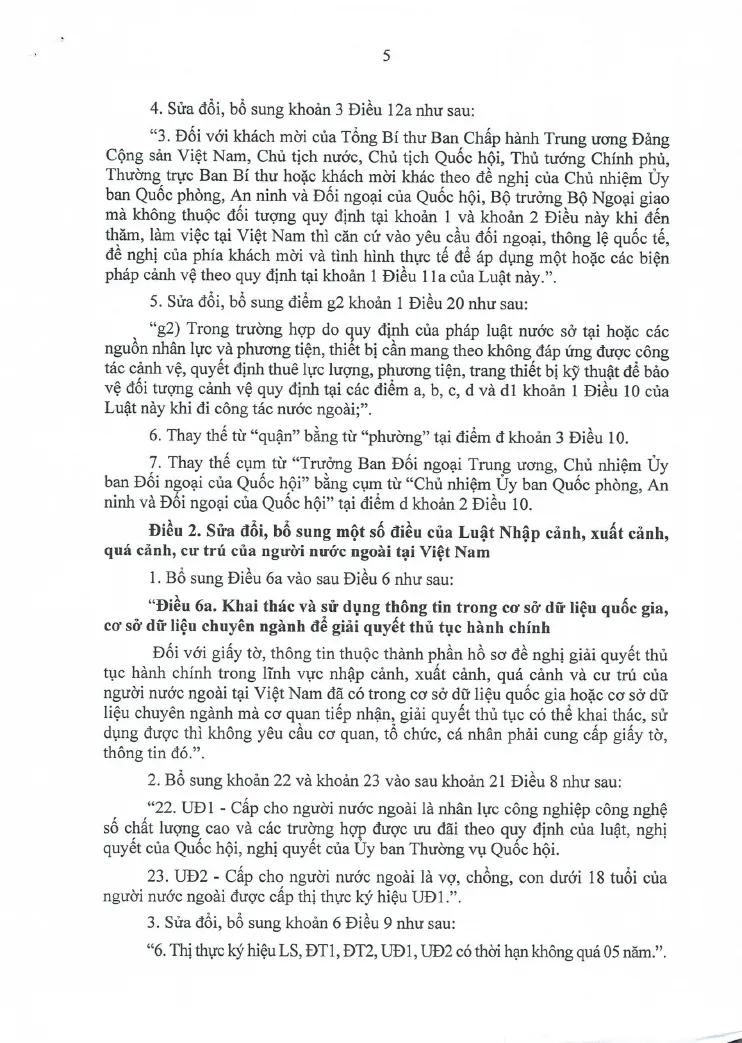
Law 118/2025/QH15 changed this list from 1 July 2026 by adding UD1 and UD2 holders. A guide dated before that is missing two symbols.
Card or stay extension?
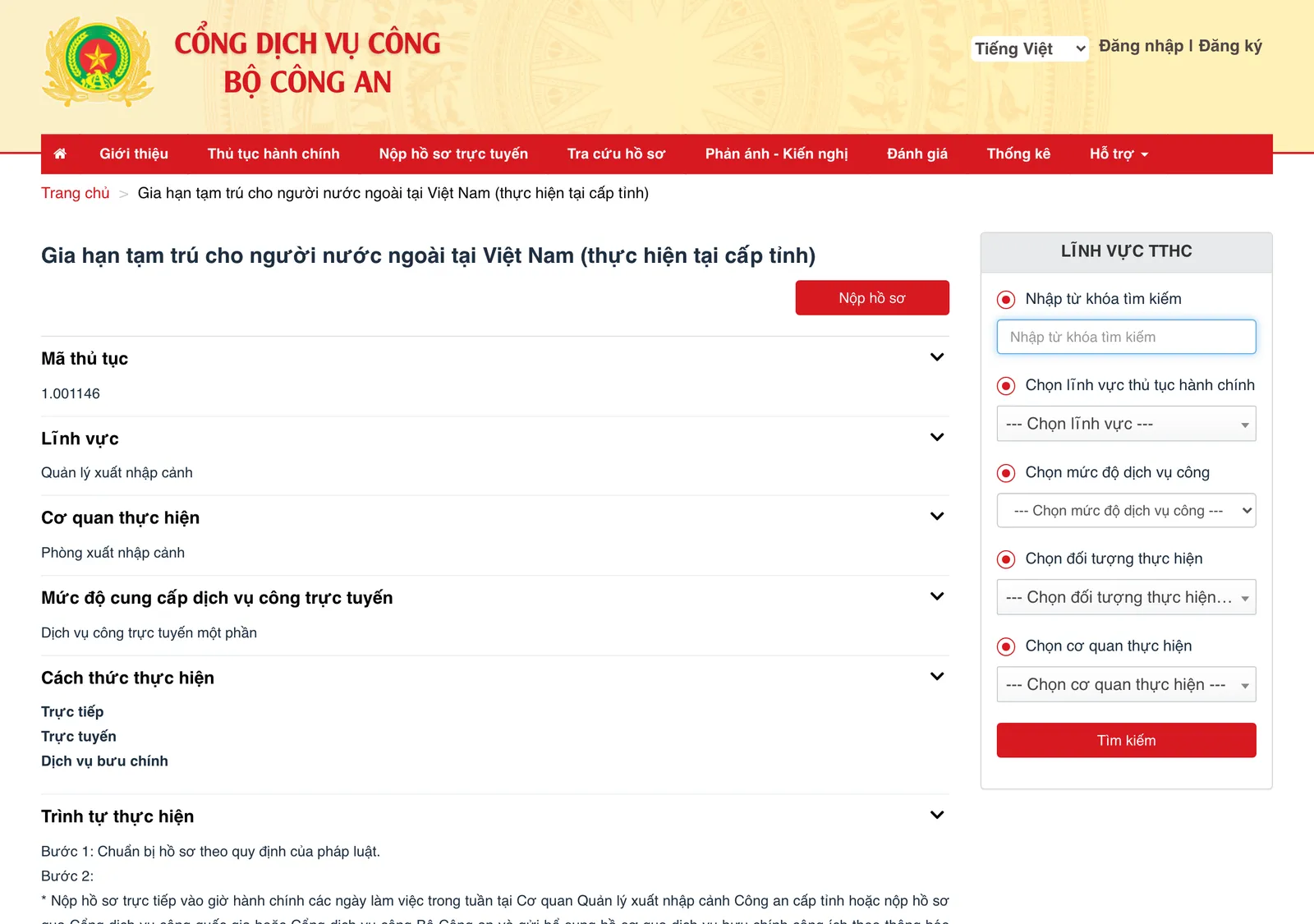
Both procedures need a sponsor, and both take up to 5 working days from a complete dossier. They differ in the form, the fee and what you receive.
| Temporary residence card | Stay extension | |
|---|---|---|
| Declaration form | NA8 | NA5 |
| Government fee | US$145 to US$165 | US$10 |
| What you receive | A card valid in place of a visa | An extended temporary residence certificate |
Pick the card only if your visa symbol is on the list.
Card versus the address declaration
The card is a sponsor-filed process with a statutory 5 working days from a complete dossier. Declaring where you sleep is a different, faster step done through the accommodation, covered in temporary residence registration.
Carry your passport or international travel document and your residence papers when you move around Vietnam, and show them when an authority asks. Failing to show them when asked is fined 500,000-2,000,000 VND.
For the office itself, see the Nha Trang immigration office guide. For a short stay, see how to extend your visa in Nha Trang. The visa hub lists the rest.
Photos and clips uploaded to Google Maps (Immigration Management Department - Immigration Office on Google Maps (opens in a new tab)) by @Evgenii Lukashevich, @Khanh Dinh, @Ak.
Step by step
- Compare your visa symbolCompare the symbol on your visa with the listed symbols.
- Prepare the dossierGather 2 photos of 2x3 cm, form NA8, the sponsor's request and proof of eligibility.
- File at the provincial immigration officeA local organisation files at the provincial police immigration management agency.
- Collect the cardProcessing takes 5 working days from a complete dossier.
Not confirmed: Khanh Hoa counter hours for card intake are not confirmed, so ask the Nha Trang immigration office before you go. Ask your sponsor to check with the office first if you hold an e-visa.
Common questions
How long does a card take to issue?
5 working days from the date a complete dossier is received.
Can I send the application online?
Yes, but the passport must then be sent to the receiving agency through the public postal service.
What photos do I need?
2 photos of 2x3 cm, 1 pasted on the declaration and 1 loose.
Which days are results returned?
From Monday to Friday each week, except Tet and public holidays.
Does the card replace my visa?
A temporary residence card is issued to a foreigner permitted to reside in Vietnam for a fixed period, and it is valid in place of a visa.
Can a DN1 or DN2 visa holder get a card?
No. DN1 and DN2 are not on the Article 36 list. A work permit holder normally gets an LD1 or LD2 visa, and both qualify.
Are UD1 and UD2 holders eligible?
Yes. Law 118/2025/QH15 added UD1 and UD2 holders to the Article 36 list. Those cards are valid for a maximum of 10 years.
Which forms do I use?
Form NA8 is the declaration for the card, with NA6 from an organisation or NA7 from an individual. A stay extension uses NA5 instead.
Is the card fee refunded if I do not qualify?
No. If the applicant is not eligible or refuses to accept the result, the fee already paid is not refunded.
Can the card be renewed when it expires?
When a card expires, the holder may be considered for a new card. Renewal is a fresh issuance, not an automatic rollover.
Read next
General information checked against the sources listed above, not legal advice for your situation. Rules and office practice change; confirm with the immigration office or a licensed adviser before you act. See how guides are checked.
Spotted an error? Report it.