Business Visa in Nha Trang: DN1 vs DN2, Sponsor, Extension
DN1 is for a foreigner coming to work with a Vietnamese enterprise or other organisation with legal-entity status. DN2 is for offering services, setting up a commercial presence, or treaty-based activity. Both last up to 1 year, are requested by a sponsor, and are not on the temporary residence card list.
On this page
- Which case are you?
- DN1 and DN2 against the old single DN symbol
- Maximum validity: up to 1 year, and shorter than your passport
- Who can sponsor a DN1 or DN2 visa
- Convert or extend a DN1 or DN2 inside Vietnam
- Extending a DN1 or DN2 stay in Nha Trang
- Does a DN1 or DN2 visa qualify you for a temporary residence card?
- DN1 and DN2 against an LD work visa
- A short business trip: e-visa or visa exemption instead
- What a DN1 or DN2 visa costs
- Read next
- Common questions
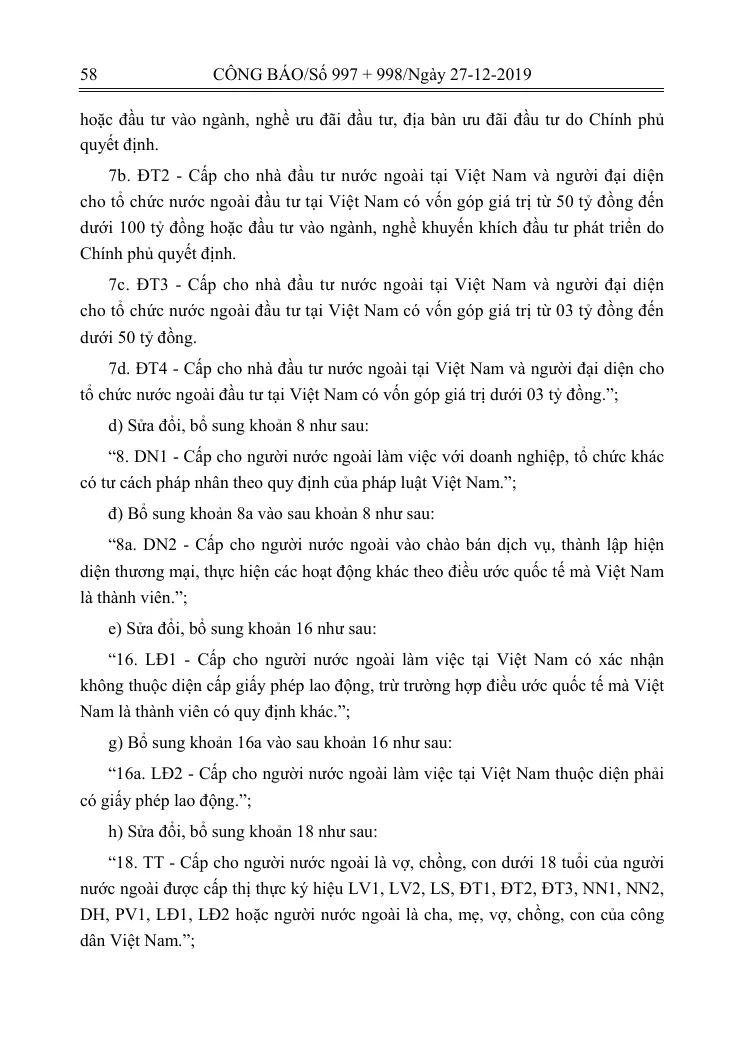
DN1 - Cấp cho người nước ngoài làm việc với doanh nghiệp, tổ chức khác có tư cách pháp nhân theo quy định của pháp luật Việt Nam.
DN1 is issued to a foreigner who works with an enterprise or other organisation that has legal-entity status under Vietnamese law.
DN2 - Cấp cho người nước ngoài vào chào bán dịch vụ, thành lập hiện diện thương mại, thực hiện các hoạt động khác theo điều ước quốc tế mà Việt Nam là thành viên.
DN2 is issued to a foreigner entering to offer services for sale, set up a commercial presence, or carry out other activities under an international treaty to which Vietnam is a party. Law 47/2014/QH13, Điều 8 khoản 8 and 8a, as amended by Law 51/2019/QH14
Start with what you will do in Nha Trang. Work with a Vietnamese organisation and DN1 is the symbol. Sell services or set up a presence and DN2 is the symbol. In both cases your sponsor files the request, not you.
Which case are you?
- You come to work with a Vietnamese enterprise or organisation: DN1, up to 1 year. The company requests it as your sponsor.
- You come to sell services or set up a commercial presence: DN2, up to 1 year, requested by your sponsor.
- A Vietnamese company hires you to work in Vietnam: the work visas LD1 and LD2 apply, for up to 2 years. Read the work permit guide for Nha Trang first.
- You want a residence card: DN1 and DN2 are not eligible, while LD1 and LD2 are. See the temporary residence card guide.
- Your trip is short: an e-visa lasts at most 90 days, but its eligibility rule does not mention business purpose. See the e-visa guide.
- Your stay is running out in Nha Trang: your sponsor files the extension at the immigration division of the provincial police.

DN1 and DN2 against the old single DN symbol
Before Law 51/2019/QH14 there was one DN symbol, issued to anyone entering to work with an enterprise in Vietnam. The split changed the symbol, not the length. The original 2014 text already capped the single DN symbol at 12 months, the same maximum DN1 and DN2 carry today.
The law’s wording for DN1 is “làm việc với doanh nghiệp”, working with an enterprise. A separate pair of symbols, LD1 and LD2, covers working in Vietnam. LD1 is for a foreigner with a confirmation of not needing a work permit. LD2 is for one who must hold a work permit.
The DN1 and DN2 definitions do not mention work permits. Whether you need one is a separate question, covered in the section on LD visas below.
Maximum validity: up to 1 year, and shorter than your passport
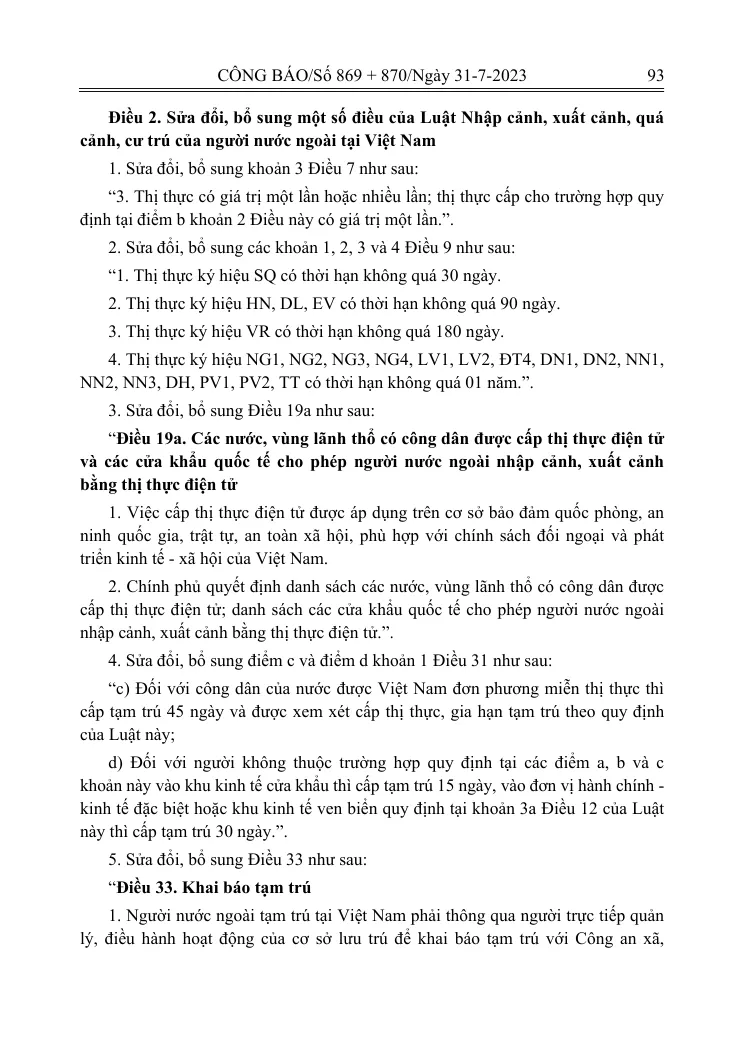
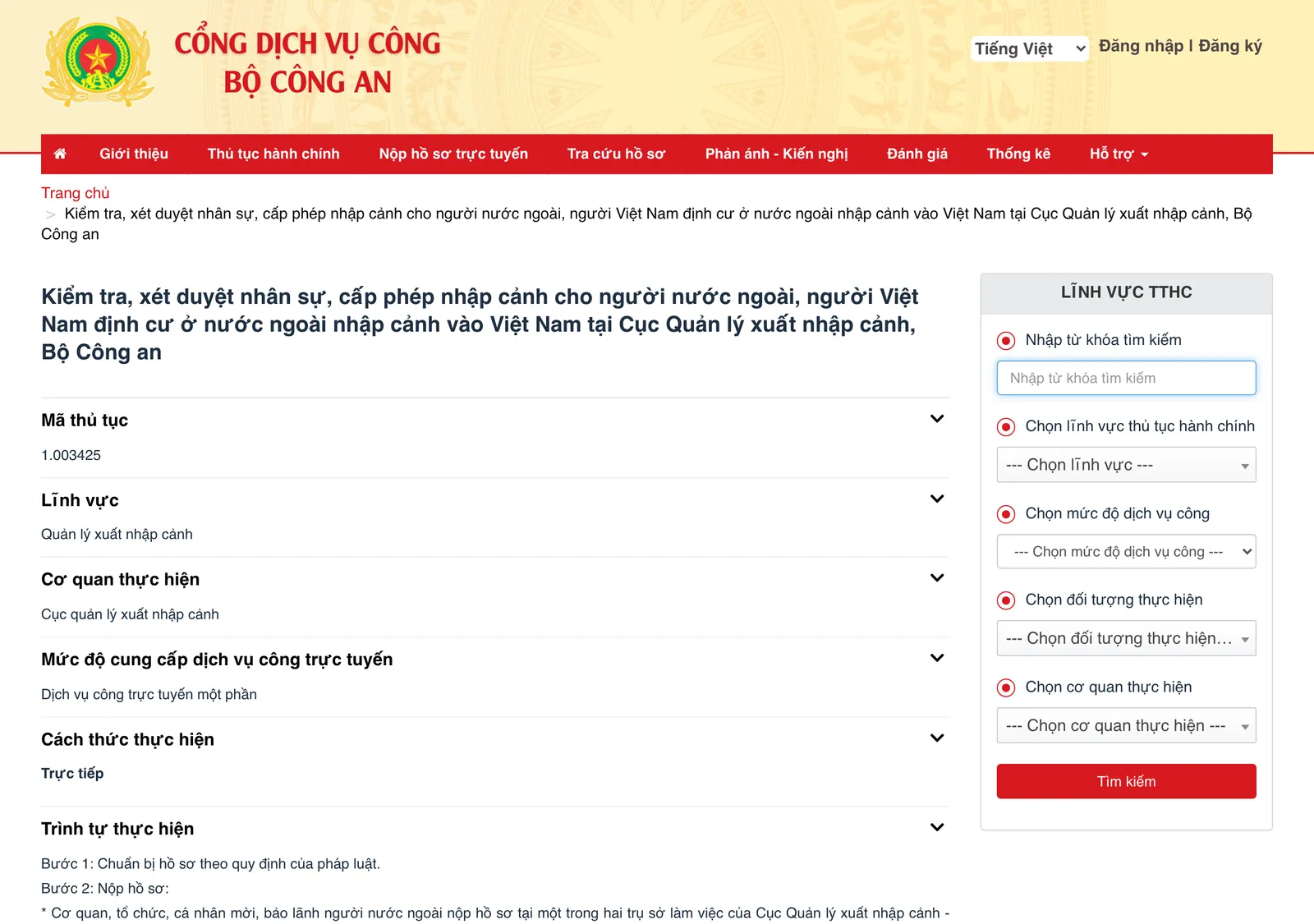
DN1 and DN2, along with several diplomatic and other symbols, are valid for a maximum of 1 year. That is shorter than the 2-year cap on LD1 and LD2 visas. Whatever the symbol, the visa’s validity must be at least 30 days shorter than that of your passport or other international travel document.
So check your passport’s remaining validity before your sponsor files.
Law 118/2025/QH15 takes effect on 1 July 2026. The Ministry of Public Security’s summary of it does not mention DN1, DN2, Article 8 or Article 9 in its list of changes.
Who can sponsor a DN1 or DN2 visa
Any enterprise established under Vietnamese law is among the organisations allowed to invite or sponsor a foreigner. The sponsor’s request must match its own functions or its operating licence. That rule sets no separate capital or headcount test for a DN1 or DN2 sponsor.
A foreigner outside Article 8 clauses 1 to 4 goes through the inviting or sponsoring agency, organisation or individual. That sponsor files the visa request with the immigration authority. Since 1 July 2026 it can also send the request by public postal service or online, if it meets the conditions of Article 16b. For an organisation, those conditions include an electronic identity account.
Law 118/2025/QH15 also widened the list of individual sponsors. A Vietnamese citizen who permanently resides in Vietnam and is a grandparent may now invite or sponsor a foreign grandchild to visit Vietnam.
The one-time notice
Before sponsoring anyone for the first time, the organisation sends the immigration authority a one-time notice, and sends an update whenever anything in it changes. The notice comes with two documents. They are a certified copy of its establishment licence and a document introducing its seal and the signature of its authorised person.
The procedure page for a visa request or extension wants a dossier under Article 16 clause 2 already on file at the provincial police immigration division. The one-time notice is set by that same clause.
What happens after the sponsor files
The immigration authority has 5 working days from receiving the request to do three things. It reviews the request, replies to the sponsor, and notifies the Vietnamese visa-issuing office abroad.
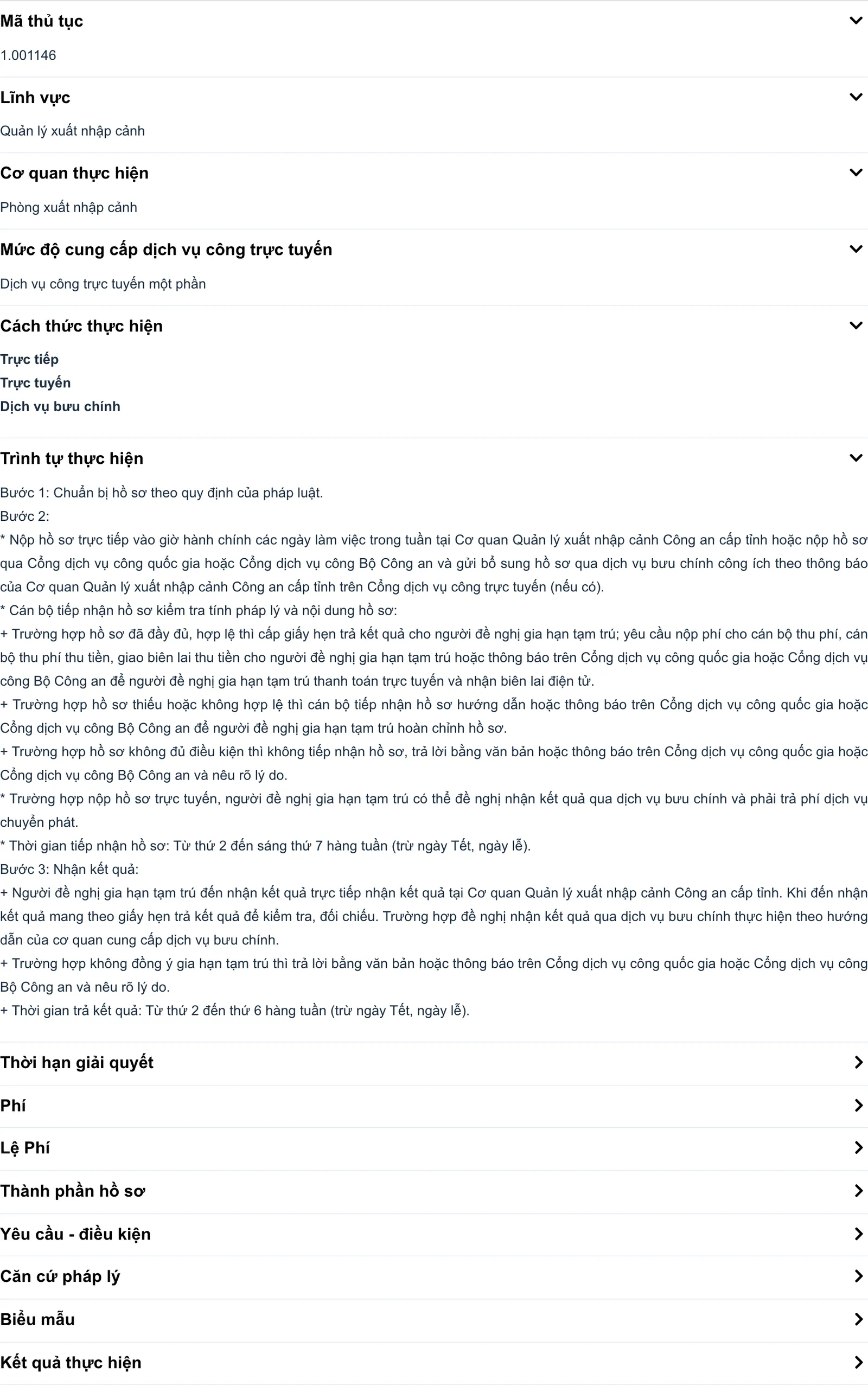
The Ministry of Public Security procedure page for this entry approval, code 1.003425, names form NA2. It lists the Immigration Department’s two head offices in Hanoi and Ho Chi Minh City for filing. No Khanh Hoa office is named there. The Not confirmed box above asks a Nha Trang company to check locally.
Law 118/2025/QH15 repealed clauses 6 and 7 of Article 16 from 1 July 2026, including the rule on paying the charge for sending the visa notification.
Checklist for the sponsor
- The sponsor is an enterprise established under Vietnamese law, or another organisation allowed to invite foreigners.
- Its request matches its functions or operating licence.
- Its one-time notice is on file, with the licence copy and the seal and signature document.
- It holds an electronic identity account if it files online or by post.
- Your passport outlasts the visa by at least 30 days.
- It uses form NA2 for entry approval and form NA5 for an extension.
Convert or extend a DN1 or DN2 inside Vietnam
A visa’s purpose can be converted only in these four cases.
- Proof that you are an investor, or the representative of a foreign organisation investing in Vietnam.
- Proof that you are the parent, spouse or child of the person who invited or sponsored you.
- An invitation or sponsorship by an organisation to work, together with a work permit or a confirmation of not needing one.
- Entry on an e-visa together with a work permit or a confirmation of not needing one.
If you entered on an e-visa and later take a job, the fourth case is the one that applies, with a work permit or a confirmation of not needing one. A conversion gives a new visa with the symbol and validity for the new purpose. None of the four cases results in DN1 or DN2, so a DN1 or DN2 can be converted out but not converted into.
A foreigner who wants to extend must have the sponsor file the request with the immigration authority. The file can go in person, online or by post. The authority has up to 5 working days from a complete file. The government fee is US$10 per extension.
File before the stay ends. A foreigner who overstays under 16 days is fined VND 500,000 to 2,000,000. For 16 to under 30 days the fine is VND 5,000,000 to 10,000,000. See overstay fines by days overstayed for the higher bands.
If a Vietnamese citizen asks for your stay extension, that person must be your grandparent, parent, spouse, child or sibling. That person must also show papers proving the relationship. For the full process, see how to extend your visa in Nha Trang.
Extending a DN1 or DN2 stay in Nha Trang
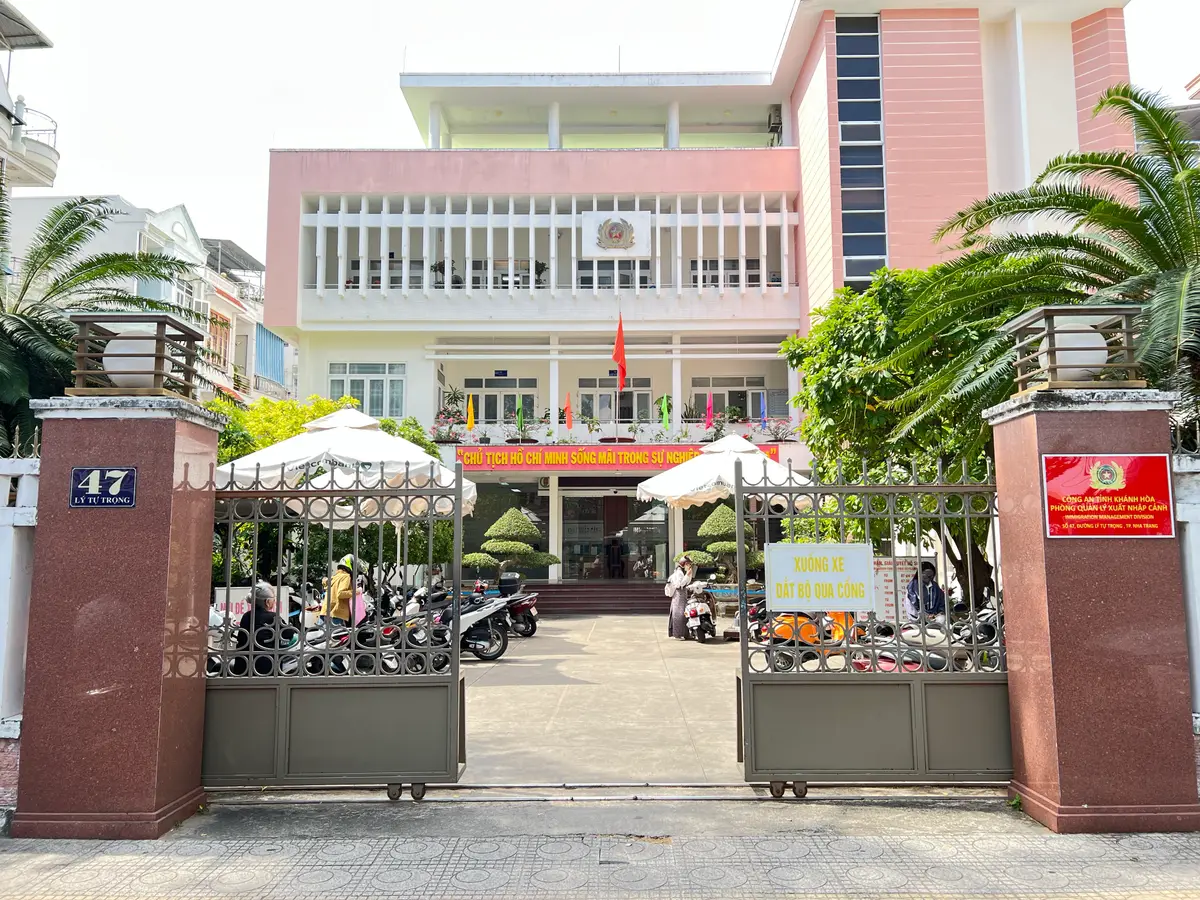
The Khanh Hoa police immigration service list includes issuing visas to foreigners in Vietnam. It also includes extending temporary stay for foreigners in Vietnam. The body that carries out the listed immigration procedures is the Immigration Management Division.
A notice of 27 June 2025 gives the division’s head office as 47 Ly Tu Trong, in what was then Loc Tho ward, Nha Trang. Resolution 1667/NQ-UBTVQH15 merged Loc Tho and four other wards into one ward named Nha Trang. Do not confuse the division with the provincial police headquarters, listed at 80 Tran Phu, Nha Trang.
47 Ly Tu Trong, Nha Trang, Khanh Hoa 650000, Vietnam · Open in Google Maps (opens in a new tab)
Open the office in Google Maps (opens in a new tab)
The national procedure page for an extension says applications are received from Monday to Saturday morning each week, except Tet and public holidays. Results are returned from Monday to Friday each week, except Tet and public holidays. Those are national lines, so ask the office whether Khanh Hoa keeps different hours.
The same page lets your sponsor file in person during office hours on working days at the provincial police immigration agency. It can also file through the National Public Service Portal or the Ministry of Public Security portal. When filing online, your passport must be sent to the receiving office through the public postal service.
The page lists the declaration for requesting a visa or a stay extension, form NA5, among the documents. Read the Nha Trang immigration office guide for the counter.
Does a DN1 or DN2 visa qualify you for a temporary residence card?
Not on its own. Article 36 lists who can be issued a temporary residence card. Members of diplomatic, consular, United Nations and intergovernmental missions, and the family and staff accompanying them, are covered by point a.
For other foreigners, the rule changed on 1 July 2026. Point b now covers foreigners staying in Vietnam who qualify for certain visa symbols. Those are LV1, LV2, LS, DT1, DT2, DT3, NN1, NN2, DH, PV1, LD1, LD2, TT, UD1 and UD2. DN1 and DN2 are not on that list.
Law 118/2025/QH15 also added the new UD1 and UD2 visas to the list.
A route to a card from a DN1 visa
- Your inviting organisation invites you to work, and you hold a work permit or a confirmation of not needing one.
- That is one of the four conversion cases, and it gives a new visa with the symbol for the new purpose.
- LD1 and LD2 are on the card list, and a card for them lasts up to 2 years.
- Ask the Khanh Hoa immigration division which papers it wants before your sponsor files.
A card for an LD1, LD2 or PV1 holder lasts up to 2 years. Its validity must be at least 30 days shorter than your passport’s remaining validity.
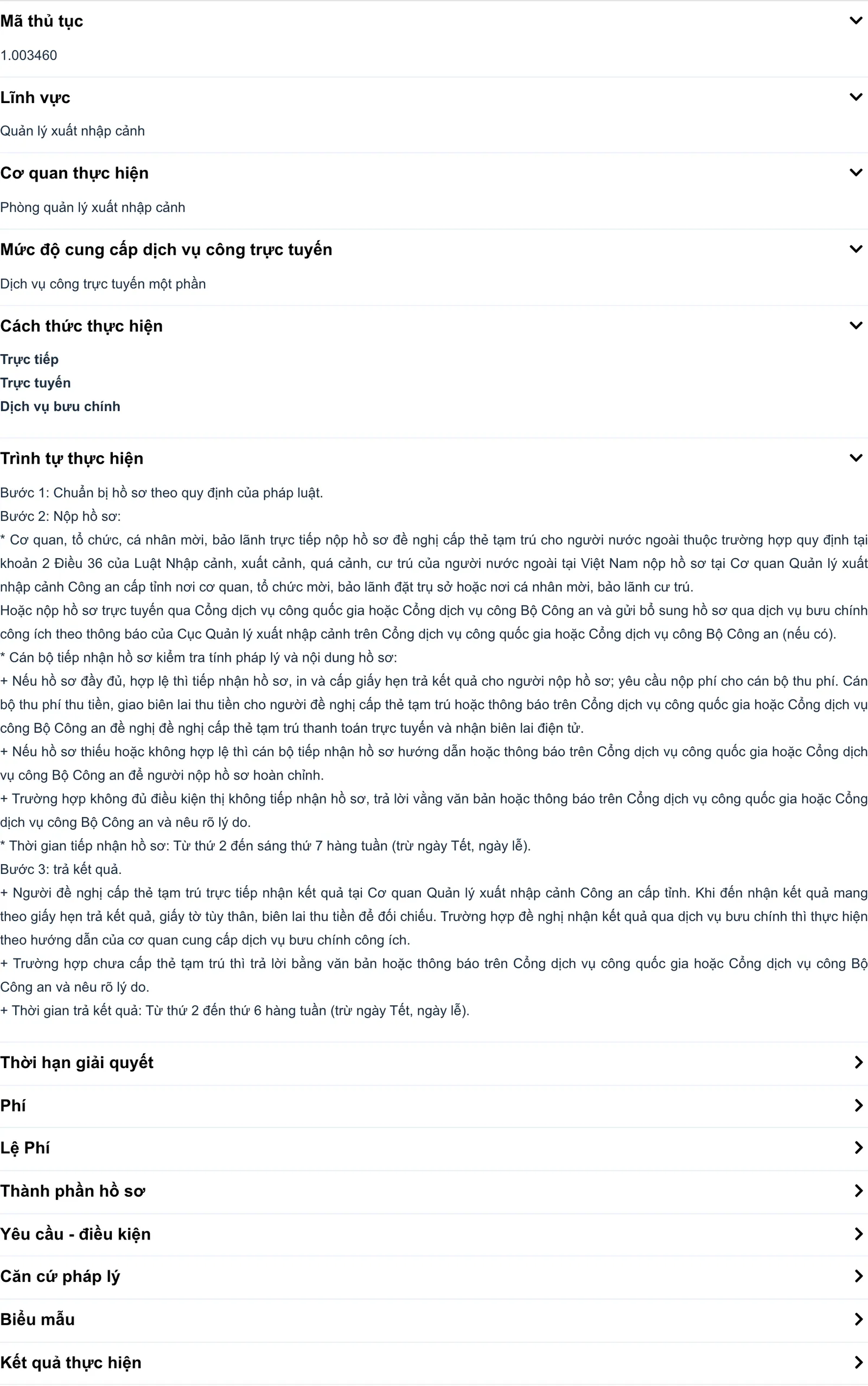
For a card, the national page lists a fee of 145 USD for one valid up to 2 years. It gives 5 working days from a complete dossier. The dossier includes a work permit, a confirmation of not needing one, or other papers proving eligibility.
A locally based organisation that requests a card files at the provincial police immigration agency. The Khanh Hoa police list includes issuing temporary residence cards at provincial police. See the temporary residence card guide for the process.
DN1 and DN2 against an LD work visa
The law defines DN1 by working with an enterprise or other organisation, and DN2 by offering services, a commercial presence or treaty activity. It defines LD1 and LD2 by working in Vietnam. LD1 is for a foreigner with a confirmation of not needing a work permit, and LD2 is for one who must hold a work permit.
LD1 and LD2 last longer, up to 2 years against 1 year for DN1 and DN2. They also qualify for a temporary residence card.
Do you also need a work permit?
A foreigner working in Vietnam must hold a work permit issued by the competent Vietnamese agency, except in the cases the Labor Code lists. Two exemptions matter for business visitors.
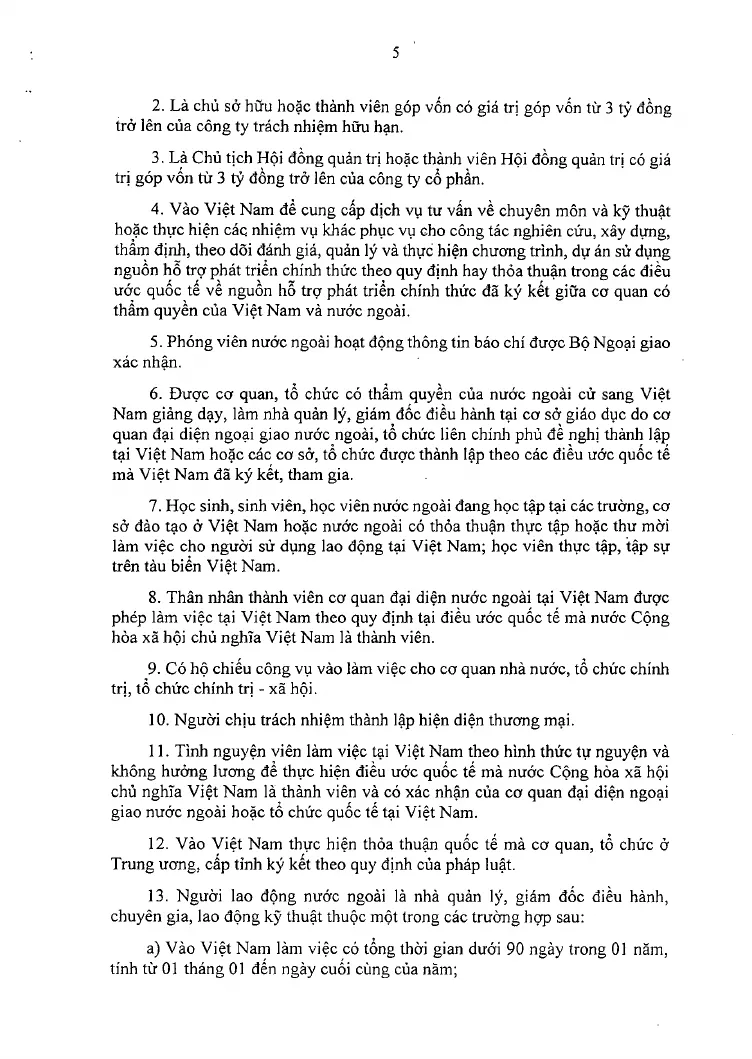
- A manager, executive, expert or technical worker who works in Vietnam for a total of under 90 days in a calendar year.
- A foreigner who enters for under 3 months to offer a service for sale.
For the 90-day case the employer only has to notify the competent agency at least 3 working days before the worker starts. A foreign worker who works without a permit or exemption certificate is fined VND 15,000,000 to 25,000,000.
For the full list of exemptions, read the work permit guide.
A short business trip: e-visa or visa exemption instead
An e-visa is issued to foreigners holding a passport who fall outside Article 8 clauses 1 to 4. The trade-off is length. E-visas are capped at 90 days against 1 year for DN1 and DN2. EV is the symbol for the electronic visa.
The e-visa eligibility rule says nothing about what you will do in Vietnam. Check the e-visa guide against your trip before using it in place of a DN visa.
Some passports need no visa at all. Citizens of the 12 countries in Resolution 44/NQ-CP get 45 days of stay from entry, regardless of passport type and purpose of entry. That applies to entries from 15 March 2025 through the end of 14 March 2028.
A second list of 12 countries gets 45 days from entry for tourism purposes. It applies to entries from 15 August 2025 through the end of 14 August 2028. Check which list your passport is on before you plan business activity. See the visa exemption guide and the Cam Ranh arrival guide.
What a DN1 or DN2 visa costs
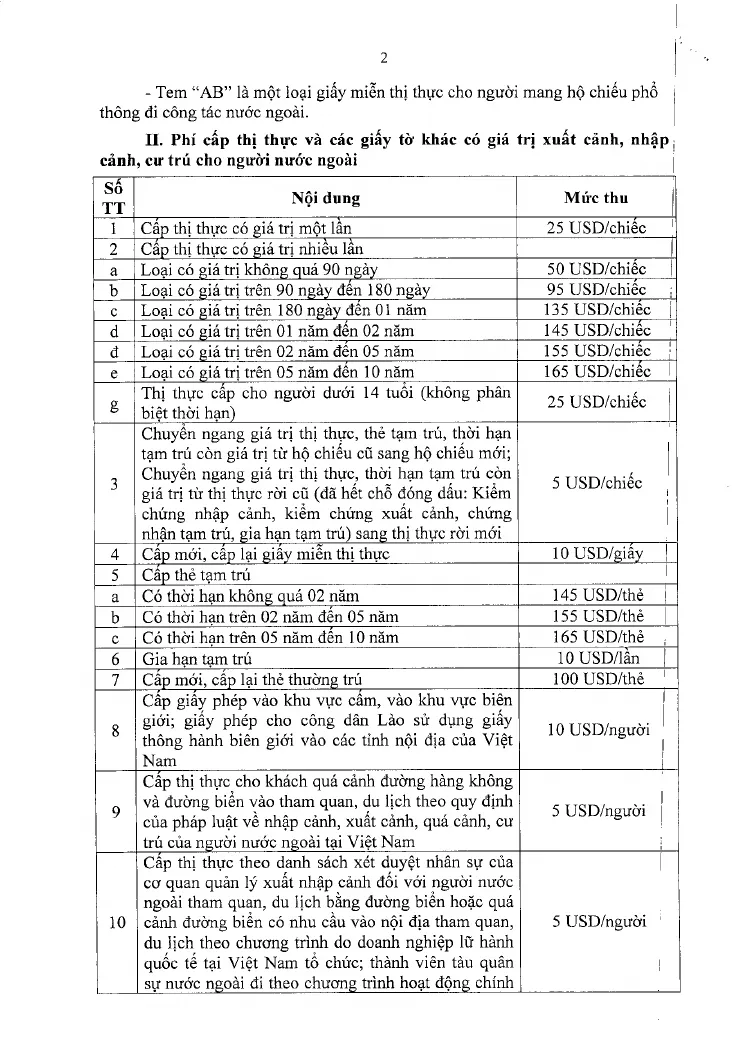
The fee schedule applies to a foreigner who asks a Vietnamese state authority in Vietnam for a visa. A single-entry visa allows one entry and costs US$25. A multiple-entry visa allows several entries, and its fee is set by validity.
- Up to 90 days: US$50.
- Over 90 to 180 days: US$95.
- Over 180 days to 1 year: US$135.
Where a fee is set in US dollars, you can pay it in dollars or in Vietnamese dong converted from the dollar amount. If you are not eligible for the visa, or you refuse to accept the outcome of your application, the fee you already paid is not refunded. An extension costs US$10.
See Vietnam immigration fees for the full schedule.
Read next
- Work permit in Nha Trang
- Vietnam visa types, NG1 to UD2
- Temporary residence card in Nha Trang
- Extend your visa in Nha Trang
- Visa extension: agent or sponsor
- Overstay fines by days overstayed
Photos and clips uploaded to Google Maps (Khanh Hoa immigration office on Google Maps (opens in a new tab)) by @Evgenii Lukashevich.
Not confirmed: Whether a Nha Trang company can file the entry-approval request in Khanh Hoa is not confirmed. Neither is whether a DN1 holder with a work permit gets a card without converting to LD1. Ask the Khanh Hoa immigration division before your sponsor files.
Common questions
What is the difference between DN1 and DN2?
DN1 is issued to a foreigner who comes to work with a Vietnamese enterprise or other organisation with legal-entity status. DN2 is issued to enter and offer services for sale, set up a commercial presence, or act under an international treaty Vietnam has joined.
How long can a DN1 or DN2 visa last?
Up to 1 year. The visa's validity must also be at least 30 days shorter than that of your passport or other international travel document.
Can I apply for a DN1 or DN2 visa myself?
A foreigner outside Article 8 clauses 1 to 4 goes through an inviting or sponsoring agency, organisation or individual, which files the request with the immigration authority. A DN1 or DN2 request is therefore filed by your sponsor.
Can I extend a DN1 or DN2 stay in Nha Trang?
Your sponsor files the extension request with the immigration authority. It can be filed in person, online or by post, and the authority has up to 5 working days from a complete file. The government fee is US$10.
Does a DN1 or DN2 visa lead to a temporary residence card?
Not on its own. Since 1 July 2026 the visa symbols that qualify for a card under Article 36 do not include DN1 or DN2. LD1 and LD2 do qualify.
Can I convert a tourist visa or e-visa into DN1 or DN2 inside Vietnam?
Article 7 allows a purpose conversion only in four cases, and none of them is framed around the DN1 or DN2 purposes. A DN1 or DN2 visa is requested by your sponsor through the immigration authority.
Does a DN1 or DN2 holder need a work permit?
The DN1 and DN2 wording does not mention work permits. A foreigner working in Vietnam must hold a work permit, except in the cases the Labor Code lists. A manager, executive, expert or technical worker in Vietnam under 90 days in a calendar year is one such case.
Is the e-visa or a visa exemption an alternative to DN1 or DN2 for a short trip?
Check your passport first. An e-visa lasts at most 90 days and its eligibility rule says nothing about business purpose. Twelve named countries get 45 days of stay regardless of the purpose of entry.
How much does a DN1 or DN2 visa cost?
The fee schedule applies to visas requested from a Vietnamese state authority in Vietnam. A single-entry visa costs US$25. A multiple-entry visa costs US$50 up to 90 days, US$95 over 90 to 180 days and US$135 over 180 days to 1 year.
Where does my sponsor file the extension in Nha Trang?
The Khanh Hoa police immigration service list includes extending temporary stay for foreigners. A notice of 27 June 2025 gives the head office as 47 Ly Tu Trong, Nha Trang.
Read next
General information checked against the sources listed above, not legal advice for your situation. Rules and office practice change; confirm with the immigration office or a licensed adviser before you act. See how guides are checked.
Spotted an error? Report it.