Swimming Safety at Nha Trang Beach: Lifeguards and Currents
Swim at a beach with lifeguards, and stay out of the sea in big waves or a rough sea, as the Nha Trang Bay Management Board urges. A February 2026 report counts 25 lifeguards in two shifts, on duty 5 am to 5 pm. Call 112 for help.
On this page
- Signs and flags on the beach
- Lifeguards: numbers, hours and where
- Where to swim: the buoyed zone and seafront rules
- Big waves, rough sea and rescues
- Rip currents: how to get out
- Hazards under the sand
- Jellyfish stings
- Storms and closed seas
- Alcohol, children and swimming alone
- Who to call
- Step by step
- Common questions
On 9 January 2026 the Nha Trang rescue team made four rescues on the central beach. They were at the Bon Mua restaurant beach, the beach at 36 Tran Phu and opposite Nguyen Chanh Street. Seven people, Russian tourists and local residents, were brought back to shore safely.
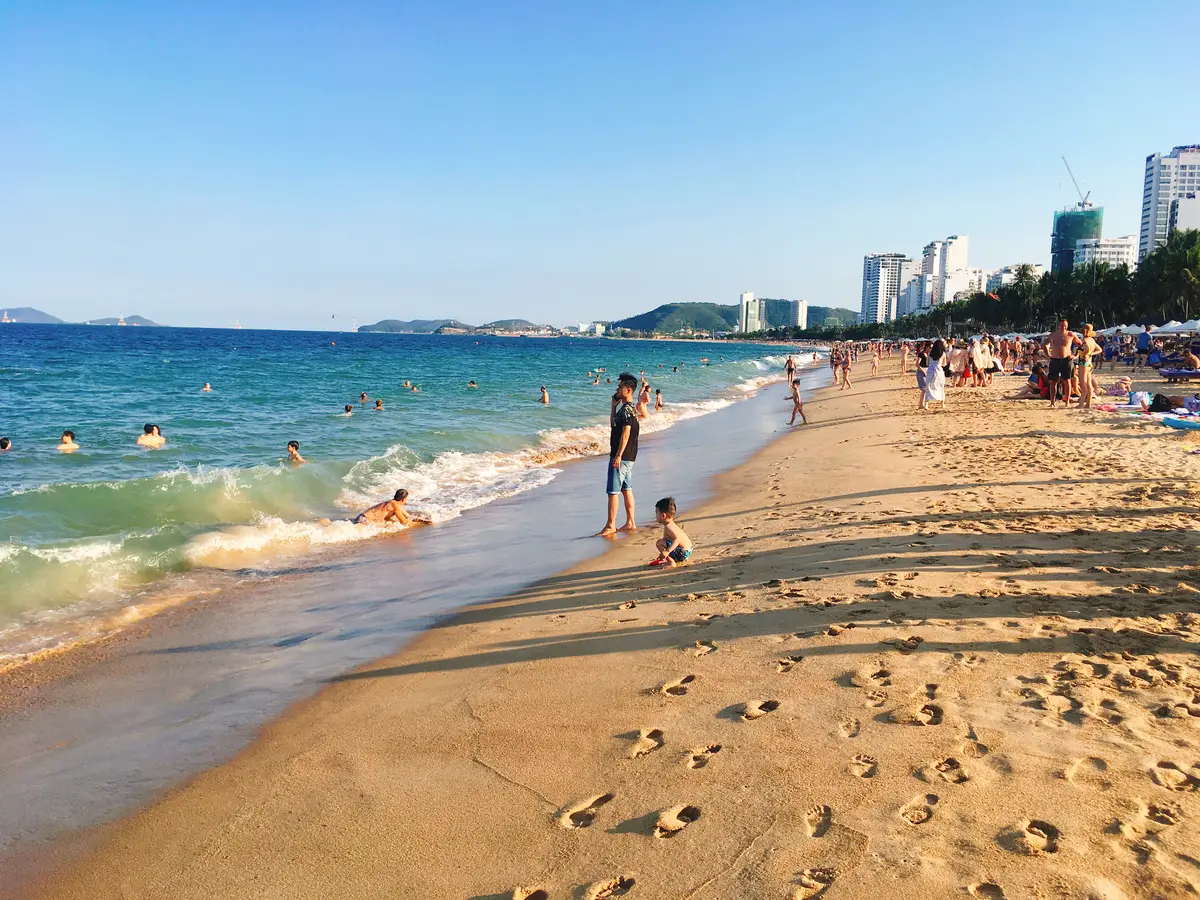
On 11 January the same team saved a tourist from Lam Dong who was swimming near the Sailing Club. The team described big waves, a rough sea and dangerous currents as a complicated situation at Nha Trang.
This page collects what is sourced about swimming safely here. Most figures come from dated press reports, and the page says so where it matters. Flag colours are not published anywhere found.
Signs and flags on the beach
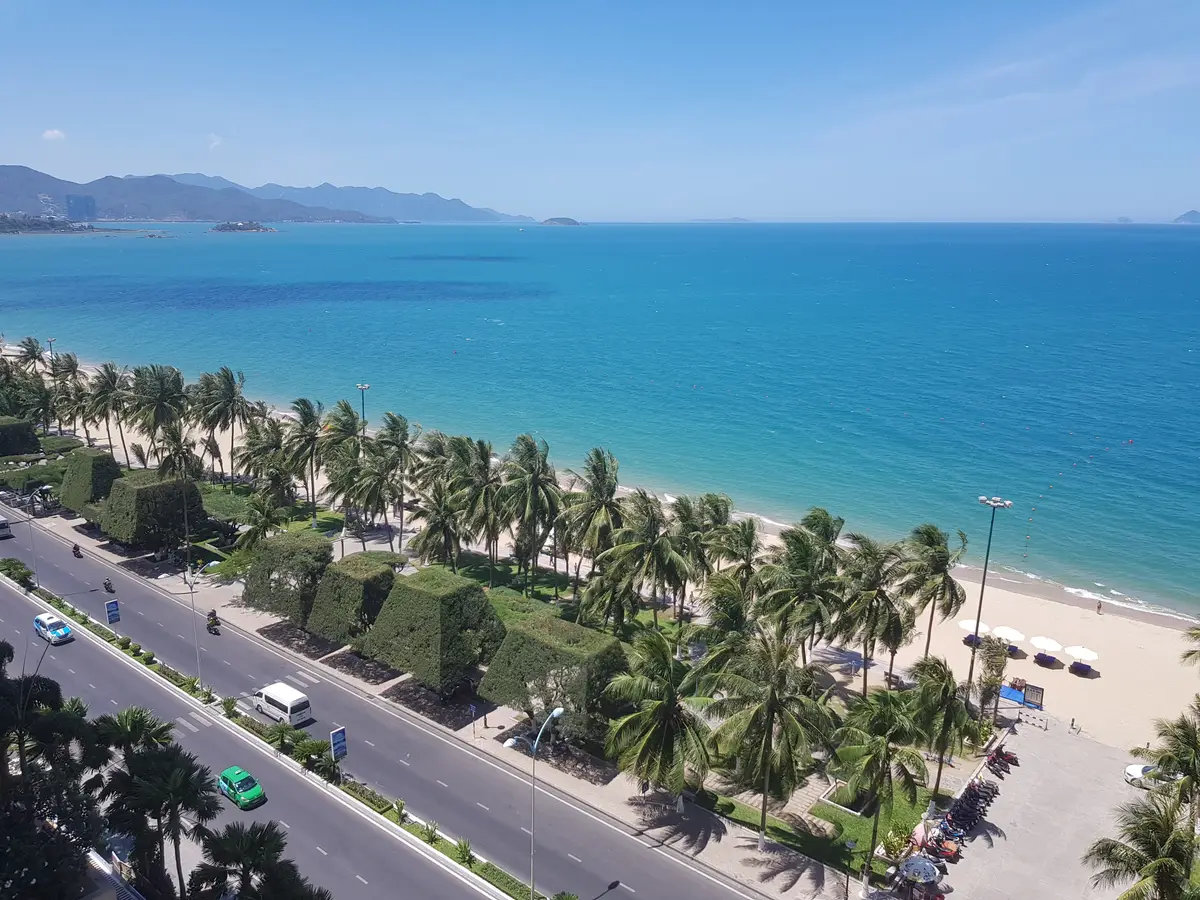
Danger signs and no-swimming flags are planted along the sand over 5 km of coast, from Tran Phu Street to the Thanh Nien football field. A February 2026 report says many visitors ignored them.
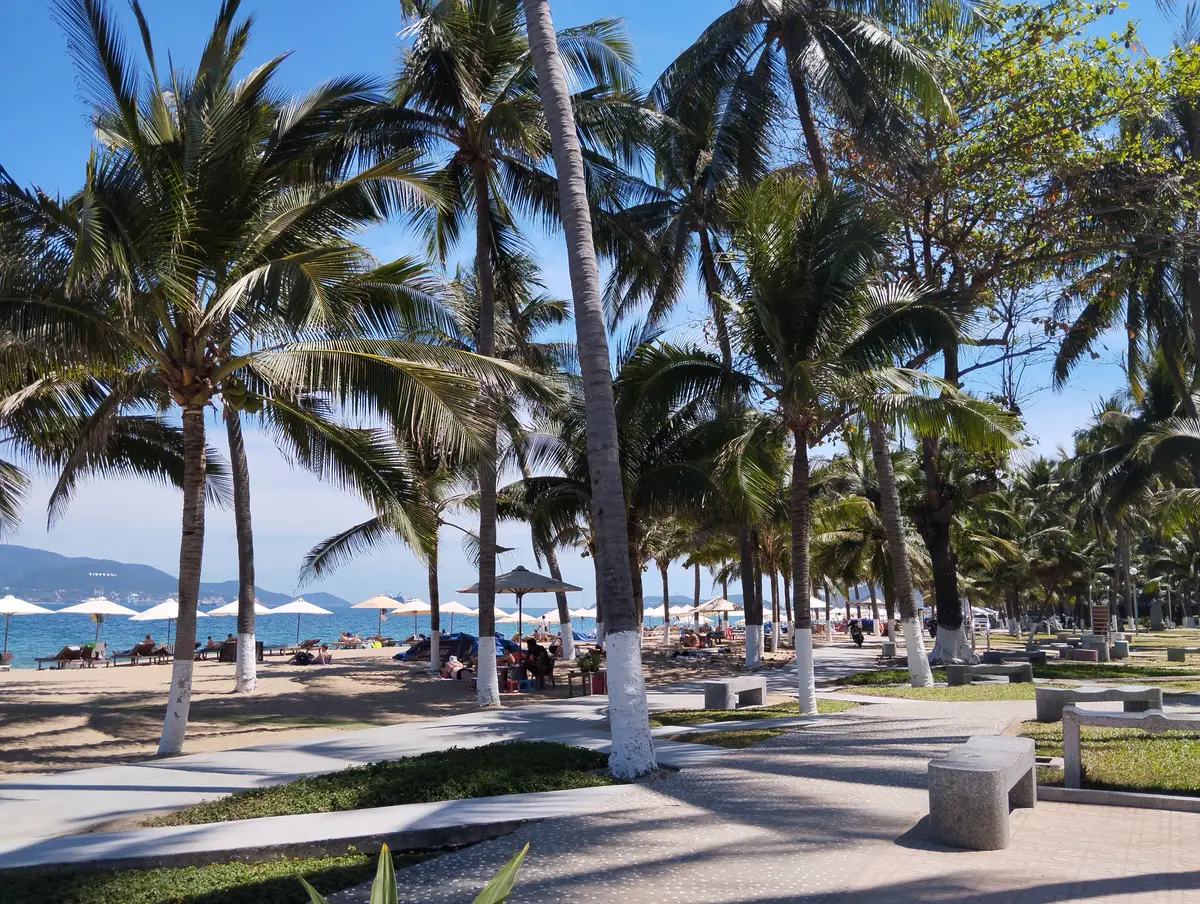
The Nha Trang Bay Management Board urges people not to go into the sea in big waves or a rough sea. It also tells people to obey danger flags, loudspeaker warnings and lifeguard instructions.
In 2020 the captain of the rescue team asked people not to be complacent once a no-swimming sign is up. No official page found explains what each flag colour means. Obey every posted flag, loudspeaker call and lifeguard instruction, and ask at the lifeguard hut if a colour is unclear.
Lifeguards: numbers, hours and where
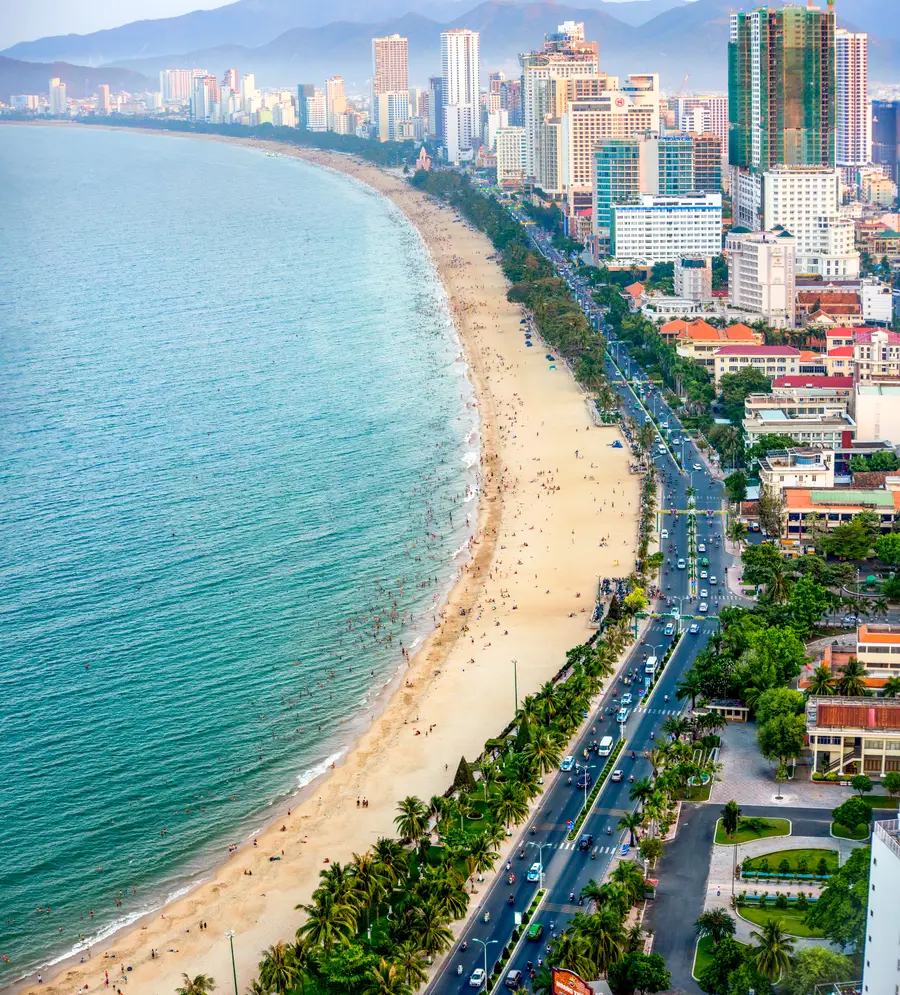
Beach rescue sits with the Nha Trang Bay Management Board, whose organisation includes a rescue unit. A February 2026 report says 25 lifeguards, in two shifts, watch the whole central beach route.
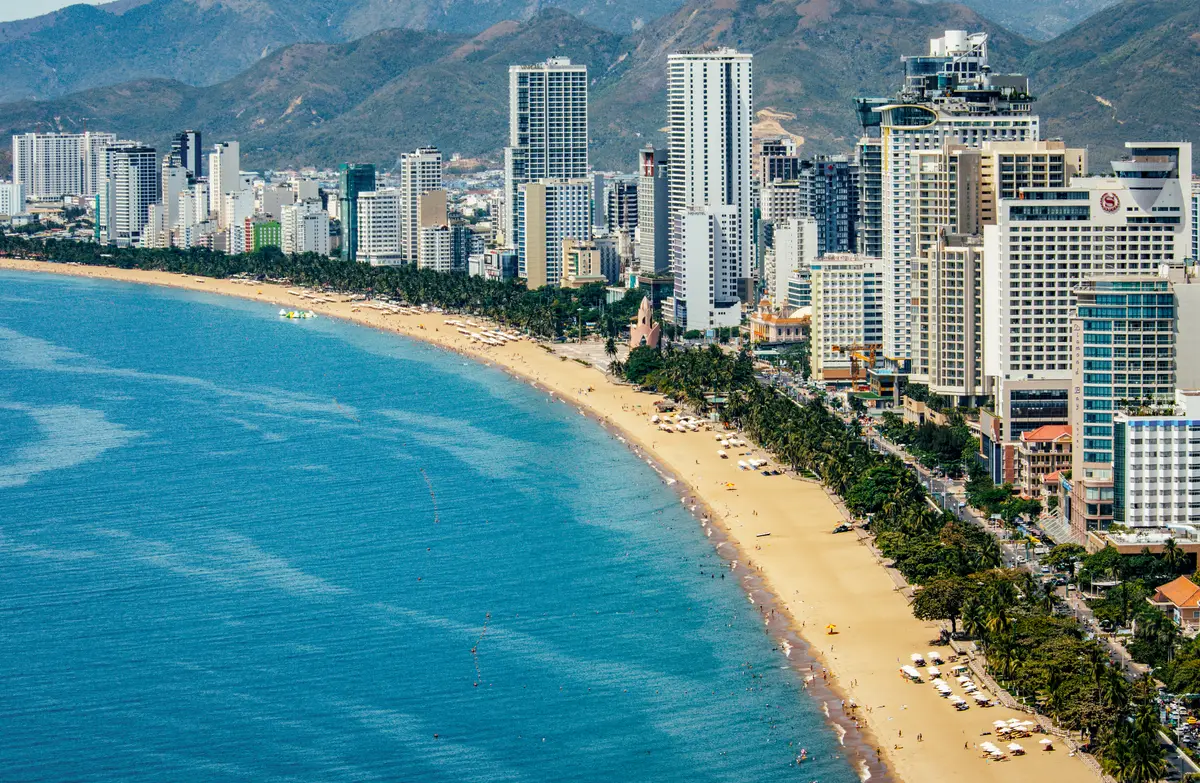
The same report says lifeguards are on duty from 5 am to 5 pm. That is a press figure written around the Tet 2026 holiday, not a posted timetable.
Lifeguards also deal with sudden medical cases such as stroke among bathers. The board works with hotels and lodging businesses so that swimmers in trouble are spotted early and given first help.
How many lifeguards, then and now
In May 2020 a report counted nearly 40 lifeguards in six teams along the bathing coast. Each team then held more than 20 life jackets of various kinds, free of charge. The 2026 report gives 25 lifeguards against nearly 40 in 2020, so ask at the hut whether life jackets are still lent out.
Lifeguard huts along Tran Phu beach usually carry vinegar, the Khanh Hoa tourism platform says. That matters after a jellyfish sting, covered below.
Tran Phu, Nha Trang, Khanh Hoa · Open in Google Maps (opens in a new tab)
Open in Google Maps (opens in a new tab)
Where to swim: the buoyed zone and seafront rules
Nha Trang city issued new seafront park rules that took effect on 24 March 2025 and replaced rules from 2015. They cover the park along Tran Phu and Pham Van Dong streets, from Bach Dang Park to Mai Xuan Thuong Street.
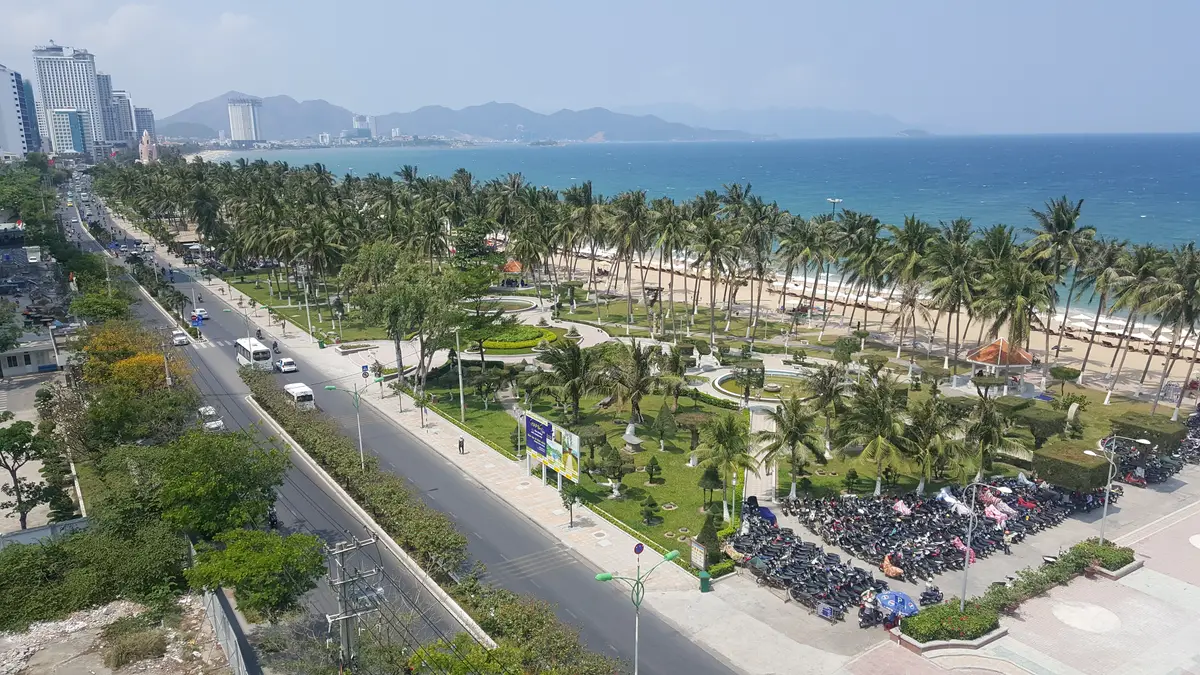
A Saigon Giai Phong report of 26 March 2025 lists these bans that touch swimmers:
- Swimming outside the buoyed safety area or in areas with no-swimming signs.
- Letting pets run loose in the seafront park or letting animals swim with people in the sea.
- Keeping water-play vehicles on the park or running them inside the buoyed area, except for rescue.
- Fishing near the shore within the bathing area.
- Washing, showering and doing laundry in the seafront park.
Officials will check regularly, remind people and draw up administrative violation records. The rules’ own text and decision number were not found, so this follows the press report.
Big waves, rough sea and rescues
Vietnam’s disaster-response decision defines big waves as sea waves 2 m or higher caused by a tropical depression, storm or strong wind at sea. Waves on the central beach reached 2 m over the Tet 2026 holiday, and many visitors still went into the water.
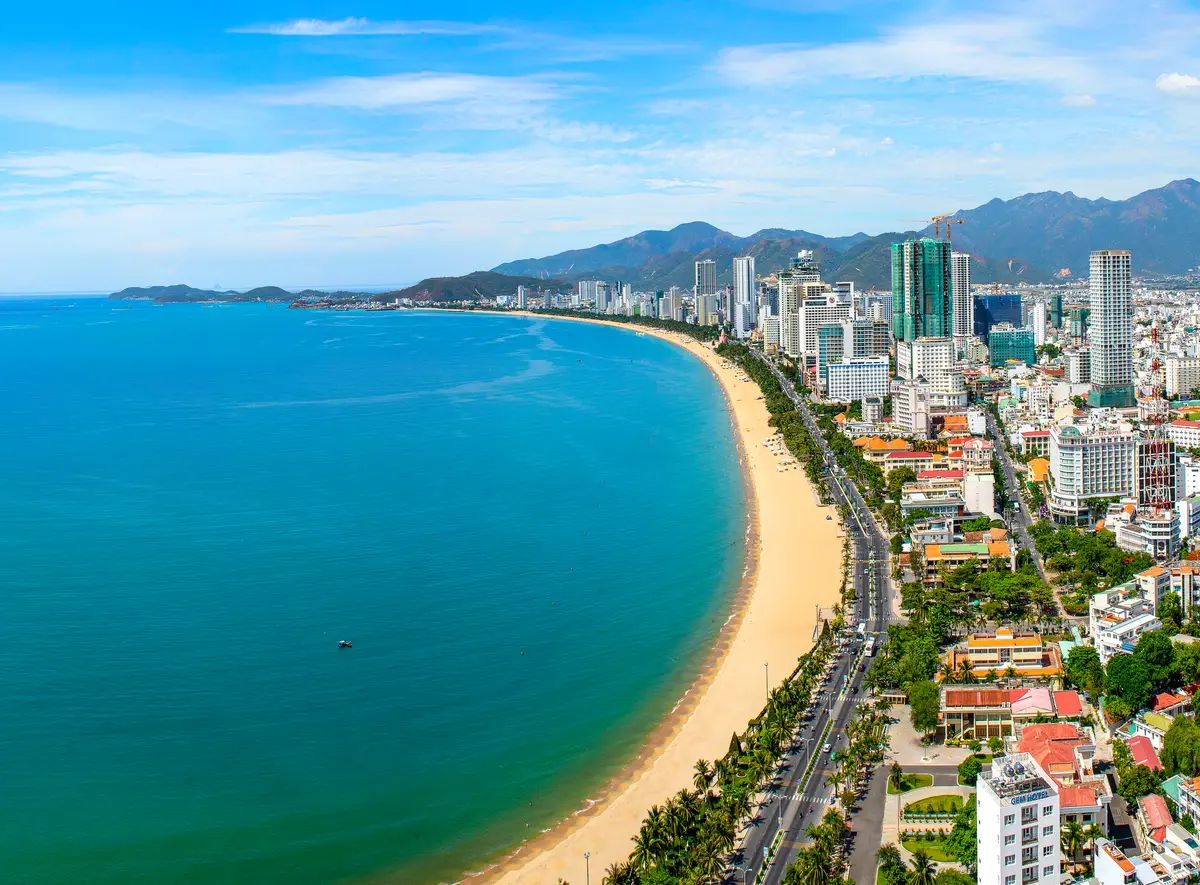
During that holiday the rescue team handled 20 drowning and swept-out cases. Of those 20 people, 15 tourists were brought ashore safely and 5 were in critical condition and taken to hospital.
The Bay Management Board director has said that stopping people entirely is hard, because some still go into the sea outside the controlled areas. Stay inside the lifeguarded stretch.
Reading a day at the beach
The January 2026 reports tie the rescues to big waves and dangerous currents. The board’s call is plain: do not go into the sea in big waves or a rough sea. If you see people swimming in rough water, that is not a sign it is safe.
Rip currents: how to get out
The rescue team lists dangerous currents among the hazards at Nha Trang. No Vietnamese official page on rip currents was found, so these steps come from the US National Hurricane Center.
- Stay calm. Rip currents do not pull you under; they pull you away from shore.
- Swim out of the rip current by swimming parallel to the shoreline.
- Do not try to swim directly back to shore or against the breaking waves.
- Signal to lifeguards or beachgoers by waving your hands, tread water and float.
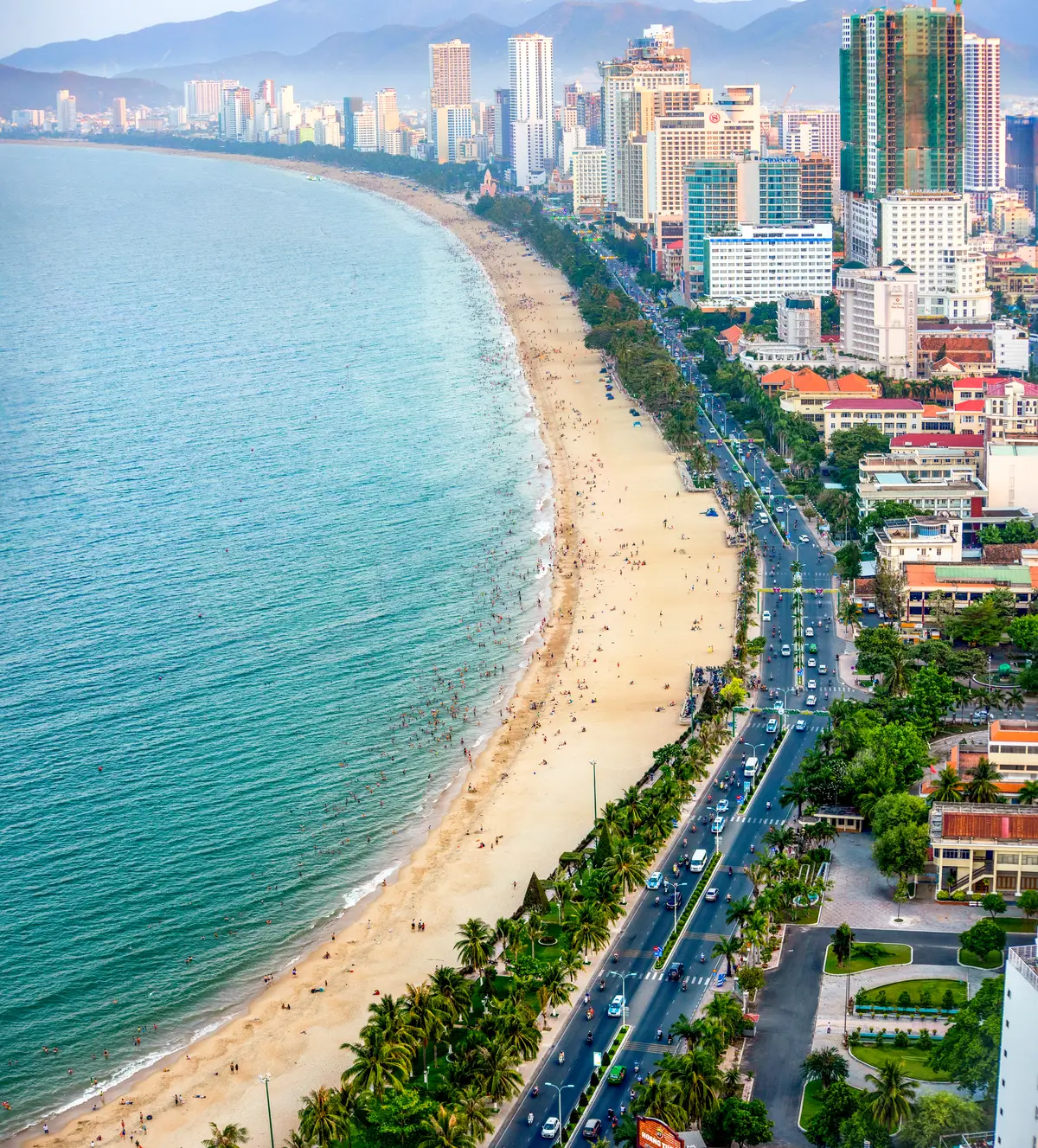
If you see someone caught, throw them something that floats and do not enter the water yourself. Many rip current deaths occur when people try to rescue others.
The US National Weather Service says great beach weather does not always mean it is safe to swim. Rip currents often form on calm, sunny days.
Hazards under the sand
The beach opposite 80 Tran Phu is where a barge more than 30 m long ran aground and broke down at the end of 2019. Iron parts of its bow still lie under the sand there and can emerge when the tide changes or waves are strong.
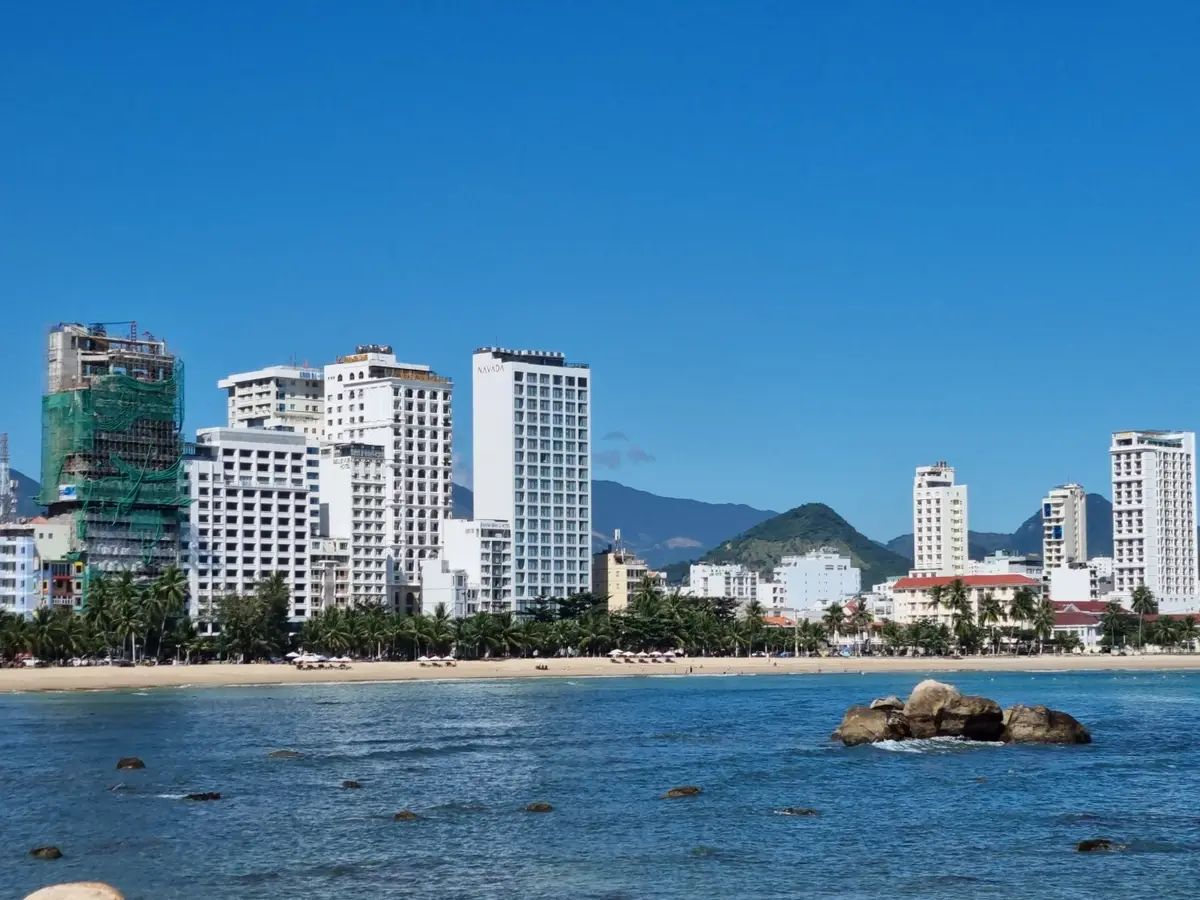
On the afternoon of 10 April 2025 officials marked off the danger area, put up warning signs and posted lifeguards there. That report dates from 10 April 2025. Look for warning signs on the day and keep out of any roped-off patch.
Jellyfish stings
The Khanh Hoa tourism platform advises swimming in planned public areas with professional lifeguards and jellyfish warning signs.
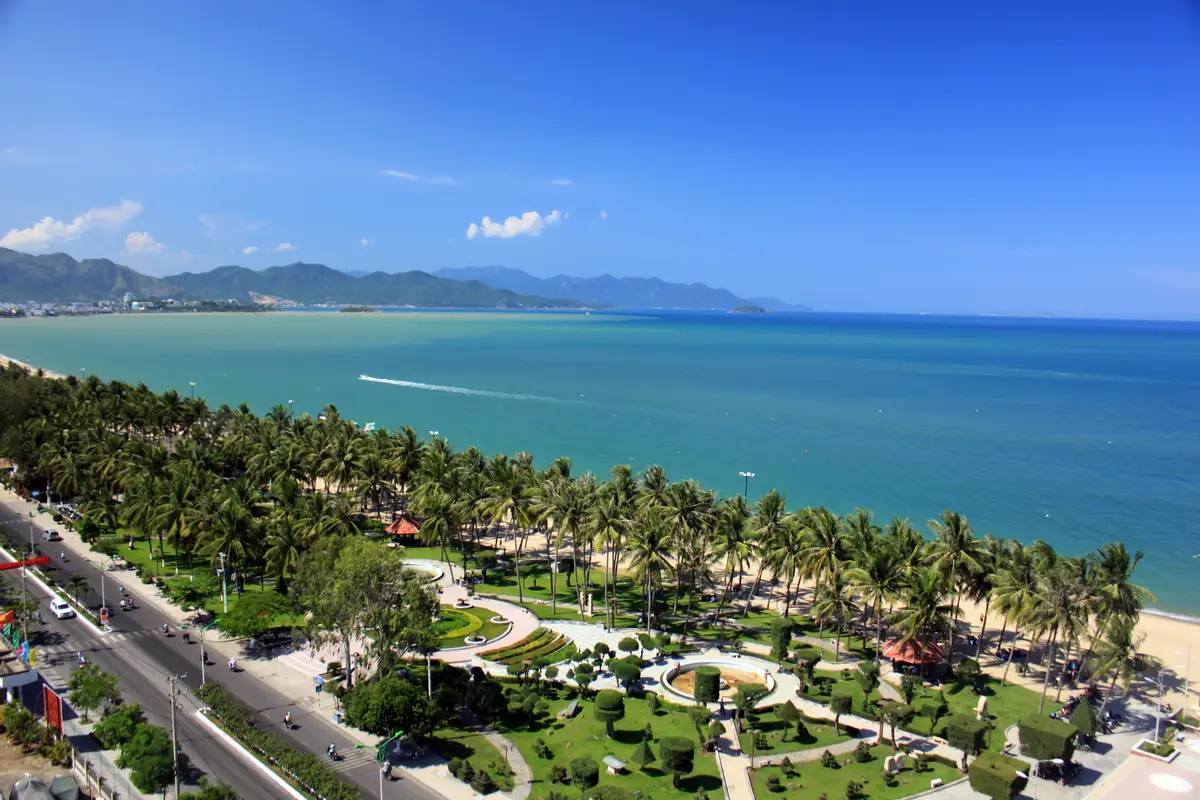
Its steps after a sting:
- Leave the water at once and move onto dry sand.
- Rinse the sting continuously with clean seawater from the same area.
- Never use fresh water or ice on the sting in the early stage.
- Pour vinegar on the skin and leave it for about 30 seconds.
- Use vinegar or a plastic card to gently remove tentacles still stuck to the skin.
- Never rub or scratch the sting hard, and do not apply leaves or unverified folk remedies.
- Watch your body’s reaction for 30 to 60 minutes.
Summer 2025 and July 2026 reports
In May 2025 Tuoi Tre News reported fire jellyfish, Physalia physalis, along Nha Trang beaches as the summer holiday began. A dermatologist warned that severe stings can cause breathing difficulties and be fatal if untreated.
In July 2026 the same paper reported Portuguese man-of-wars in several parts of Nha Trang Bay. The head of the Nha Trang Bay Management Board said they surface because of ocean currents and water temperatures. A bay dive operator said tourists may not swim or dive where they gather, around Hon Mun and Hon Bac. Dead ones washed ashore can still cause skin reactions.
The two reports differ on first aid. The 2025 article says to remove tentacles with a clean tool and rinse with seawater, vinegar or baking soda for 15 to 30 minutes. The 2026 article says to rinse gently with seawater and use no fresh water, medicated oil or sand.
Both agree on leaving the water and not scratching. Ask the lifeguard what they use on the day. Children can wear full-coverage swimsuits.
Go to the nearest hospital or health station if you get spreading pain, fever, headache, nausea, chest tightness, breathing difficulty or dizziness. For hospitals with emergency departments, see hospitals in Nha Trang for foreigners.
Storms and closed seas
On 6/11/2025 the Nha Trang Bay Management Board urgently asked residents and tourists not to swim and not to take part in sports or play at sea during the storm. The same notice told businesses to suspend deckchair and parasol rental along the Tran Phu and Pham Van Dong beaches.
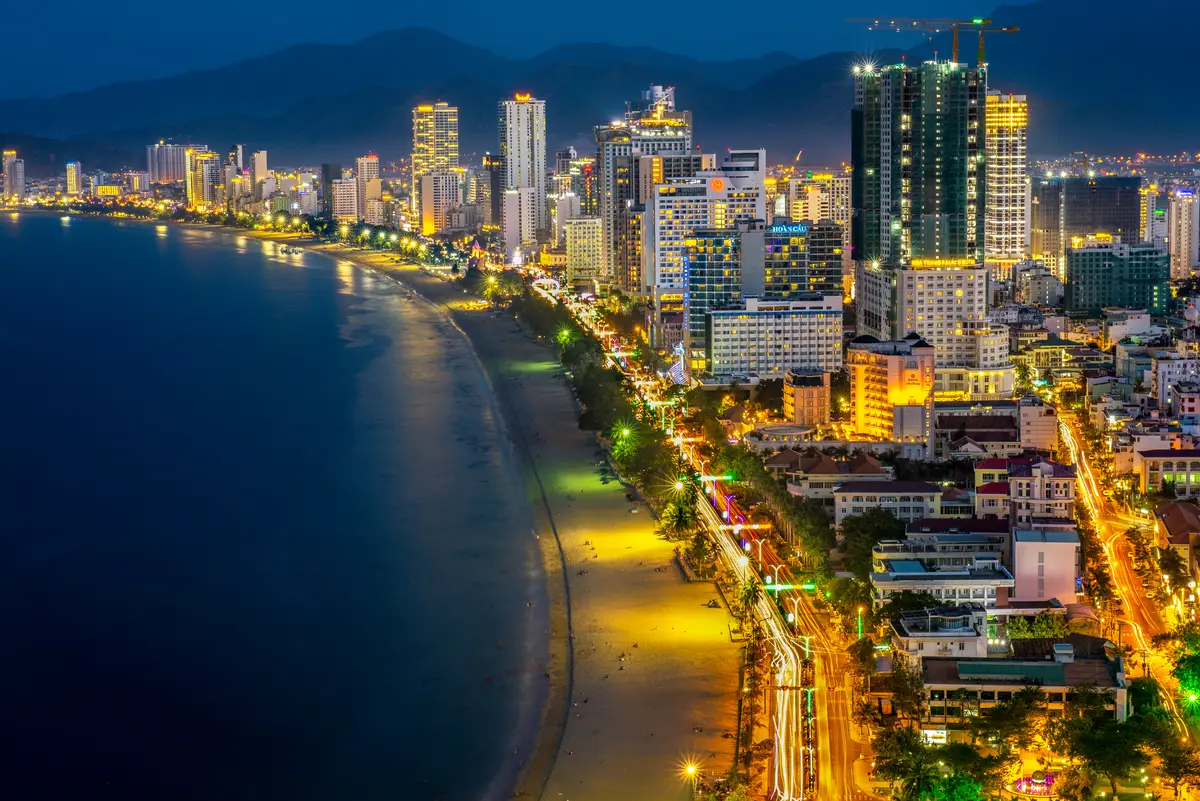
From 12:00 that day Khanh Hoa province stopped all activity at sea until the storm passed. The national forecast centre advises that storms and the northeast monsoon bring strong winds and big waves that affect activity at sea.
The full storm outlook and risk levels are in the storm and flood season guide. Streets that flood are in Nha Trang flooding.
Alcohol, children and swimming alone
A February 2026 report says many people drank alcohol before swimming and ignored lifeguard reminders. WHO links higher drowning rates among males to riskier behaviour such as swimming alone and drinking alcohol before swimming alone.
WHO says the risk of drowning increases when children are near water without active adult supervision. The US National Weather Service advises swimming only at a beach with lifeguards.
For a family beach day, see Nha Trang with kids.
Who to call
Call 112 for incidents, natural disasters and requests for help. Calls to 112 from fixed-line and mobile phones are free of charge. The system operates 24 hours on all days. 112 is also the call service number for search and rescue.
The Khanh Hoa police portal describes 113 as the number for public security and order, 114 for fire, rescue and relief, and 115 for medical emergency. Khanh Hoa also runs a 24/24 hotline for tourists, *2258 from a mobile.
For a rescue at sea, the Maritime Search and Rescue Coordination Centre lists a 24/24 duty line, 0243.768.3050. Its region IV office is at 65 Nguyen Van Linh Street, Nam Nha Trang Ward. More numbers are on the emergency numbers page.
Photos and clips uploaded to Google Maps (Tran Phu Beach on Google Maps (opens in a new tab)) by @B.H.T., @ARTHUR GEO, @Khoa Trần, @Hải Ngô, @Hoai Anh Nguyen, @周柏岑, @Tâm Nguyễn Văn.
Step by step
- Look for signs and flagsCheck the sand for danger signs and no-swimming flags before you go in.
- Stay inside the buoyed areaThe seafront park rules, as reported, ban swimming outside the buoyed safety area.
- Skip the water in big wavesDo not go into the sea when there are big waves or a rough sea.
- In a rip current, swim parallel to the shoreSwim out of the rip current by swimming parallel to the shoreline.
- Call 112Call 112 for requests for help.
Not confirmed: What each flag colour means: no official page explains them, so ask the lifeguard at the beach before you swim. Lifeguard hours outside the reported daytime shift: ask at the lifeguard hut. Lifeguards at Bai Dai, Doc Let and Hon Chong: unknown; ask the resort.
Common questions
Is it safe to swim at Nha Trang beach?
It depends on the day. The Nha Trang Bay Management Board urges people not to go into the sea in big waves or a rough sea. Over the Tet 2026 holiday its rescue team handled 20 drowning and swept-out cases.
Are there lifeguards on Nha Trang beach?
A February 2026 report says 25 lifeguards in two shifts watch the whole central beach route. It says they are on duty from 5 am to 5 pm.
What do the beach flags mean?
Press reports say danger signs and no-swimming flags are planted along the sand. The board tells people to obey danger flags, loudspeaker warnings and lifeguard instructions.
Can I swim outside the buoys?
The city's seafront park rules, as reported, ban swimming outside the buoyed safety area or in areas with no-swimming signs.
What should I do after a jellyfish sting?
The Khanh Hoa tourism platform says to leave the water at once and rinse the sting continuously with clean seawater. It says never to use fresh water or ice in the early stage.
How do I escape a rip current?
NOAA says to swim parallel to the shoreline and not to swim directly back to shore or against the breaking waves. Wave your hands to signal for help, tread water and float.
Are life jackets free on Nha Trang beach?
A May 2020 report said each rescue team held more than 20 life jackets that people could use free of charge. Ask at the lifeguard hut whether this still applies.
Can I swim during a storm?
On 6/11/2025 the board asked residents and tourists not to swim and not to take part in sports or play at sea during the storm. Khanh Hoa stopped all activity at sea from 12:00 that day until the storm passed.
Is it safe to swim after drinking alcohol?
A February 2026 report says many people drank alcohol before swimming and ignored reminders from lifeguards. WHO links higher drowning rates among males to riskier behaviour such as drinking alcohol before swimming alone.
Which number do I call for help at the beach?
Call 112 for incidents, natural disasters and requests for help. Calls to 112 from fixed-line and mobile phones are free of charge.
Read next
Places in this guide
General information checked against the sources listed above, not legal advice for your situation. Rules and office practice change; confirm with the immigration office or a licensed adviser before you act. See how guides are checked.
Spotted an error? Report it.