Renting an Apartment in Nha Trang: Contract and Deposit Rules
Sign a written contract before you hand over any deposit, because Vietnamese law requires housing contracts to be in writing. If you back out after paying, the deposit stays with the landlord. Find places on Batdongsan.com.vn and Nha Tot, and make sure your stay is declared to the ward police.
On this page
Get the contract in writing before you pay anything, because a housing contract must be in writing. Then check the home and the person renting it to you, pay a deposit with clear terms, and make sure your stay is declared to the ward police.
Hợp đồng về nhà ở do các bên thỏa thuận và phải được lập thành văn bản
A housing contract is as agreed by the parties and must be made in writing.
Law on Housing No. 27/2023/QH15, Điều 163

Finding a place
Search Batdongsan.com.vn and Nha Tot, then ask each agent about rent, floor area, condition, service fees and what is included. Photos will not answer those. For a sense of scale, October 2026 asking prices on Batdongsan include about VND 8,000,000 a month for a furnished 1-bedroom at VCN Phuoc Hai and about VND 14,500,000 for one at HUD. If you have not picked a neighbourhood yet, start with where to live in Nha Trang.

If an agent negotiates and signs the lease for you, that is real estate brokerage, and an individual broker must hold a practising certificate. Ask for the company name and the certificate before a viewing, and agree in writing who pays the agent.
What to check before you sign
Check these in person.
- The home must not be seized for judgment enforcement, or under a land-recovery, clearance or demolition decision.
- It needs electricity, water supply and drainage, unless you agree otherwise. Open the taps, flush the toilet and test the sockets.
- The contract names both sides with addresses, describes the home, and states the rent, how it is paid and the lease term.
- If the person signing is not the owner, ask for the owner’s authorisation, since an owner may authorise someone else to sign for them.
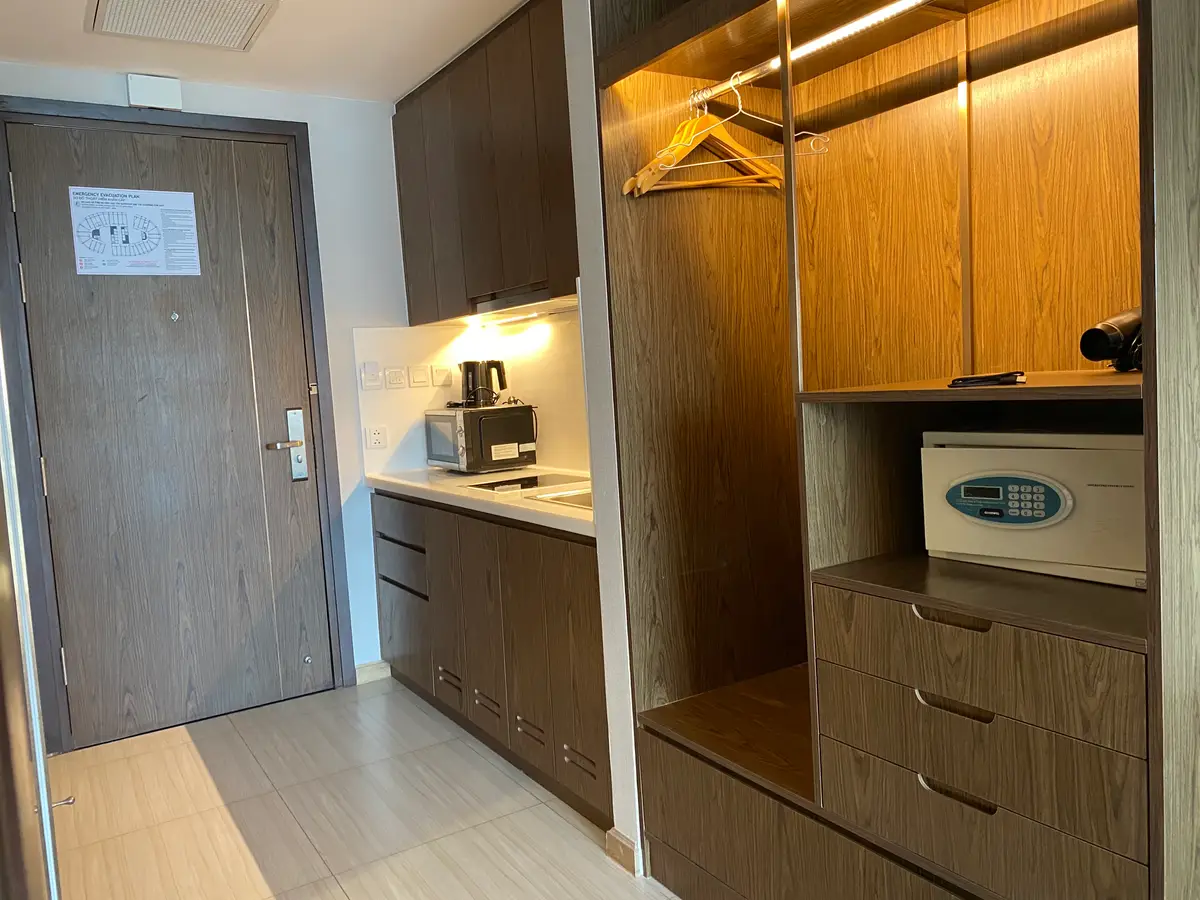
Photograph walls, floors, appliances and furniture at handover. You return the home in similar condition to how you received it, apart from natural wear and tear, so those photos protect you when you leave.
When you read the draft, look for the names and addresses of both parties, a description of the home, and the rent and how it is paid. It also lists the handover time, the lease term, each side’s rights and duties, the effective date and both signatures. If you have not agreed an effective date, the contract takes effect when signed.
As a foreigner you can rent without residence registration at the address, as long as you are a foreign individual permitted to enter Vietnam. A lease does not need notarisation unless you both want it.
Deposit
A deposit is money or valuables handed over to secure the contract. If the lease goes ahead, it is returned or deducted from what you owe. It works both ways: if you refuse to sign or perform, the landlord keeps it, but if the landlord refuses, they must return it plus an amount equal to its value, unless you agreed otherwise.
Ask in writing what the deposit is for and when it comes back. The Housing Law cap of 5% applies to a project investor taking a deposit on a sale, not to a landlord letting a flat.
When you move out, the landlord can claim compensation only if the home’s value has fallen beyond natural wear and tear.
Electricity and water
Settle before you sign who pays for both, because the law treats them as prices separate from the rent. A landlord who charges more than the regulated household electricity price is fined VND 20,000,000-30,000,000 and must refund the excess. The full tariff and the short-lease rule are in landlord electricity price.
Ending the lease
Your landlord cannot end the lease early during its term, except in the cases the law lists. Those include 3 months or more of unpaid rent, subletting without consent, using the home for another purpose, or renovating it alone.
You can end it if the landlord does not repair severe damage, or raises the rent unreasonably or without the agreed notice. Whoever ends it must give at least 30 days’ notice, unless you agree otherwise. You may sublet only if the landlord agrees.
If you are the tenant and the owner dies, you keep leasing until the term ends and the heir continues the contract, unless you agree otherwise. If the tenant dies, whoever lived with them may keep leasing until the term ends.
If the owner sells the home, you keep leasing until the term ends and the new owner continues the contract, unless you agree otherwise.
Red flags
- No written contract.
- A signer who is not the owner and shows no authorisation.
- Anyone asking for your passport as a guarantee: the UK government advises against handing it to landlords or rental shops.
- A request for a deposit before the written contract exists, because a refused deposit stays with the receiver.
Declare your stay
A foreigner staying temporarily must declare the stay through the person who runs the accommodation, to the ward police, and the accommodation must see your passport and residence papers first. You do not file it yourself, because the owner, its legal representative or an authorised person does. An electronic declaration is filed as soon as you arrive. If you move to another address, you declare again. The steps are in temporary residence registration in Nha Trang.
Photos (3)
- Victor311 (CC BY-SA 4.0 (opens in a new tab))
- Ty Tiy (Ty)
- iFruit iFruit
Step by step
- Find listingsSearch Batdongsan.com.vn and Nha Tot, and ask each agent for the rent, floor area, condition, service fees and amenities.
- Check the homeCheck it is not distrained and not under a land-recovery decision, and that it has electricity, water supply and drainage.
- Agree the contract in writingAgree the term, the rent and how it is paid, and put it in writing.
- Pay the depositA deposit secures the conclusion or performance of the contract.
- Declare your stayThe accommodation declares your stay to the ward police, after you show your passport and residence papers.
Not confirmed: Rent levels: no reliable price range for Nha Trang apartments is confirmed, so compare several listings and ask each landlord for the all-in monthly cost.
Common questions
Does a rental contract have to be in writing?
A housing contract is as agreed by the parties and must be made in writing.
Do I lose my deposit if I back out?
If the depositor refuses to conclude or perform the contract, the deposited property belongs to the deposit-receiver.
What if the landlord backs out?
The deposit-receiver must return the deposited property plus an amount equal to its value, unless otherwise agreed.
How much notice do I give to end a lease?
The party unilaterally terminating must notify the other at least 30 days in advance, unless the parties agree otherwise.
Can I sublet my rented apartment?
A tenant may sublet if the landlord agrees.
Does a lease have to be notarised?
Notarisation or certification of a lease is not required, unless the parties want it.
How big can a deposit be?
The Housing Law cap of 5% applies to a project investor taking a deposit for a sale or hire-purchase, not to a landlord letting a flat.
Can my landlord charge more than the regulated electricity price?
No. A landlord who charges more than the regulated price is fined VND 20,000,000-30,000,000 and must refund the excess.
What happens to my lease if the owner sells the home?
The tenant may keep leasing until the term ends, and the new owner continues the contract unless the parties agree otherwise.
Do I register with the police as a tenant?
A foreigner staying temporarily must declare the stay through the person managing the accommodation.
Read next
Sources and reader comments
Official legal texts (Gazette, government portals):
- Law on Housing No. 27/2023/QH15 — Official Gazette PDF, Công báo Số 39+40, 08-01-2024 (part 2 of 2; Chương X 'Giao dịch về nhà ở', Điều 159-198 — contains every article this research cites) (opens in a new tab)
- Bộ luật Dân sự số 91/2015/QH13 — bản gốc ký ban hành (Điều 1–365), Cổng Thông tin điện tử Chính phủ (opens in a new tab)
- Law 47/2014/QH13 as consolidated, Văn bản hợp nhất 62/VBHN-VPQH of 23 March 2026 (incorporates 118/2025/QH15), Article 33 — official PDF, scanned (opens in a new tab)
- Luật Kinh doanh bất động sản số 29/2023/QH15 — bản gốc ký ban hành, Cổng Thông tin điện tử Chính phủ (opens in a new tab)
- Nghị định số 133/2026/NĐ-CP — Công báo điện tử nước CHXHCN Việt Nam (opens in a new tab)
Show 6 more sources
- Bộ luật Dân sự số 91/2015/QH13 — phần tiếp theo (Điều 366–689), Cổng Thông tin điện tử Chính phủ (opens in a new tab)
- Law on Housing No. 27/2023/QH15 — Official Gazette PDF, Công báo Số 37+38, 08-01-2024 (part 1 of 2; Chương I-IX, Điều 1-158) (opens in a new tab)
- Toàn văn Luật Điện lực số 61/2024/QH15 — Cổng Xây dựng chính sách, pháp luật (Chính phủ) (opens in a new tab)
- UK FCDO — Vietnam travel advice: safety and security (opens in a new tab)
- Circular 87/2026/TT-BCA, Official Gazette page + signed PDF (full text; replaces Circular 53/2016/TT-BCA) (opens in a new tab)
Company and press pages (not official sources):
General information checked against the sources listed above, not legal advice for your situation. Rules and office practice change; confirm with the immigration office or a licensed adviser before you act. See how guides are checked.
Spotted an error? Report it.
Comments (0)
Be the first to ask about this topic.